

In an era where travel is being rewritten by technology and shifting global ambition, Adebayo Adedeji stands at the forefront of Africa’s quiet revolution. As CEO of Wakanow, he has transformed a struggling booking platform into a dynamic, borderless travel ecosystem: profitable, expansive, and deeply attuned to the modern traveller. Blending Silicon Valley discipline with African ingenuity, Adedeji is not merely scaling a business; he is redefining access, experience, and possibility. His vision reaches beyond tickets and itineraries, shaping a future where travel becomes more inclusive, more intelligent, and unmistakably African in its confidence and global relevance.
By Gbolahan Familusi

In the evolving atlas of global travel, where technology increasingly dictates the rhythm of movement and experience, a new kind of architect has emerged; one who does not merely connect destinations but redefines the journey itself. Among this rarefied class stands Adebayo Adedeji, the Group Chief Executive Officer of Wakanow, whose stewardship has transformed a once-troubled booking platform into one of Africa’s most formidable travel-tech ecosystems.

When Adedeji assumed leadership seven years ago, Wakanow was burdened by the paradox that afflicts many fast-growing companies: ambition had outpaced structure. It was a business rich in potential yet constrained by inefficiencies and mounting losses. Where others might have sought quick fixes or cosmetic growth, Adedeji applied something far more exacting: discipline.
Drawing from his formative years at global powerhouses such as Amazon and Walmart, where he honed his expertise in financial strategy and operational efficiency, he introduced a philosophy that would come to define his tenure: profitability before scale, structure before spectacle. The shift was immediate and, by industry standards, astonishing. Within his first year, Wakanow moved from a loss-making enterprise to a profitable one, restoring not only financial health but institutional confidence.
“I came to the table ready,” Adedeji reflects. “Completely certain that if the opportunity was in Nigeria, I could get it done.” What he encountered, however, was less than ideal. “I found a business in a state of mess,” he says candidly. Yet, in that disorder, he discerned possibility. “I fell in love with it. I saw a diamond that the founders had already created; I didn’t create it; I just had the chance to polish it.”
That instinct, to refine rather than replace, has shaped the remarkable evolution of Wakanow. Under Adedeji’s leadership, the company has transcended its origins as a flight-booking service to become a fully integrated travel-tech platform, encompassing everything from visa processing and holiday packages to insurance and financing. Today, it operates across dozens of countries spanning Africa, Europe, the Middle East, and North America, offering a seamless travel experience tailored to the complexities of a globalised yet locally nuanced clientele.
Central to this transformation is an unrelenting commitment to the customer. In an industry often defined by transactional efficiency, Adedeji has insisted on something more human; an experience that anticipates needs, builds trust, and delivers consistency.
“The key for us is a relentless focus on the customer,” he explains. “If you make a booking with us, we’re going to call you three times; to confirm your payment, to verify your itinerary, and to remind you of your travel details. It’s the extras that create the moat.”
This attention to detail is not incidental; it is engineered. Every interaction, every touchpoint, is measured and refined. The result is a platform that does not merely facilitate travel but elevates it; transforming what could be a routine transaction into a curated experience.
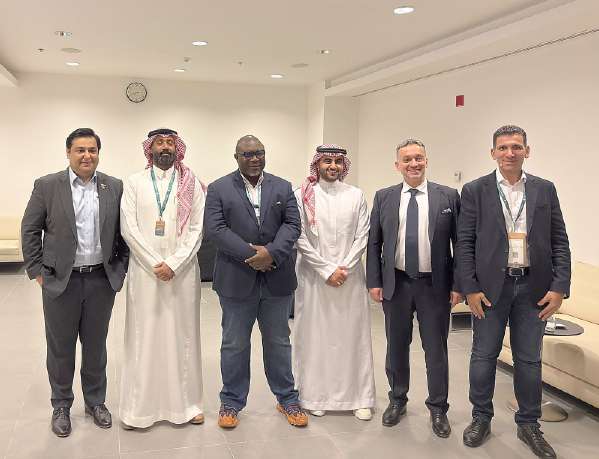
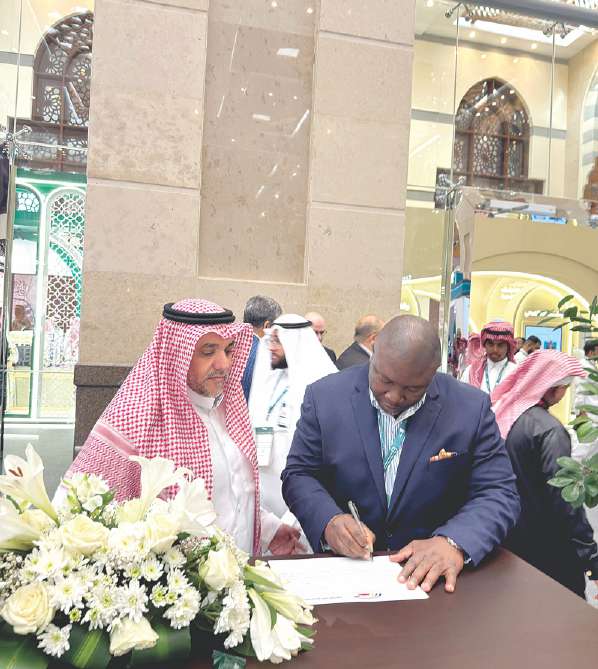
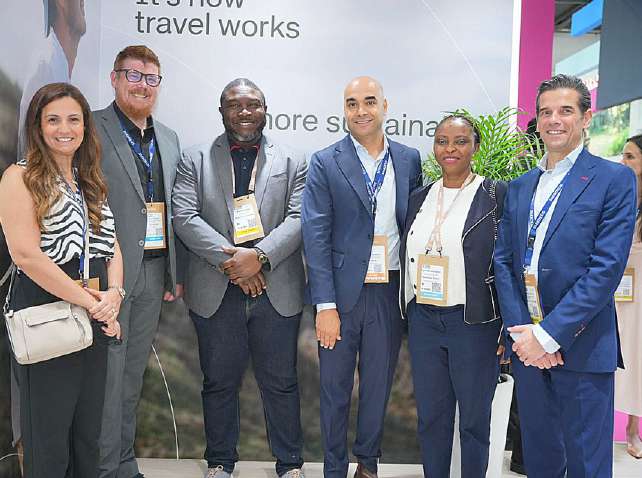


Yet perhaps the most profound aspect of Adedeji’s vision lies in accessibility. In many emerging markets, travel has long been perceived as a luxury, reserved for a privileged few. Through innovations such as Wakanow’s “Pay Small Small” financing model, that paradigm is shifting. By enabling customers to pay for travel in instalments, the company has effectively democratised mobility, opening the world to a broader segment of society.
Beyond commercial success, this approach carries significant socio-economic implications. Wakanow today employs hundreds directly and supports thousands more through its affiliate network, while Adedeji’s broader business ecosystem, spanning hospitality, food, and entertainment, extends that impact even further.
“When you look at that scale,” he notes, “one individual managing an ecosystem that allows nearly 6,000 people to earn a living; that’s a significant impact.”

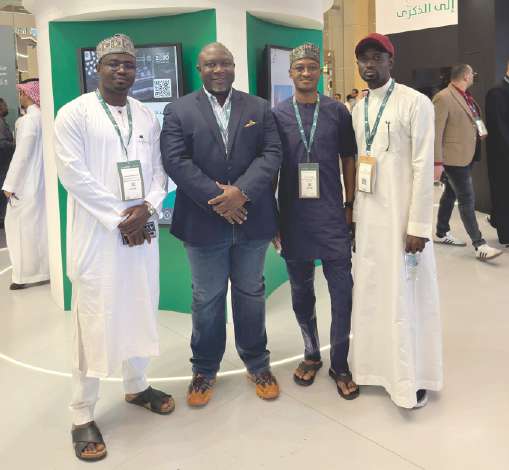
His journey to this point is as compelling as the transformation he has led. Raised in Lagos in what he describes as a “privileged humble” environment, Adedeji’s early life was shaped by both aspiration and adversity. The loss of his father at the age of two and the subsequent passing of his mother instilled in him a resilience that would later define his leadership.
“We become strong because of the circumstances of our existence,” he reflects. “Those challenges shape us into who we are.”

Education became both refuge and springboard. From Lagos State Model College to Obafemi Awolowo University, and later Clark Atlanta University, where he earned his MBA, Adedeji cultivated a mindset that combined intellectual rigour with relentless curiosity. Even today, he remains a committed learner. “Though I have an MBA, I still leverage YouTube to get more education as often as I can,” he says; a statement that captures both humility and hunger.
His professional ascent in the United States was marked by significant achievements. At Amazon, he played a pivotal role in financial operations generating over $90 billion in sales. Yet, despite these accomplishments, a different calling emerged, one that would ultimately draw him back to Nigeria.
“The reality is quite interesting,” he recalls. “Someone once told me I had a higher propensity to be successful in Nigeria than in America. Those words resonated.” When the opportunity at Wakanow arose, the decision was swift. “It was a no-brainer.”
Returning to Nigeria meant confronting a business environment often characterised by infrastructural deficits and unpredictability. But for Adedeji, these challenges are not obstacles; they are opportunities.
“I don’t complain,” he says with characteristic clarity. “I focus entirely on the solution. The opportunity in Nigeria is almost always bigger than the problems; in fact, the opportunity pays for the problems.”
This philosophy extends beyond Wakanow into a broader portfolio of ventures that collectively redefine the travel experience. From premium beachfront destinations such as Kyma and Wave Beach to quick-service innovations like Dundu Nation, Adedeji has constructed an ecosystem where travel, leisure, and lifestyle intersect seamlessly.

“Diversification isn’t just about ROI,” he explains. “It’s about building a self-sustaining ecosystem where every venture adds value to the next.”
At the heart of this ecosystem lies a sophisticated understanding of integration. By aligning transportation, accommodation, dining, and entertainment, Adedeji has created a model in which each component reinforces the others. The traveller, in turn, benefits from a cohesive and immersive experience.
This systems thinking is complemented by a keen sensitivity to local context. Unlike many global operators who attempt to replicate foreign models, Wakanow’s strategy is rooted in adaptation.
“We don’t compare ourselves to global players,” Adedeji notes. “Our customer base behaves differently. You might see a brilliant model abroad and think you can transplant it here, but you’ll fail if you don’t account for local nuance. We take the global spark and refine it for the local fire.”
It is a philosophy that has allowed the company to innovate in ways that resonate deeply with its audience, from payment systems tailored to local habits to service protocols that build trust in environments where it is often scarce.
Leadership, for Adedeji, is as much about people as it is about strategy. He is deliberate in his approach to talent, prioritising qualities that cannot be taught.
“I’m looking for two things you simply cannot teach: grit and care,” he says. “You can train someone on a technical skill, but if they don’t fundamentally care about the mission, nothing you do will change that.”
This emphasis on culture has been instrumental in sustaining Wakanow’s growth, enabling it to scale without losing coherence. It also reflects a broader truth about Adedeji’s leadership: that it is rooted not in charisma alone, but in clarity.
As the global travel industry continues to evolve, shaped by technology, shifting consumer expectations, and emerging markets, Adedeji remains firmly focused on the future. His perspective is both pragmatic and forward-thinking, encapsulated in a single piece of advice he offers to his younger self: “Learn AI.”
It is a deceptively simple directive, yet it speaks volumes about his orientation towards progress. For Adedeji, innovation is not optional; it is imperative.
Looking ahead, Wakanow’s ambitions are expansive. From deeper integration into fintech to large-scale tourism developments, including a 50,000-square-metre resort project in Ibeju-Lekki, the company is positioning itself as a central player in the next phase of African travel.
And yet, for all the scale and sophistication, the essence of Adedeji’s vision remains profoundly human. It is about connection; between people and places, between aspiration and opportunity, between Africa and the world. In reimagining Wakanow, Adebayo Adedeji has done more than transform a company. He has redefined what travel can mean for an entire continent: not merely movement across borders, but the expansion of possibility itself.