

At 92, Nobel laureate Wole Soyinka remains a global intellectual in perpetual motion: writing, teaching, travelling and challenging power with the same restless curiosity that has defined his extraordinary life.
By David Edremoda
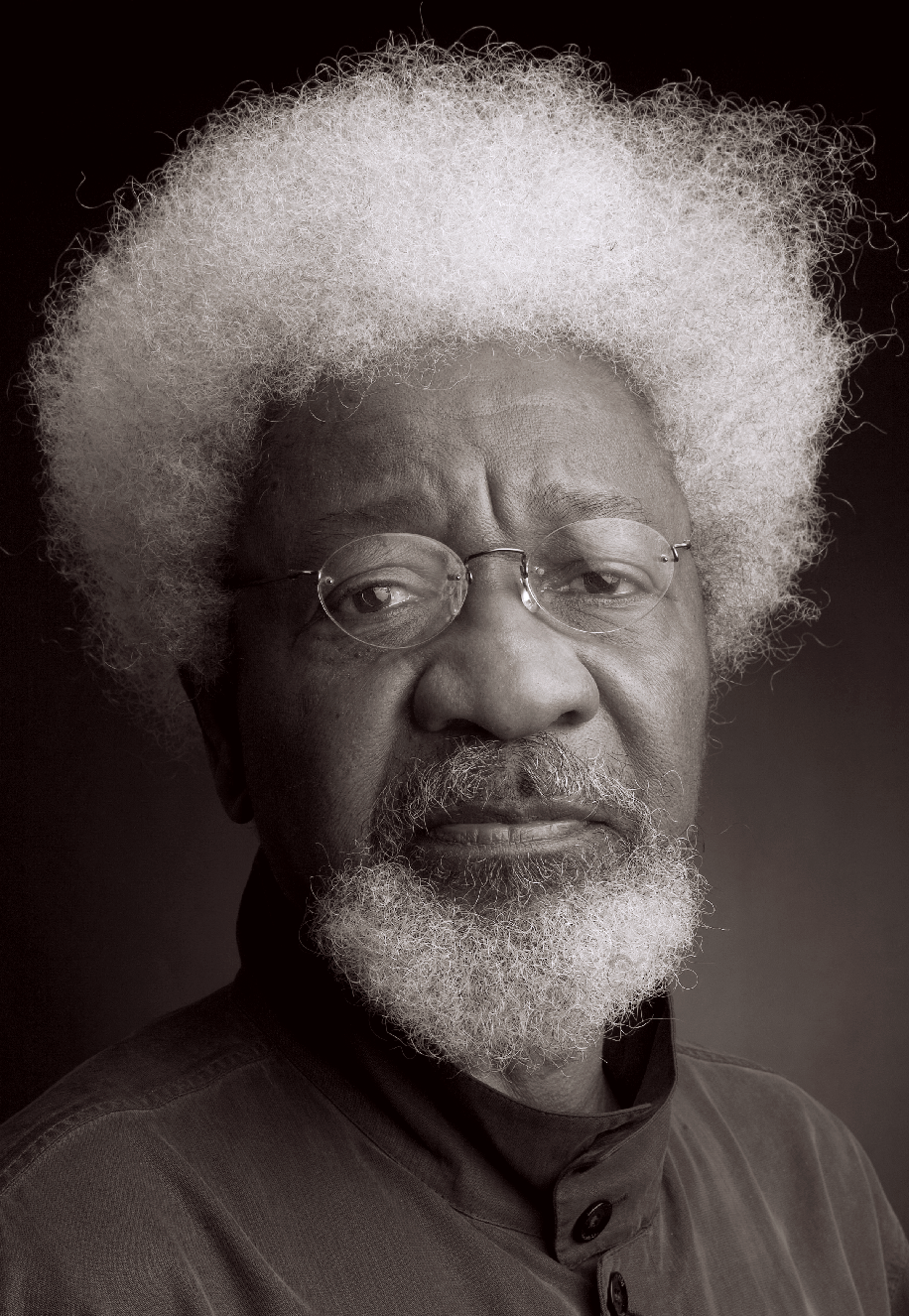
The interview was almost over. Professor Wole Soyinka had spent more than an hour fielding questions from a group of journalists in Ikeja, Lagos, when his mobile phone rang. He listened briefly, apologised to the gathering and rose to his feet.
“There is somewhere else I need to be,” he said. “My flight to Abu Dhabi is almost ready.”
What followed was striking not because it was dramatic, but because it was so effortless. Slinging his familiar knapsack over his shoulder, Soyinka strode briskly towards a waiting SUV. There was no hint of hesitation in his gait, no suggestion that this was a man entering his tenth decade. Minutes later he was heading for Murtala Muhammed International Airport, en route to another international academic engagement.
For one journalist present, the image lingered long after the interview had ended. Perhaps, he thought, one secret of Soyinka’s remarkable vitality is that he simply refuses to stop.
There is more than a little truth in that observation.
At 92, Professor Akinwande Oluwole Babatunde Soyinka remains one of the world’s most active public intellectuals. Retirement appears to have no place in his vocabulary. He continues to write, lecture, teach, mentor, travel and intervene in public affairs with a consistency that would test people decades younger. His beard has turned completely white, but his mind remains razor-sharp, his humour mischievous, and his appetite for ideas undiminished.
More remarkably, the causes that animated him in his youth: freedom, justice, culture, education, human dignity and accountability, continue to define his public life. Time has altered neither his convictions nor his curiosity.
His 92nd birthday on 13 July 2026 became less a celebration of longevity than a tribute to enduring relevance. Across Nigeria and beyond, the commemorations were not simply birthday ceremonies. They became platforms for discussing the ideas that have shaped Soyinka’s life and work; democracy, culture, Pan-Africanism, youth development, justice and the moral responsibilities of citizenship.
Rather than celebrating an ageing literary icon, participants encountered a man who continues to live fully in the present.


The London Event
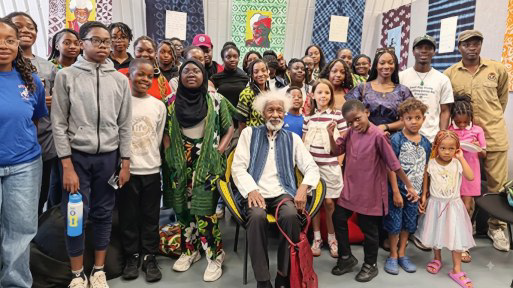
One of the most memorable events took place in London during the annual Wole Soyinka International Cultural Exchange. Hosted at The Africa Centre in Southwark under the theme, Culture Without Borders, the gathering reflected the global reach of a writer whose intellectual journey has traversed continents while remaining deeply rooted in Yoruba civilisation. The most compelling moments, however, unfolded away from the podium.
Young participants who had encountered Soyinka only through books, documentaries and university classrooms suddenly found themselves in conversation with him. Questions flowed freely. He listened attentively, challenged assumptions, laughed easily and responded with the generosity of a seasoned teacher rather than the distance of a Nobel laureate.
There were photographs and selfies, certainly, but more importantly there was genuine dialogue.
For many of the young participants, the encounter transformed an intimidating literary giant into an approachable mentor. Their curiosity seemed to energise him as much as his wisdom inspired them.
That intergenerational exchange has become one of the defining strengths of the Wole Soyinka International Cultural Exchange. It recognises that the greatest way to honour an intellectual is not through endless praise but by cultivating new generations of independent thinkers.
A similar spirit animated celebrations elsewhere.
In Abuja, a public lecture coincided with the launch of Ideas Do Not Die, a book by Professor Adesoji Adesugba. The title could easily describe Soyinka’s own intellectual journey. Discussions ranged far beyond literature, examining leadership, education, national security, economic development and governance. Predictably, the conversation returned to ideas Soyinka has championed throughout his career; that no nation can achieve sustainable progress without justice, accountable leadership and investment in human capital.
In Ondo State, the emphasis shifted to young people. Students participated in literary competitions, cultural performances and essay contests celebrating creativity and critical thinking. Traditional dances, Yoruba ewi, spoken-word poetry and artistic performances filled the programme with colour, but its deeper purpose lay elsewhere: encouraging young Nigerians to embrace knowledge, courage and independent thought.
The message was unmistakable. Soyinka’s greatest legacy will not be another monument or commemorative plaque. It will be another generation willing to ask difficult questions.
Port Harcourt provided yet another dimension to the celebrations.
During the 28th Wole Soyinka Lecture Series organised by the National Association of Seadogs, the focus turned to one of Nigeria’s most persistent challenges: impunity.

Joined by former Aviation Minister Osita Chidoka and former Niger Delta Development Commission Managing Director Timi Alaibe, Soyinka used the occasion to call for greater accountability and respect for human life.
Characteristically, he rejected vague rhetoric. Dedicating the event to victims of state brutality, mob violence and extrajudicial killings, he reminded the audience that the legitimacy of any government ultimately rests on its protection of human life.
“The life of a human being constitutes the basic unit of any community and any system of governance,” he observed. It was vintage Soyinka.
More than half a century after his imprisonment during the Nigerian Civil War, he continues to speak with the same moral urgency that made him one of Africa’s most fearless public voices. Age has softened neither his language nor his principles.
That consistency perhaps distinguishes Soyinka as much as his longevity. Few writers have remained as intellectually engaged across seven decades while resisting the temptation to become mere national monuments.
His global engagements also show no sign of slowing.
Since joining New York University Abu Dhabi as Arts Professor of Theatre, Soyinka has remained immersed in teaching and mentoring younger scholars. The appointment followed an earlier period as Writer-in-Residence and reflects international recognition not only of his literary achievements but also of his enduring influence as an educator.
Teaching keeps him in constant conversation with younger generations. It also keeps him connected to evolving ideas rather than merely reflecting on past accomplishments.
Meanwhile, his own creative output continues. His satirical intervention Enter Your Pin (2026) follows the acclaimed Chronicles from the Land of the Happiest People on Earth (2021), his first novel in almost five decades. Alongside his literary work, Soyinka remains active in campaigns for reparatory justice, heritage reconnection and civic engagement, including initiatives surrounding Badagry’s “Door of Return.”


For him, writing has never been an escape from public life. It has always been another way of entering it. That philosophy has defined his career from the beginning.
Born in Abeokuta on 13 July 1934, Soyinka emerged from a richly layered cultural environment that would later shape some of Africa’s most influential literature. Yoruba cosmology, colonial encounters, religion, family life and political awakening all found expression in works that challenged readers as much as they entertained them.
Whether in The Lion and the Jewel, The Strong Breed, Death and the King’s Horseman or A Dance of the Forests, Soyinka consistently resisted simplistic narratives. His writing demanded intellectual participation. It explored the tensions between tradition and modernity, individual responsibility and communal obligation, power and morality.
That refusal to simplify extended beyond literature into politics. When Nigeria drifted towards civil war in the 1960s, Soyinka attempted to facilitate dialogue. The effort led to his arrest and prolonged solitary confinement.
Prison failed to silence him.
Instead, it deepened his understanding of power, freedom and human resilience, themes that would resonate through much of his later work, including The Man Died. The moral conviction underpinning that memoir, that silence in the face of injustice carries its own consequences; has remained a defining principle throughout his public life.
Military rulers came and went.Civilian administrations followed. Soyinka continued to challenge authoritarianism, corruption, extremism and abuses of power with equal determination. Agreement has never been his objective. Intellectual honesty has.
His Nobel Prize in Literature in 1986 transformed not only his own career but also Africa’s literary standing. As the first African recipient of the prize in literature, Soyinka demonstrated that African histories, philosophies and artistic traditions belonged at the very centre of world literature.
…Yet perhaps the Nobel Prize represents only one chapter in a much larger story.
The greater achievement may be that, four decades later, he continues to produce new work rather than merely celebrate old triumphs. Longevity, of course, cannot be reduced to willpower alone. Genetics, healthcare, good fortune and personal discipline all play their part.
Soyinka himself has spoken candidly about surviving early-stage prostate cancer after routine medical examinations led to its discovery in 2014. Rather than conceal his diagnosis, he used the experience to challenge the widespread belief that cancer is inevitably a death sentence.
He urged Nigerians to embrace early detection, regular medical screening and greater public investment in cancer treatment and research. He also acknowledged the importance of disciplined living, outdoor activity and following medical advice—even when that meant enduring a demanding diet and drinking more water than he enjoyed.
His response reflected the same pragmatic courage that has characterised much of his public life. Face reality. Take action. Move forward.
Perhaps that, ultimately, is what still makes Wole Soyinka tick at 92.
Not simply robust health or extraordinary stamina, but an abiding refusal to surrender his curiosity. There is always another book to write, another lecture to deliver, another student to mentor, another injustice to confront, another idea to test.
Many people grow older by withdrawing from the world. Soyinka seems to have chosen the opposite path.
He remains deeply engaged with literature, politics, education and culture, convinced that ideas still matter and that silence is rarely an honourable option. Even now, his calendar stretches across continents, his classroom spans generations and his imagination continues to seek new frontiers.
For admirers around the world, that may be the most enduring lesson of his remarkable life. Wole Soyinka has never allowed age to become an identity. Instead, he has made curiosity, courage and intellectual engagement the enduring measure of a life still very much in motion.