
After years of silence, the ancient waters of Argungu stir again, summoning thousands to a ritual where heritage, diplomacy and spectacle converge; an enduring Nigerian festival reborn as both cultural covenant and global tourism statement.
By Mohammad A. Aliu
In an age when heritage is too often reduced to performance, the return of the Argungu International Fishing and Cultural Festival feels less like a spectacle revived and more like a civilisation remembering itself.
After six years of silence, the ancient waters of Matan Fada stirred again from February 11 to 14, as the 61st edition of the festival unfolded in the north-west of Nigerian State of Kebbi. That silence had followed another, an earlier ten-year hiatus that preceded the 60th edition in 2020. For an event conceived as annual, such discontinuities were jarring. They were caused by security challenges, environmental strain, infrastructural decay, fiscal constraints, and, most recently, a global pandemic. And yet, Argungu endured.
This year, its return was not tentative. It was triumphant. Recognised by UNESCO as an Intangible Cultural Heritage of Humanity, the festival traces its formal origins to 1934, when it was instituted to cement peace between the Kebbi Kingdom and the Sokoto Caliphate. What began as a diplomatic gesture evolved into one of Africa’s most remarkable cultural gatherings; a four-day convergence of sport, ritual, agriculture, music and communal affirmation.
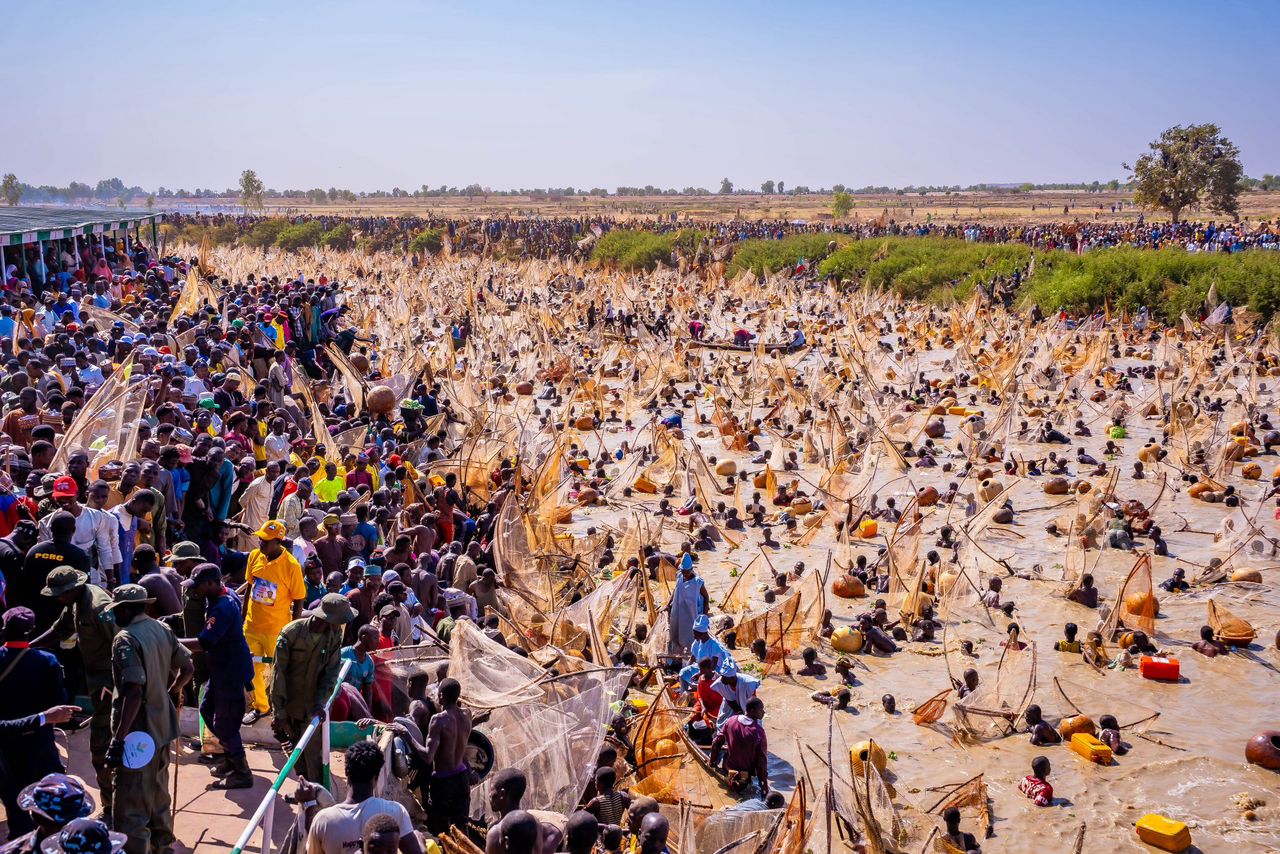
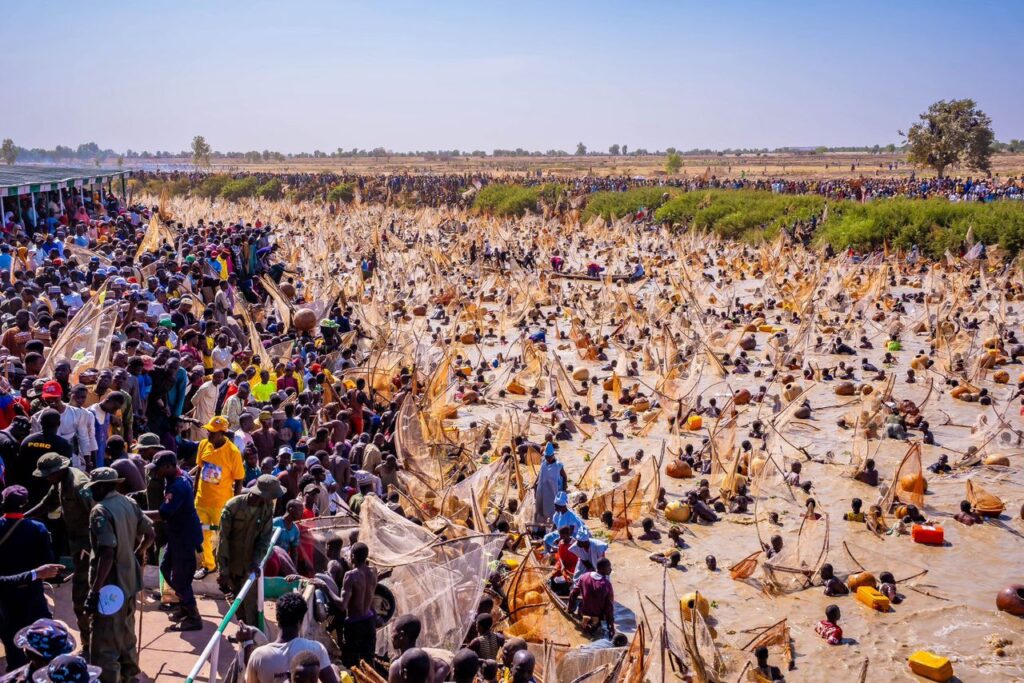
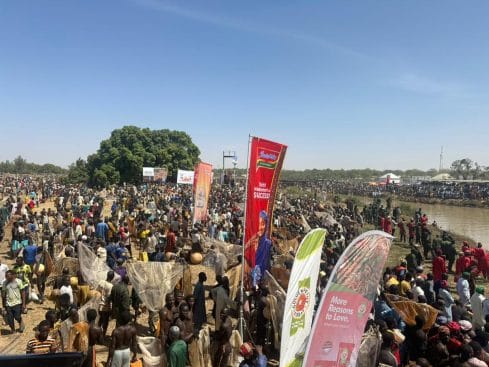
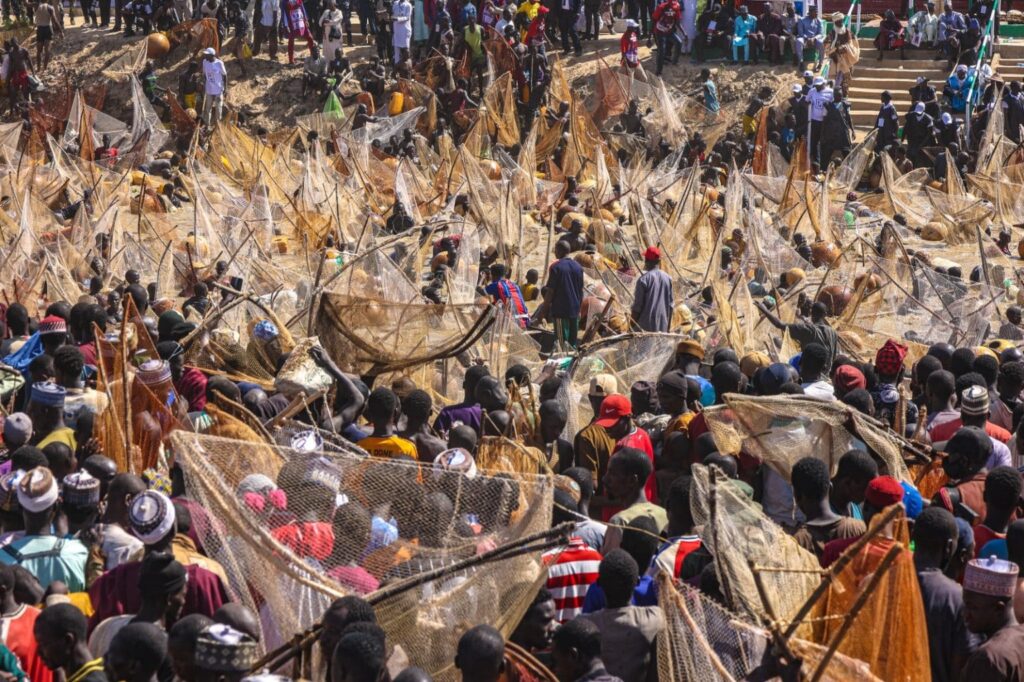
At its epicentre stands the fishing competition itself: tens of thousands of men, armed only with nets and calabash gourds, plunging into the Matan Fada River in pursuit of a single, monumental catch. The river is closed for the rest of the year, allowing fish stocks to replenish in anticipation of this cathartic release.
On the morning of the contest, drummers beat out the rhythms of the Kabawa people as the Sarkin Ruwan, the river’s spiritual custodian, performed the rites that sanctify the waters. From his canoe, he presided over a ceremony that felt at once primordial and urgently contemporary.
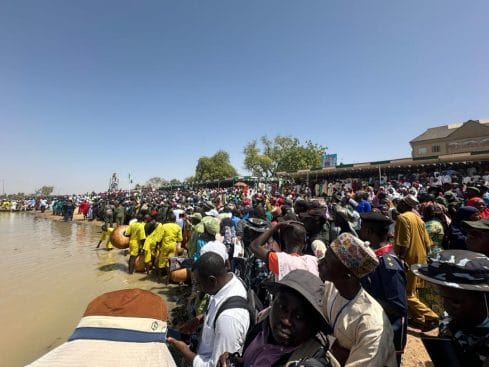
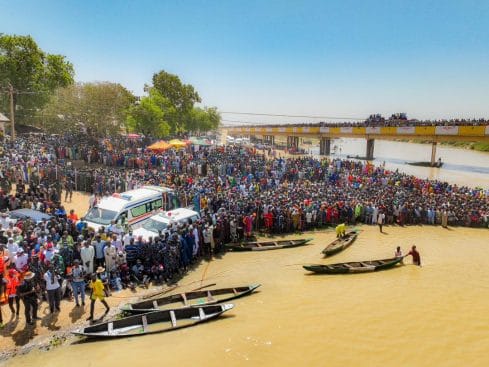
Then came the sprint. With nets flung over their shoulders and gourds clutched as buoyancy aids, more than 50,000 fishermen surged toward the riverbank. They plunged into waters that rose to their chins in places, dragging their nets along the silty floor, feeling; more than seeing, for movement. The gourds served as both flotation and floating larder, keeping prized catches above the current.
The spectacle is kinetic, almost operatic. Yet it is also intensely intimate: a man, a net, a river, and the silent negotiation between patience and force.
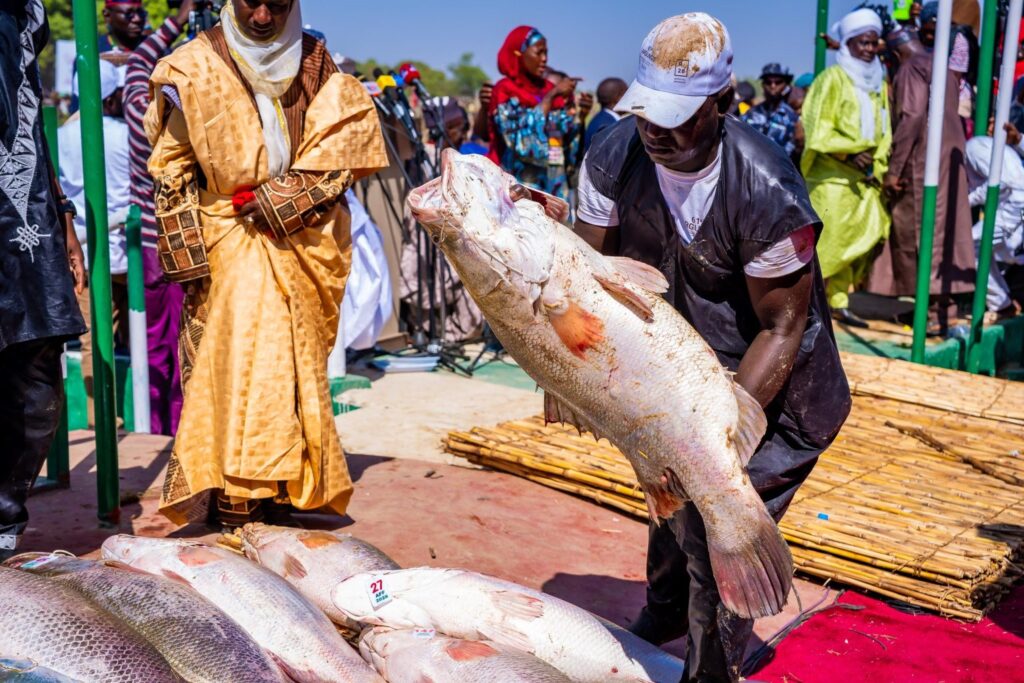
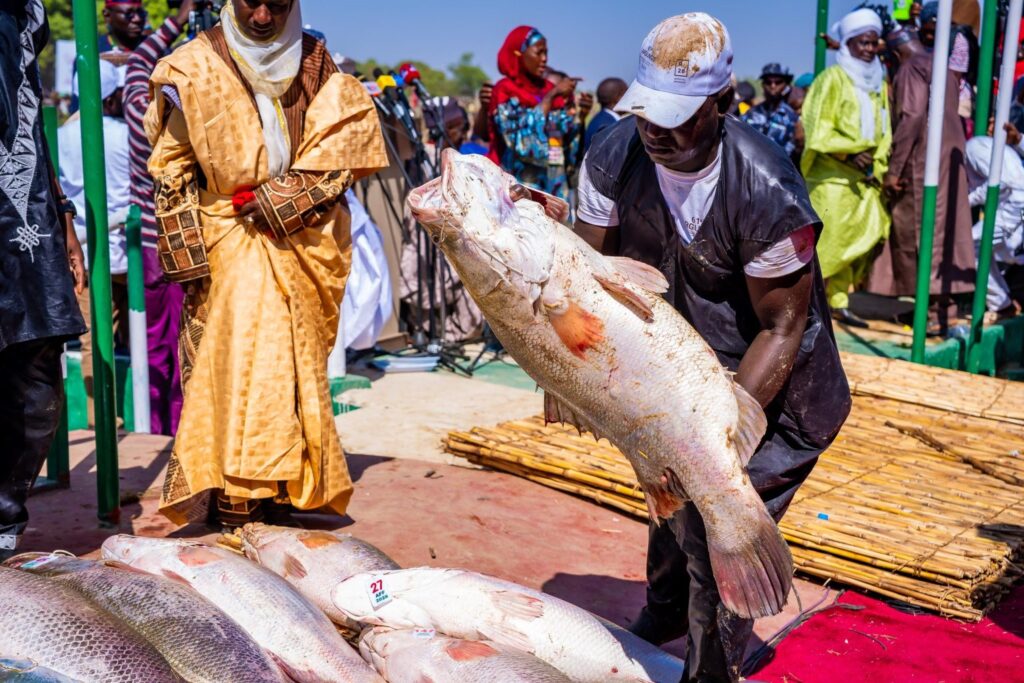
When the contest concluded, judges hauled immense fish onto waiting scales. This year’s victor, Abubakar Usman from Maiyama, emerged holding a Nile perch weighing 59 kilograms. His reward, two brand-new Toyota vehicles and one million naira, was life-altering. The largest fish in the festival’s recorded history remains the 75-kilogram behemoth landed in 2005, but Usman’s catch felt emblematic of something larger: abundance reclaimed.
The festival, however, is not merely aquatic theatre. Over four days, Argungu becomes a living museum of northern Nigerian culture. Archery contests unfurl beneath wide Sahelian skies. Traditional drumming and dance ripple through the fishing village. The ancient combat sport of dambe draws roaring crowds as fighters wrap rope around their dominant hands, “the spear”, and parry with the other, “the shield,” seeking a decisive knockdown. Elsewhere, competitors chase wild ducks across shallow waters, while children, including girls, try their hands at bare-fishing, embodying generational continuity.
“Argungu is a place where people can share their love and celebrate the culture of this part of Nigeria,” said Alhaji Hussaini Makwashe, the Sarkin Ruwan, in a sentiment that captures the festival’s emotional architecture.
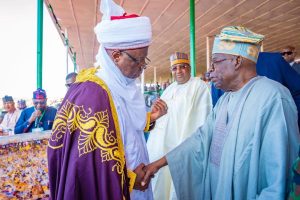
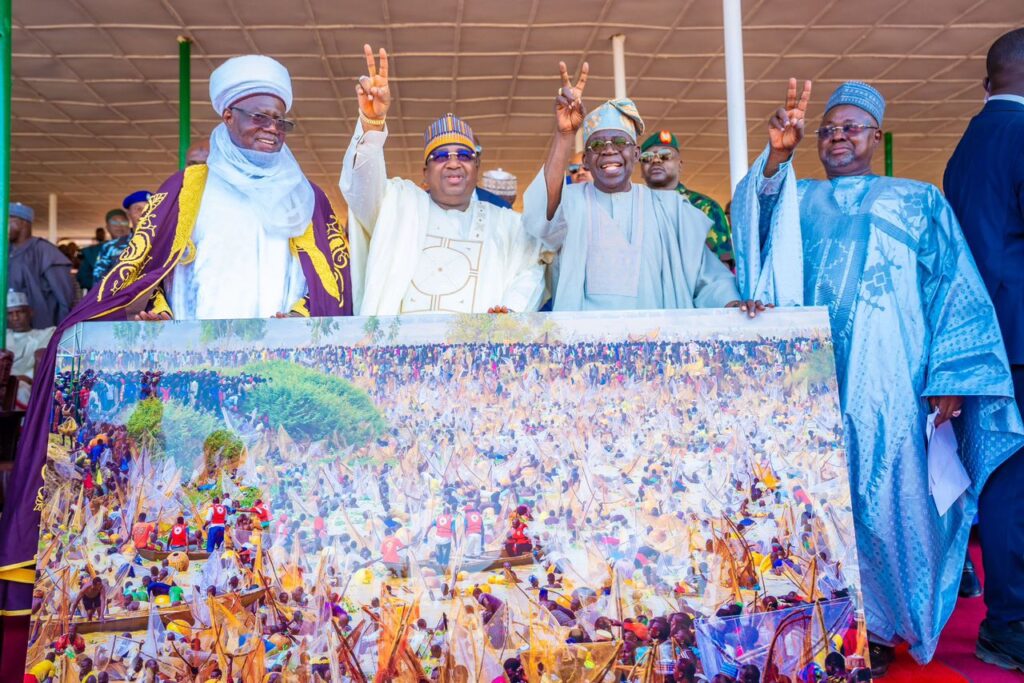
If tradition provides the soul of Argungu, politics and economics inevitably shape its future. The presence of President Bola Ahmed Tinubu at the 61st edition was more than ceremonial. It signalled federal endorsement of a heritage brand with continental resonance.
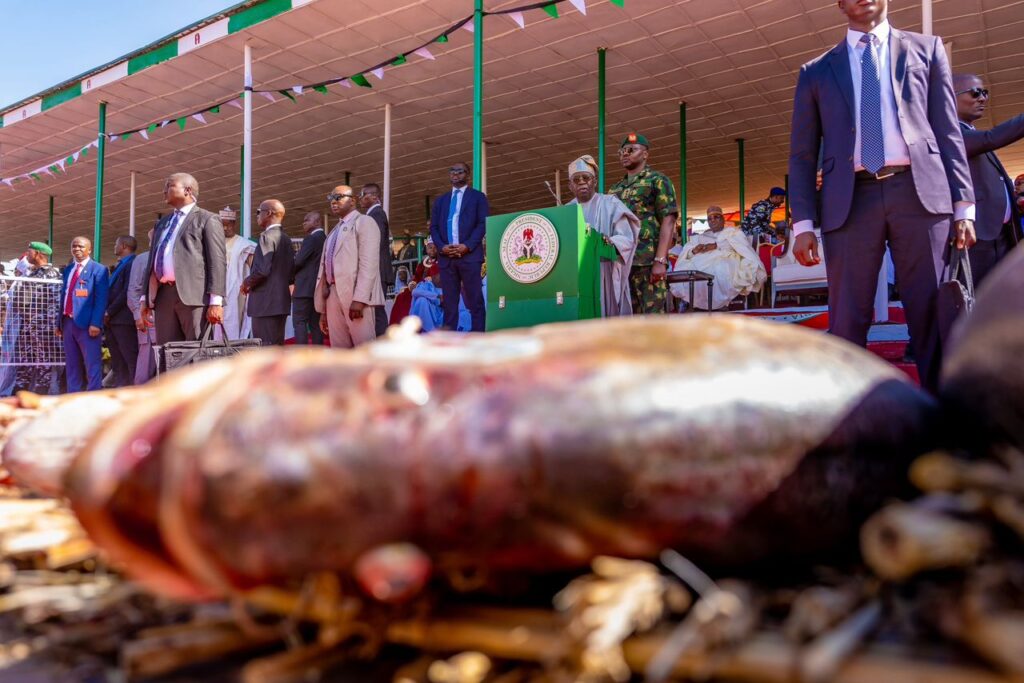
“This festival reflects the richness of our culture, the strength of our traditions and the opportunities that lie in increasing and harnessing our natural and human resources for national development,” President Tinubu declared before a mammoth crowd. “It promotes tourism, showcases our heritage and projects Nigeria in a positive light to the rest of the world.”
For a region that has grappled with insecurity, his remarks were pointed. “A socio-cultural event like this can only thrive and become a tourism attraction where the security atmosphere is conducive,” he observed, adding that “the relative peace we are witnessing today in this region is not accidental. It is the result of sustained investment in security, intelligence gathering and community engagement.”
Indeed, security concerns were central to the decade-long interruption that preceded 2020. The festival’s revival therefore reads as both cultural renaissance and geopolitical reassurance.
But Argungu’s renewed relevance extends beyond symbolism. In repositioning itself as a high-value International Heritage Brand, it now speaks to a sophisticated demographic: heritage travellers who seek authenticity, spend generously, and linger longer. UNESCO recognition has placed Argungu firmly on the global cultural map. Cancellation is no longer a local embarrassment; it risks tarnishing an international standing.
This awareness appears to have catalysed structural reforms. In preparation for the 2026 revival, the Argungu Fishing Village underwent significant renovation. Hotels were upgraded; pavilions refurbished. Local businesses reported their highest earnings in sixteen years. Restaurants brimmed; artisans sold out; transport operators thrived. Economic participation has seeded a grassroots insistence that the festival must never again falter.
The Kebbi State Investment Promotion Agency courted foreign investors from Europe and Asia, leveraging the festival as both cultural showcase and commercial platform. A consultative forum convened investors, indigenous entrepreneurs and government institutions, exploring partnerships in agriculture, solid minerals and hospitality. In parallel, new legislation authorised streamlined issuance of Certificates of Occupancy, signalling administrative seriousness.
For Governor Nasir Idris of Kebbi State, who spearheaded the revival, the festival is not nostalgia but strategy: cultural preservation fused with economic empowerment.
Yet for all the optimism, continuity cannot be assumed. The festival’s past interruptions reveal structural fragilities. Its fluctuating reliance on state budgets leaves it vulnerable to political cycles. Historically, its execution was often tethered to the enthusiasm, or indifference, of a sitting governor. Such politicisation imperils heritage.
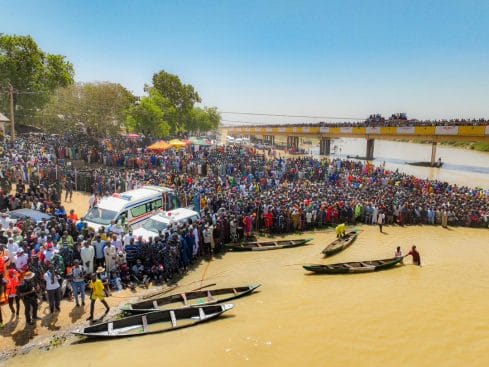
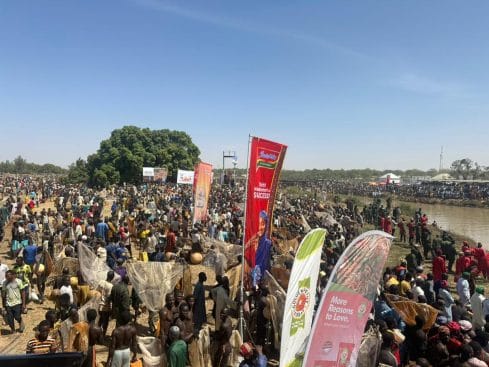
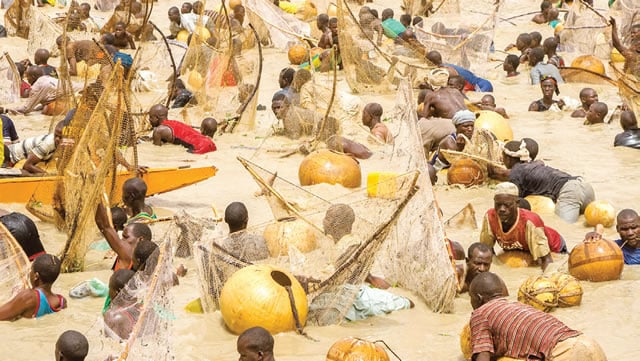
A sustainable future demands depoliticisation and financial innovation. One proposal gaining traction is to transform Argungu International Fishing and Cultural Festival into a robust Public-Private Partnership. Under such a model, the private sector would lead operational execution while government assumes regulatory oversight. Commercial partners, invested in brand equity and annual returns, would fight harder for continuity irrespective of electoral transitions.
Environmental stewardship is equally crucial. Without the Matan Fada River, maintained at sufficient depth and ecological health to sustain large fish, the festival’s core ritual cannot exist. Conservation, therefore, is not ornamental but existential.
There is, too, the matter of security architecture. Temporary arrangements cannot suffice. A permanent, intelligently designed template is essential to reassure international visitors whose presence now shapes the festival’s economic calculus.
And yet, to speak only of frameworks risks missing Argungu’s deeper resonance. At its heart, the festival remains what it was in 1934: a covenant of peace. The Emir of Argungu, Sama’ila Muhammad Mera, articulated this eloquently during the reopening. “For 61 editions this festival has endured not merely as a competition but as a testament to the capacity of our people to choose courage over conflict and friendship over feud.”
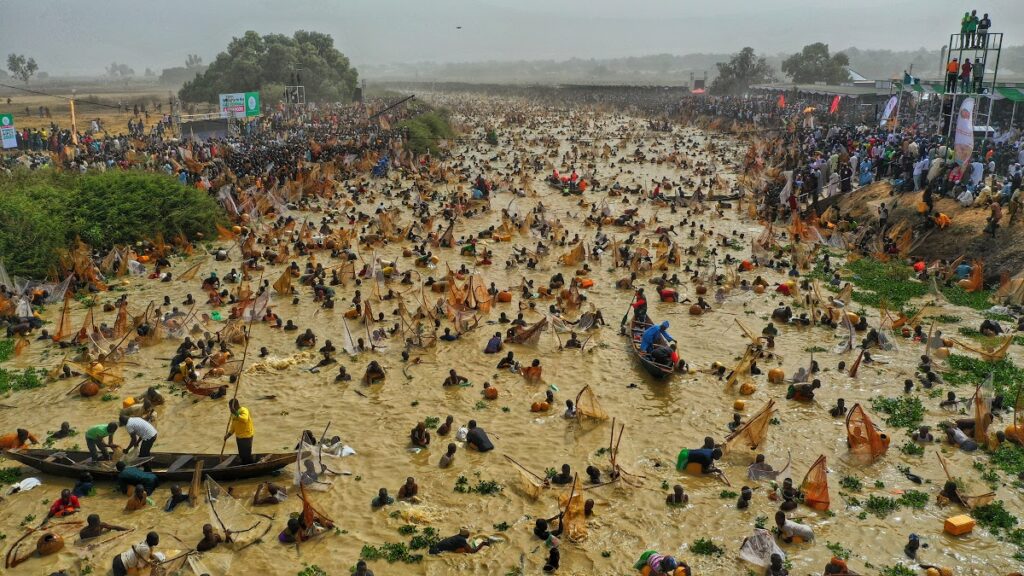
In a fractured world, such gatherings carry moral weight. They remind us that heritage is not static inheritance but active choice. Each year the river is reopened, each time the gunshot announces the contest’s start, the community affirms continuity over rupture.
For the discerning traveller, Argungu offers something increasingly rare: immersion in a living tradition that has neither been sanitised for consumption nor ossified into folklore. It is exuberant, imperfect, communal and unapologetically rooted. One does not attend as spectator alone; one becomes participant in a ritual drama older than modern Nigeria itself.
As dusk settles over the fishing village and the drums soften into twilight, the river resumes its quiet flow. The fish that escaped this year will fatten in darkness, awaiting another February. The young girls who tried bare-handed fishing will grow into custodians of memory. The investors who arrived curious may depart convinced. The villagers who profited will plan for the next influx.
Argungu’s return is therefore not simply a comeback. It is a recalibration—a recognition that culture, when properly stewarded, can anchor security, stimulate economies and restore dignity.
Tourism development, as the Nigerian experience shows, requires more than rhetoric. It demands vision, focus and organisation. Argungu’s latest chapter suggests that these ingredients are finally converging.
We welcome back the country’s most iconic fishing festival—not as an exotic curiosity, but as a sophisticated heritage enterprise worthy of global attention. Its waters have reopened. Its drums have resumed. Its covenant endures. In the end, Argungu teaches a simple, profound truth: when a community guards its river, it guards its soul.