

Here is How Njideka Akunyili Crosby Painted the Obamas into History in Chicago
By David Edremoda
When the doors of the Obama Presidential Center finally opened in Chicago in June, global attention naturally gravitated toward former United States President Barack Obama and former First Lady Michelle Obama. The expansive cultural institution had been years in the making, conceived not merely as an archive of a presidency but as a living civic space intended to preserve ideas, inspire future generations, and extend the enduring conversation around leadership, democracy and public service.
Yet amid the celebration, the symbolism and the inevitable political commentary surrounding the opening of such a landmark institution, another story quietly emerged and began attracting international attention. It belonged not to a political figure, a public intellectual or a cultural celebrity, but to a Nigerian artist whose work has, for years, occupied one of the most fascinating spaces in contemporary art.
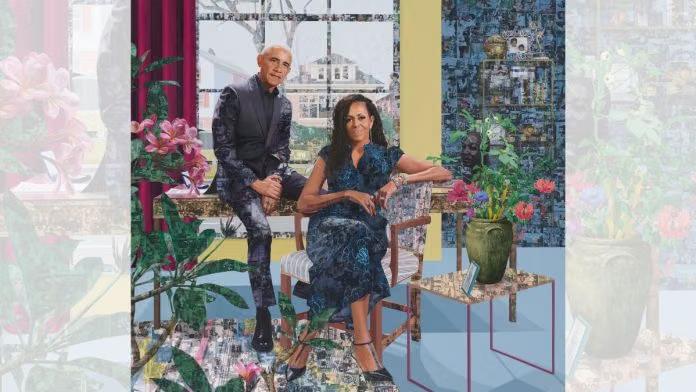
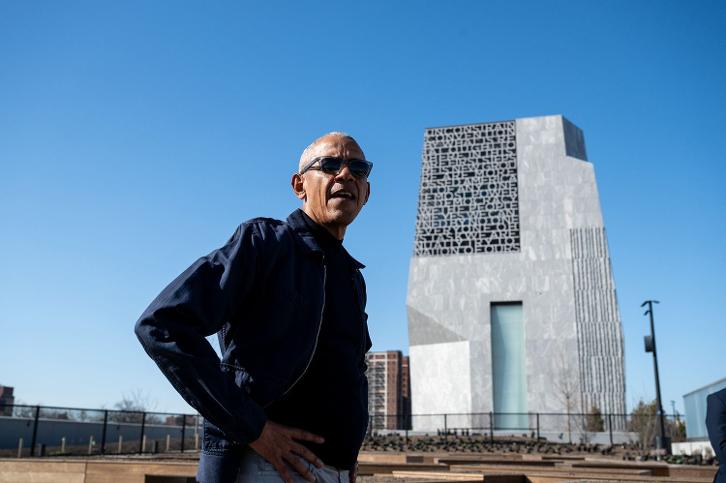
Forty-two-year-old Njideka Akunyili Crosby stood at the intersection of history and imagination, not through speech or public office, but through the language of paint, memory and visual storytelling. Her monumental work, The Obamas: Springing Forth, now occupies a commanding place in the lobby of the Obama Presidential Center. Measuring an imposing nine feet by ten feet, it carries an important distinction as the first official portrait to depict Barack and Michelle Obama together.
To call it merely a portrait, however, immediately feels insufficient.
Portraits traditionally preserve likeness. They document faces, capture appearances and freeze moments in time. Njideka Akunyili Crosby’s work accomplishes something altogether more ambitious. It does not simply present two recognizable public figures; it constructs a visual narrative of lives lived, journeys travelled, and identities continuously shaped by family, memory and history.
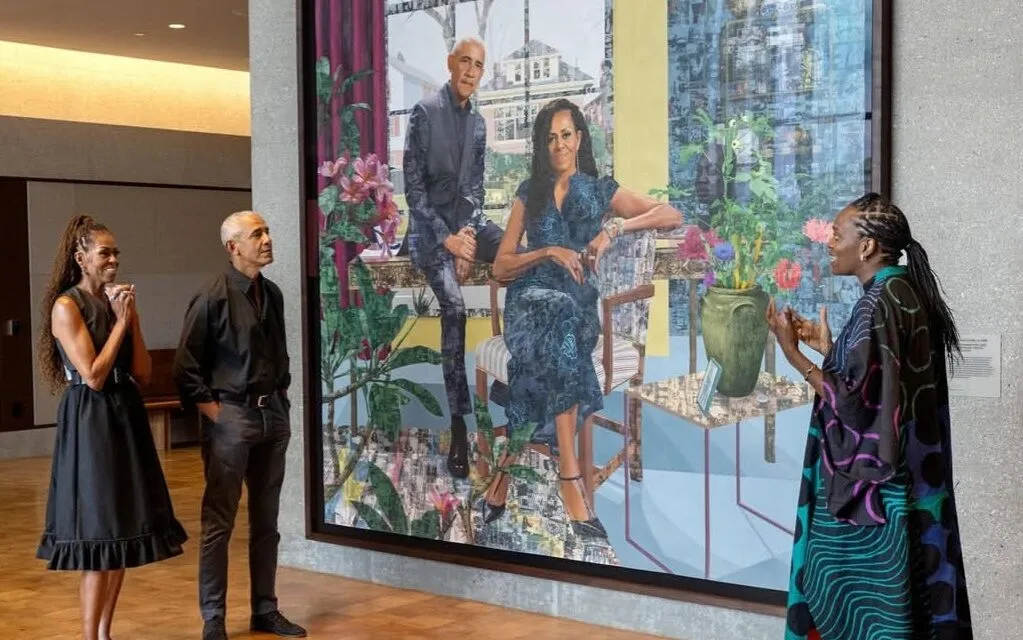


Her painting functions almost like biography translated into visual language.
The work bears the unmistakable characteristics that have made Akunyili Crosby one of the most celebrated artists of her generation. Embedded within the composition are carefully layered references to deeply personal elements of the Obamas’ lives: Michelle Obama’s childhood home, symbols reflecting their literary and cultural accomplishments, and intimate visual cues that quietly trace the paths that carried them from ordinary beginnings into extraordinary public life. The effect is remarkable.
One does not simply look at the painting; one gradually reads it. Its details unfold slowly, revealing themselves in stages rather than all at once. The viewer discovers meanings concealed within textures, relationships hidden within colour, and histories embedded within visual fragments. The painting invites patience. It rewards attention.
The result is less an official portrait than a visual memoir.
Rather than reducing Barack and Michelle Obama to political symbolism, Akunyili Crosby restores them to a more intimate humanity. The work presents not merely a former President and First Lady, but two individuals connected by shared experiences, private sacrifices and enduring partnership. Their humanity precedes their titles. Perhaps this is precisely why the painting feels so compelling.
Official presidential portraiture has often served the purpose of preserving authority. History is filled with kings seated upon thrones, presidents standing beside imposing desks and leaders framed by symbols of power and statehood. Such portraits frequently celebrate office before personality.
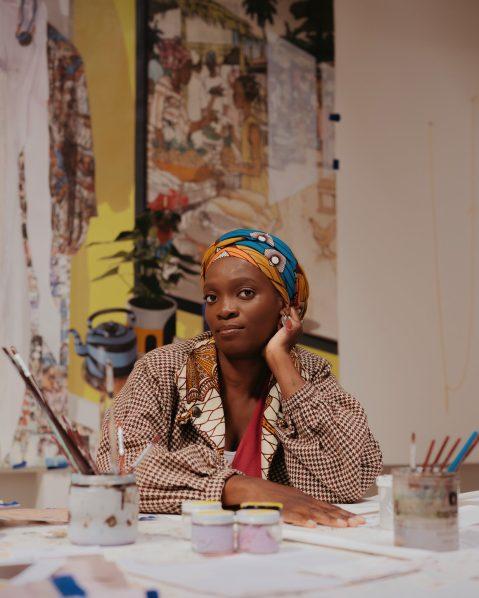
Akunyili Crosby departs from that tradition.
The Obamas do not appear distant or ceremonial. They seem emotionally present; not suspended in formality but emerging into life itself. The title, Springing Forth, captures that sense of movement and continuity. The painting refuses to present its subjects as completed historical figures preserved within the stillness of memory. Instead, it suggests lives that continue to evolve and inspire.
In many ways, the work reflects the larger themes that have long defined Akunyili Crosby’s artistic practice: identity, migration, memory, family and belonging.
Those themes are not abstract concepts for her. They are lived experiences.
Born in Enugu in 1983, Njideka Akunyili Crosby spent her early years in Nigeria before moving to Lagos and later relocating to the United States as a teenager. Like many immigrants, she came to understand that migration extends far beyond geography. Crossing borders often involves learning how to inhabit multiple worlds simultaneously.
One part of the self remains anchored in memory while another learns to adapt to unfamiliar realities. Many spend years navigating this tension. Njideka transformed it into art.
For Nigerians, Njideka’s international success carries significance beyond artistic achievement. Her surname immediately recalls one of the country’s most admired public servants.
Professor Dora Akunyili became a household name during her tenure as Director-General of the National Agency for Food and Drug Administration and Control (NAFDAC). She confronted counterfeit drug syndicates with uncommon courage, survived assassination attempts and restored public confidence in Nigeria’s pharmaceutical regulatory system.
To millions of Nigerians, Dora Akunyili embodied integrity. She demonstrated that public office could be a vehicle for service rather than personal enrichment. Growing up in such a household inevitably shaped Njideka, although she chose a different battlefield. Her mother fought counterfeit medicines. Her daughter confronts cultural invisibility. One defended lives through public policy; the other preserves identities through art. Different professions, yet the same commitment to truth.