

… A Remarkable Era When Literature Truly Belonged to the People
Widely regarded as the largest market in West Africa, Onitsha Market stands as one of the sub-region’s busiest and most vibrant commercial hubs. In those days, this special market was more than just a bustling centre of commerce, entrepreneurship and the resilience of the Nigerian trading spirit. It was a thriving hub of literary activities, creative expression and exchange of ideas.
By Sylvester Asoya
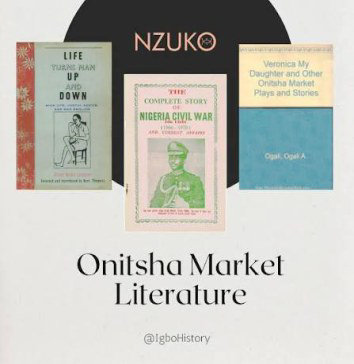
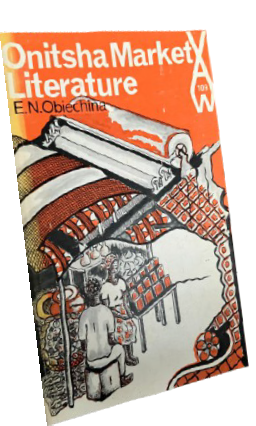
It was a golden age when books were not the exclusive preserve of scholars, teachers, researchers, the privileged or the elite. Literature, in all its richness and diversity, was, at the time, woven into the fabric of everyday life. This was the essence of Onitsha Market Literature, a period when books were written for ordinary people in ordinary ways. Simply put, Onitsha Market Literature captures an era from the 1940s through the 1970s, when a body of very popular pamphlets, booklets and novellas were produced and sold mainly in the energetic market of Onitsha, in today’s Anambra State.
Widely regarded as the largest market in West Africa, Onitsha Market stands as one of the sub-region’s busiest and most vibrant commercial hubs. In those days, this special market was more than just a bustling centre of commerce, entrepreneurship and the resilience of the Nigerian trading spirit. It was a thriving hub of literary activities, creative expression and exchange of ideas. So, amid the lively bargaining, movement of goods and the exciting daily rhythm of trade and investments, literature also flourished in a manner that was unprecedented alongside these heavy commercial activities.
This is where the story takes an ironic turn.
For many people, this brand of literature in those days, was believed to be the literature of the people, by the people and for the people because it captures the hopes, anxieties, aspirations and everyday experiences of ordinary Nigerians in a rapidly changing society. While nearly all the works entertained and informed readers, they also offered moral lessons and brought about practical guidance, both to the young, the old, including the traders themselves who were at the centre of that unique literary revolution. It is interesting to add that it was a period that did not only democratize literature, it also forever changed how people viewed and appreciated literary works.
But is it not ironic that Onitsha, a city renowned primarily for trade and commerce, became the birthplace of a literary movement that transformed Nigeria’s reading culture and publishing landscape? In a place where traders haggled over prices, goods changed hands by the minute, and where the pursuit of profit dominated daily life, a different kind of transaction was quietly taking place: the exchange of ideas, stories, knowledge and experiences. In truth, Onitsha Market literature did not emerge by accident. A combination of forces, including a unique convergence of historical, economic and cultural forces gave birth to it. In addition, the rapid growth of literacy, expansion of the printing industry, the entrepreneurial spirit of booksellers and traders, and a growing appetite for locally relevant stories were also contributory factors to the emergence of this remarkable literary movement that took the country by storm.
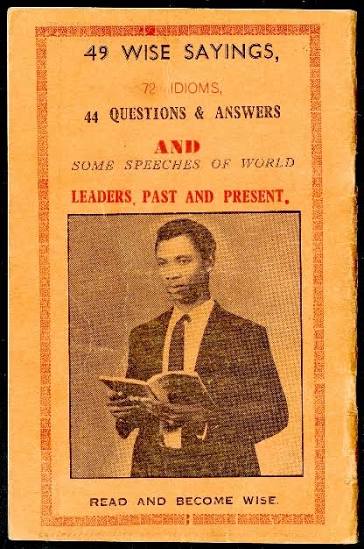
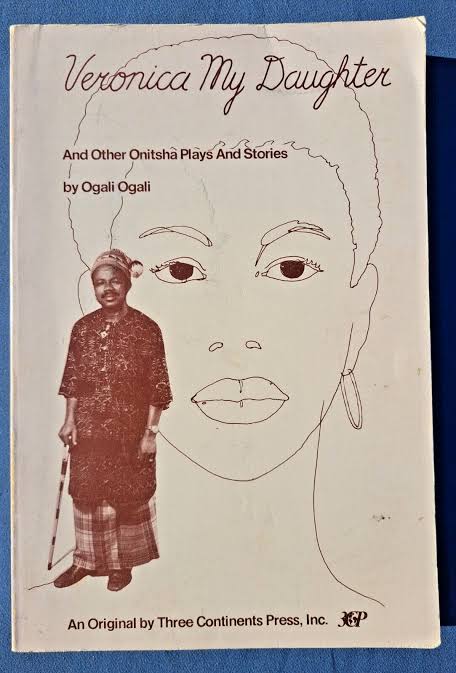

So, from the bustling markets of Onisha emerged a vibrant body of literature that spoke directly to ordinary people, their needs and expectations. These novellas, pamphlets and popular booklets did more than just entertain; they educated, inspired and reflected the aspirations and everyday experiences of many Nigerians. And in doing so, the books also democratised reading and made literature accessible to those who might otherwise would have remained outside the interesting and life-changing world of books. So, what began in the crowded stalls of a commercial city grew into a cultural phenomenon that changed lives and reshaped reading habits across the country. And, that proved that great literary movements do not always emerge from universities, literary societies, libraries, reading clubs or elite circles. Sometimes, they are born in the marketplace, among the people whose stories they tell in a remarkable way.
Chukwuma Chiazor is a medical doctor. As the son of a father who served as the principal of a secondary school in the then Bendel State, with a duty post bordering Onitsha in Anambra State, Chiazor recalls how Onitsha Market Literature profoundly shaped his love for books and reading. The close proximity of his father’s workstation to Onitsha, the vibrant commercial city that became the cradle of this unique literary movement, gave him easy access to the inexpensive yet intellectually stimulating publications that flooded the markets at the time.
According to him, those literary works were not only readily available but also remarkably engaging and accessible. Written in clear, simple language that addresses everyday experiences, the books activated young readers and nurtured a lasting appreciation for literature. Their affordability and widespread circulation ensured that they found their ways into the hands of countless schoolchildren, including Chiazor. “As schoolchildren, we were drawn not only to the captivating writing style but also to the simplicity and accessibility of those books. As a matter of fact, they made reading a delight rather than a difficult experience, and that body of literature awakened in many of us a lifelong passion for works of fiction. For me, that was truly a golden era of literary culture during our formative years. And I remain deeply grateful for that unforgettable experience, which left an enduring imprint on my mind. It also played a significant role in shaping my literary outlook.”
Festus Gabriel Diugwu, a radio producer and photographer, is another passionate enthusiast of Onitsha Market Literature. Like many lovers of that brand of literature, he believes that it was a literary tradition that captivated a generation of readers including him, with its compelling storytelling, availability and simplicity.
But unlike Dr. Chiazor, Diugwu’s experience with literature during his formative years was shaped by a different set of circumstances. While his father’s profession required the family to move frequently across different parts of Nigeria at very short notice, Diugwu never lost touch with his love for Onitsha Market Literature. Beyond the prescribed and compulsory texts recommended by his primary and secondary school literature teachers, he made a conscious effort to broaden his reading with different materials, including those that came directly from Onitsha Market. So, whenever the opportunity arose, he eagerly obtained copies of the popular Onitsha Market publications, many of which were brought to him by his uncles and aunts from Nigeria’s South-East. In no time, these inexpensive, widely circulated booklets became a treasured part of his personal library. However, the clincher was that the books exposed him, even as a boy, to captivating stories, practical wisdom, moral lessons and the vibrant writing style that made Onitsha Market Literature a cultural phenomenon. Together with his school texts, they nurtured his imagination, deepened his appreciation of literature and helped lay the foundation for his enduring passion for reading and writing.
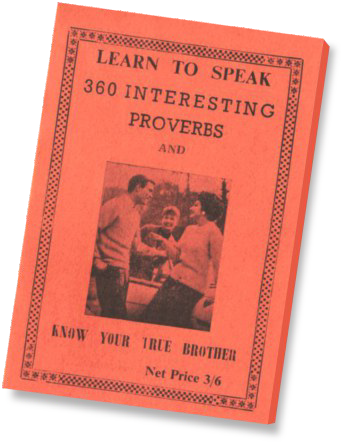
As previously stated, these works, written in plain English and Nigerian Pidgin, they are inexpensive publications that speak directly to everyday concerns of ordinary Nigerians. They explore themes such as love, marriage, morality, success, disappointment, politics, religion and social behaviour. Some of the most enduring and popular titles of Onitsha Market Literature include the following: How to Get Rich; Rosemary and the Taxi Driver; Drunkards Believe Bar as Heaven; Money Hard to Get but Easy to Spend; Beware of Harlots; Why Harlots Hate Married Men; No Condition is Permanent; Too Much Money Makes Man Mad; Love in the Taxi Park; The Lady with the Million-Dollar Legs and Veronica My Daughter. No doubt, these titles are often provocative, catchy, unrestrained and deliberately designed to attract buyers, not just in the bustling Onitsha Market but everywhere.
Therefore, it would be unfair not to acknowledge the significance of Onitsha Market Literature. Indeed, it was one of the earliest forms of popular literature in Nigeria that offered valuable insights into urban life, popular culture and the profound social changes that came with colonialism and the post-independence era. More important, it played a major role in fostering a reading culture among ordinary Nigerians. Today, it remains a significant chapter in the evolution of modern Nigerian literature and a lasting testament to the power of literature in shaping society.