
How Things Fall Apart, born in Ogidi, reshaped literature, identity, and the moral imagination of the modern world
By Sylvester Asoya
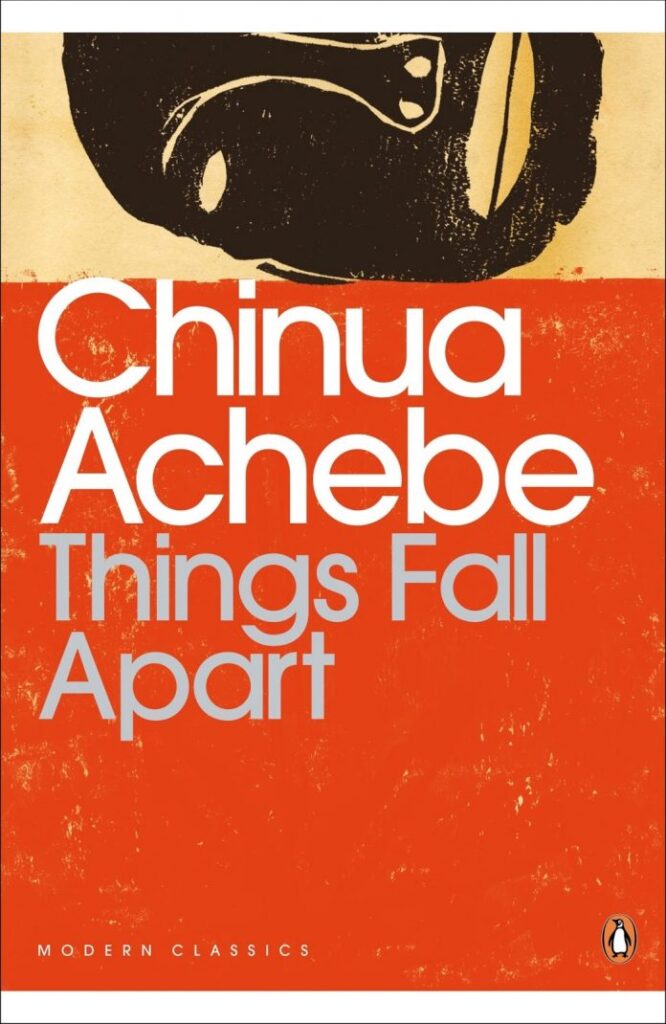
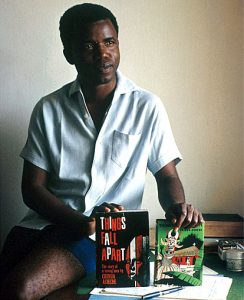
Few novels have altered the course of world literature with the quiet authority of Chinua Achebe’s Things Fall Apart. First published in 1958, the book emerged from a small Igbo town in southeastern Nigeria and went on to transform how Africa would be written, read, and understood across continents. Set in Ogidi, Anambra State, reimagined in fiction as Umuofia, the novel transcends its historical moment, continuing to shape literature, politics, culture, identity, and the interior lives of its readers more than six decades after its appearance.
Achebe himself once unsettled admirers when he remarked that, of all his novels, he would most likely be found rereading Arrow of God. He considered it his most mature work, psychologically layered and intellectually demanding, particularly in its exploration of power, authority, pride, religion, and the collision between tradition and colonial governance. The comment, offered many years ago, revealed an artist deeply attentive to craft rather than applause.
Yet history has spoken with remarkable clarity. Across the globe, Things Fall Apart has come to be regarded as Achebe’s greatest literary achievement. This judgment is not merely sentimental; it is rooted in the novel’s singular accomplishment. Written in prose that is both spare and resonant, the book renders with astonishing precision a traditional society at the edge of irreversible transformation. It neither romanticizes the past nor condemns it. Instead, it reveals a living world; coherent, ordered, flawed, before tracing how that world fractures under the pressures of conquest and cultural displacement.
The novel’s enduring power lies in its balance. Achebe resists caricature at every turn. Precolonial life is neither idyllic nor barbaric; it is human. Colonialism, when it arrives, does not encounter a vacuum but collides with an already complex moral and social system. That collision, rendered without hysteria, nostalgia, or polemic, marks Things Fall Apart as one of the most disciplined and morally serious novels of the twentieth century.
Why, then, would Achebe himself privilege Arrow of God over a book that achieved such sweeping acclaim? The answer lies partly in the distinction between an artist’s private reckoning and history’s public verdict. Achebe remained the most authoritative voice on his own artistic journey, yet Things Fall Apart belongs not only to its author but to the generations who encountered it, argued with it, and found in it a mirror of human fragility and resilience.
At the heart of the novel stands Umuofia, Achebe’s fictional Igbo community. So vividly drawn is this setting that it feels less invented than remembered. Every detail, its rhythms, disputes, rituals, and silences, suggests an intimate knowledge of place. And indeed, Umuofia is not a purely imagined space. It is Ogidi, Achebe’s hometown, translated into fiction through memory, insight, and disciplined imagination.
In truth, Things Fall Apart cannot be separated from Ogidi. The novel draws deeply from Achebe’s lived experience of the town; its customs, cosmology, social structures, and moral universe. The resemblance between Umuofia and Ogidi is neither accidental nor superficial. It is structural. Everything, one might say, both began and ended in Ogidi.
Ogidi, a prominent town in Idemili North Local Government Area of Anambra State, consists, like Umuofia, of nine villages. Its cultural practices form the bedrock of Achebe’s narrative world. Market days, agricultural cycles, festivals, wrestling contests, masquerades, communal labor, rites of marriage and mourning, codes of masculinity and bravery, taboos, leisure, creativity, and shared responsibility are all rendered with fidelity and respect. These are not anthropological ornaments; they are the living grammar of a people.
Equally vital is the novel’s spiritual dimension. The shrines, gods, ancestral forces, and sacred groves that shape Umuofia’s metaphysical life are integral to Ogidi’s own cultural reality. Religion in Achebe’s world is not abstraction but structure; organizing justice, morality, and communal cohesion. Achebe’s refusal to exoticize this system remains one of his most radical achievements.
Local memory further dissolves the boundary between fiction and place. In Ogidi, it is widely believed that the location where Ikemefuna was killed by Okonkwo corresponds to the site of present-day Ogidi Girls’ Secondary School. Older indigenes recall that, in earlier decades, when the school grounds fell unusually quiet, students would whisper that Ikemefuna’s restless spirit, unappeased and lingering, hovered nearby. Whether fact or folklore, such stories testify to how deeply the novel has fused with communal imagination.
For Chikezie Sunny Udemezue, actor and scriptwriter from Ogidi, this fusion is beyond dispute. His portrayals of Umuofia reinforce the belief that Achebe’s fictional community is, in essence, Ogidi rendered through art. “Everything in Things Fall Apart reflects the people of Ogidi: their culture, values, ways of life, and moral codes,” he says. “Achebe was both a grassroots man and a thoroughbred intellectual. He was not only a brilliant writer; he was a custodian of culture.”
Udemezue emphasizes that Achebe’s genius lay in synthesis. He was intimate with tradition yet capable of critical distance. He understood culture not as relic but as living system. This, Udemezue notes, explains why Achebe is celebrated across all nine villages of Ogidi, not simply as a famous son, but as a faithful interpreter of collective memory.
Anthony Okoye, another son of Ogidi and a businessman with a deep love for literature, offers a complementary insight. For him, Things Fall Apart endures because Achebe listened, closely and patiently, to elders who carried history in their voices. “Listening,” Okoye observes, “is how history survives.” Achebe, still a young man when he wrote the novel, understood that storytelling was an act of preservation as much as creation.
Achebe’s upbringing uniquely prepared him for this role. Born Albert Chinualumogu Achebe on November 16, 1930, he grew up at the intersection of worlds. His father, Isaiah Okafor Achebe, was a teacher with the Church Missionary Society who engaged deeply with missionary culture. His mother, Janet Anaenechi Iloegbunam, was a gifted storyteller steeped in Igbo oral tradition. Between Christian instruction and indigenous folklore, Achebe absorbed a dual inheritance that shaped his narrative sensibility.
Educated at St. Philip’s Central School in Ogidi, Government College Umuahia, and University College Ibadan (now the University of Ibadan), Achebe developed an intellectual discipline that matched his moral seriousness. He later worked at the Nigerian Broadcasting Corporation, taught at universities, and emerged as a formidable critic of Western representations of Africa. Through essays and lectures, he challenged depictions that reduced the continent to stereotype, insisting instead on complexity, dignity, and self-definition.
Although Achebe never publicly ranked Things Fall Apart above his other works, the novel’s afterlife speaks with unmistakable force. Translated into more than fifty languages and read by millions across the world, it remains one of the most widely read African novels in history. Its influence extends far beyond literature into politics, postcolonial thought, cultural identity, and global education. In the end, Things Fall Apart is more than a novel. It is a moment of historical correction; a work that restored agency to African storytelling and altered the global canon. Rooted in Ogidi yet universal in consequence, it stands as enduring proof that when a writer listens deeply, writes honestly, and trusts the intelligence of readers, literature can outlive empire and speak across time.