

… Memory, Justice, and the New Diplomacy of Reparations
Across continents and centuries, the call for reparations gathers force, as history, memory, and moral urgency converge in a renewed global reckoning with slavery’s enduring legacy.
By David Edramoda

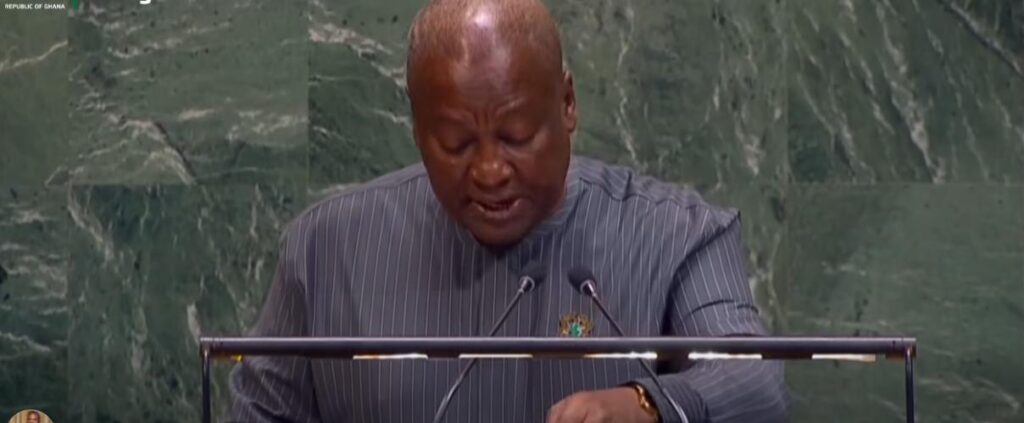
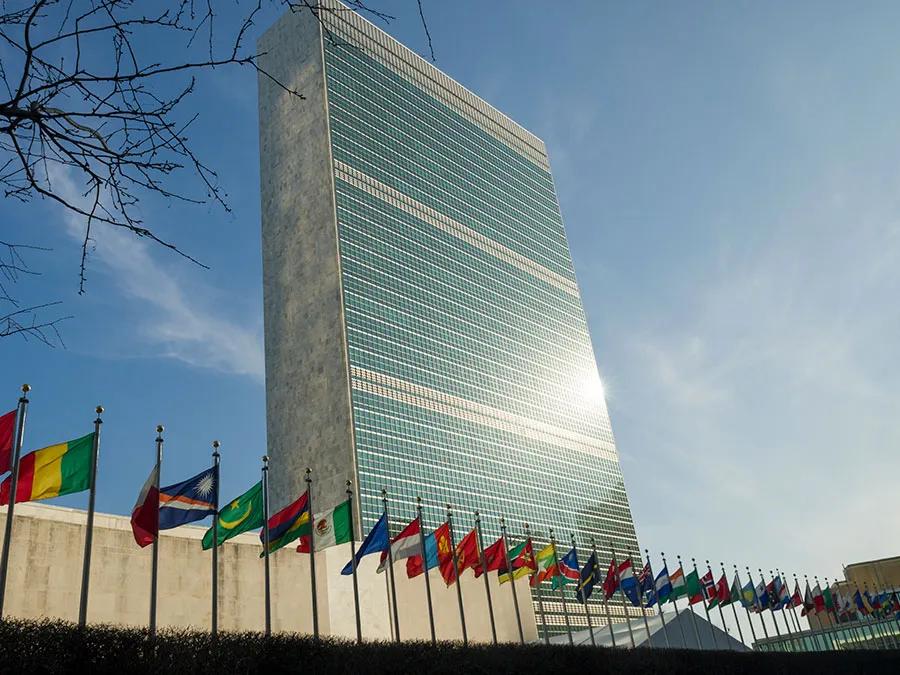
He stood with the stillness of a man who understood the weight of history pressing against the present. At the lectern of the United Nations General Assembly, John Dramani Mahama, the President of the Republic of Ghana, did not merely speak; he summoned centuries. His voice carried the cadence of conviction, sharpened by moral clarity and burnished by the long memory of a continent that has endured, resisted, and remembered. In that moment, the chamber was no longer just a forum of nations; it became a theatre of reckoning.
Mahama’s appeal was neither rhetorical flourish nor diplomatic ritual. It was an insistence that the world confront one of its most enduring silences. Reparations for the transatlantic slave trade, he argued, are not a matter of charity or political convenience. They are a moral imperative, deferred for far too long. His words drew from the moral vocabulary of history, invoking the refusal of neutrality in the face of injustice and the enduring belief that justice, though slow, is inexorable. Yet beneath the eloquence lay something more urgent: a demand that the past be acknowledged not as a distant tragedy, but as a living inheritance shaping the inequalities of the present.
The setting of his address was steeped in symbolism. March 25, commemorated globally as the International Day of Remembrance of the Victims of Slavery and the Transatlantic Slave Trade, is not merely a date on the calendar. It is an annual summons to memory. On that day in 2026, the symbolism deepened as Ghana, supported by the African Union and Caribbean states, advanced a resolution that would declare the transatlantic slave trade among the gravest crimes against humanity and call for reparatory justice.
What unfolded was more than a diplomatic exercise. It was an intervention into the architecture of global memory. For centuries, the story of slavery has been told in fragments; acknowledged in principle, yet rarely confronted in its full moral and material implications. Mahama’s intervention sought to close that gap, to insist that remembrance without redress is an incomplete form of justice.
This was not the first time Africa had raised its voice in this register. Decades earlier, Moshood Kashimawo Olawale (M.K.O) Abiola had articulated a similar demand, arguing that the economic underdevelopment of Africa could not be disentangled from centuries of extraction and exploitation. He spoke of wealth built on unpaid labour, of global systems that had been shaped by the commodification of African bodies. Though his advocacy did not immediately alter global policy, it seeded an intellectual and political lineage; one that Mahama’s initiative now extends with renewed urgency.
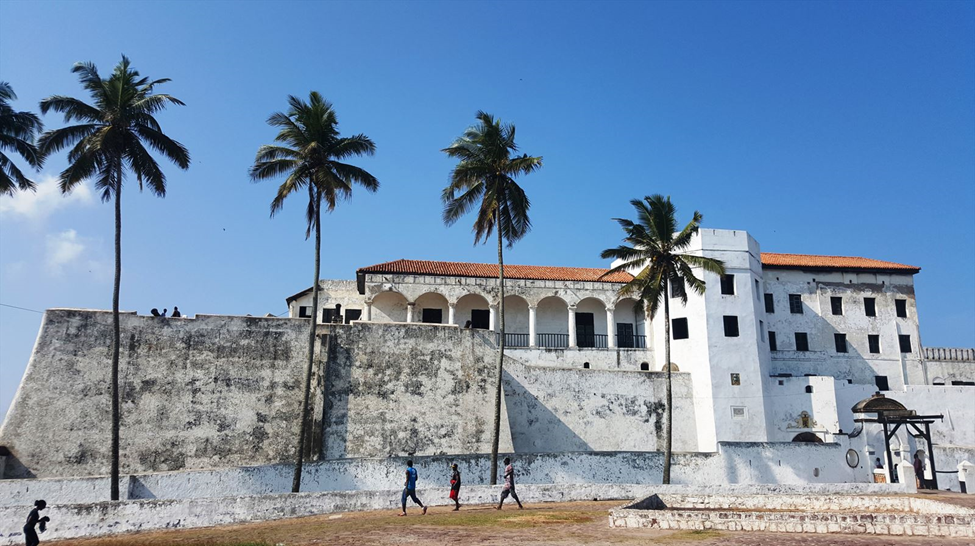
To understand why Ghana has assumed a leading role in this contemporary movement, one must look beyond the abstractions of policy and into the geography of memory. Along Ghana’s coastline stand the remnants of a world that once turned human lives into cargo. Elmina Castle, rising starkly against the Atlantic, is not merely an architectural relic; it is a testament carved in stone. Within its walls, the past is palpable. The dungeons, suffocating and lightless, bear silent witness to the suffering of those who were held there, awaiting a journey from which there would be no return.
Visitors who walk through its corridors often emerge altered. For members of the African diaspora, particularly those whose ancestors were taken across the ocean, the experience can be overwhelming. The “Door of No Return” is not just a historical marker; it is a threshold between identity and erasure, between belonging and dispossession. It is here, perhaps more than anywhere else, that the abstraction of history collapses into human reality.
Ghana’s leadership in the reparations discourse is thus rooted in more than political positioning. It emerges from a convergence of history, geography, and a deliberate effort to reconnect with the diaspora. Initiatives such as the “Year of Return” have transformed the country into a symbolic bridge, inviting descendants of the enslaved to reclaim a connection severed centuries ago. In doing so, Ghana has cultivated a global constituency for whom the question of reparations is not theoretical but deeply personal.
The vote at the United Nations revealed, with striking clarity, the enduring fault lines of global politics. While a significant majority of countries supported the resolution, the absence of unanimity was telling. The pattern followed a familiar geography: nations of the Global South: Africa, the Caribbean, much of Latin America and Asia, voted overwhelmingly in favour, while several Western powers hesitated, abstained, or opposed.
This divergence speaks to more than differing policy perspectives. It reflects the complex interplay of history, responsibility, and contemporary geopolitics. For many nations that benefited directly or indirectly from the slave trade, the question of reparations raises uncomfortable implications; legal, economic, and moral. Acknowledgment, in this context, is not merely symbolic; it carries the potential to reshape narratives of national identity and global hierarchy.
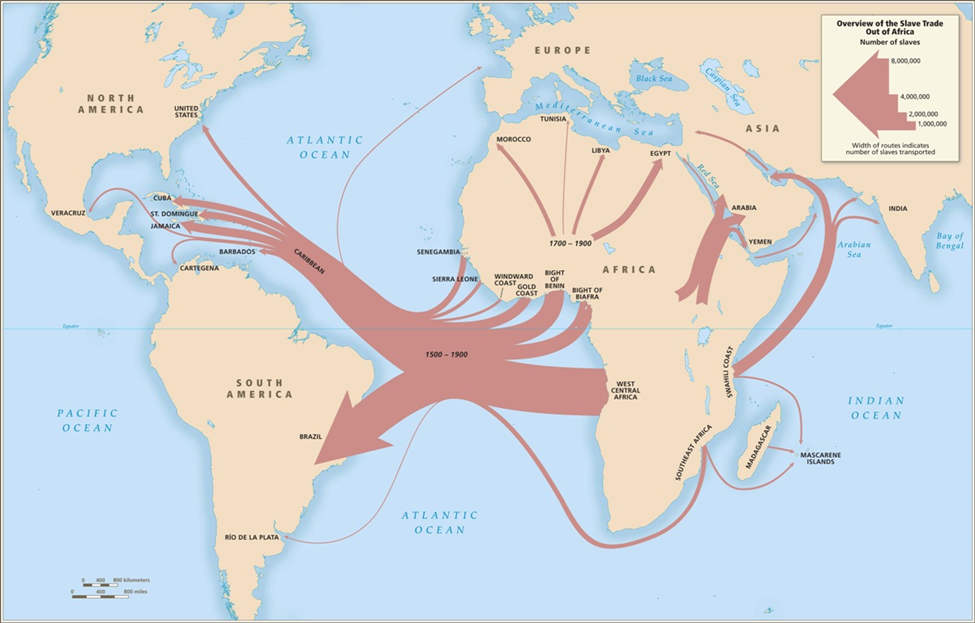
Yet the historical record is unambiguous in its scale and brutality. Between the fifteenth and nineteenth centuries, millions of Africans were forcibly transported across the Atlantic in a system that reduced human beings to units of trade. The so-called triangular trade linked continents in a cycle of exploitation: manufactured goods from Europe exchanged for captives in Africa, enslaved Africans transported to the Americas, and raw materials returned to Europe. At its core was a machinery of dehumanization, sustained by violence and justified by ideology.
The Middle Passage remains one of the most harrowing chapters of this history. Within the holds of slave ships, men, women, and children were packed into spaces so confined that movement was nearly impossible. The air was fetid, the heat oppressive, the suffering relentless. Disease spread rapidly; death was a constant presence. For some, the ocean became a final refuge, a desperate escape from a fate deemed worse than death.
Those who survived the journey entered a world where their humanity was systematically denied. On arrival in the Americas, they were inspected, auctioned, and dispersed. Families were torn apart with a finality that defies comprehension. On plantations, their lives were defined by unremitting labour, enforced through violence. The commodities they produced: sugar, cotton, tobacco, became the foundation of immense wealth, fuelling the rise of global capitalism.
It is impossible to disentangle the prosperity of certain nations from this history. Ports flourished, industries expanded, financial institutions grew; all within an economy underwritten by enslaved labour. Slavery was not an incidental feature of early modern economies; it was central to their development. Its legacies persist, not only in economic disparities but in the enduring structures of inequality that shape the modern world.
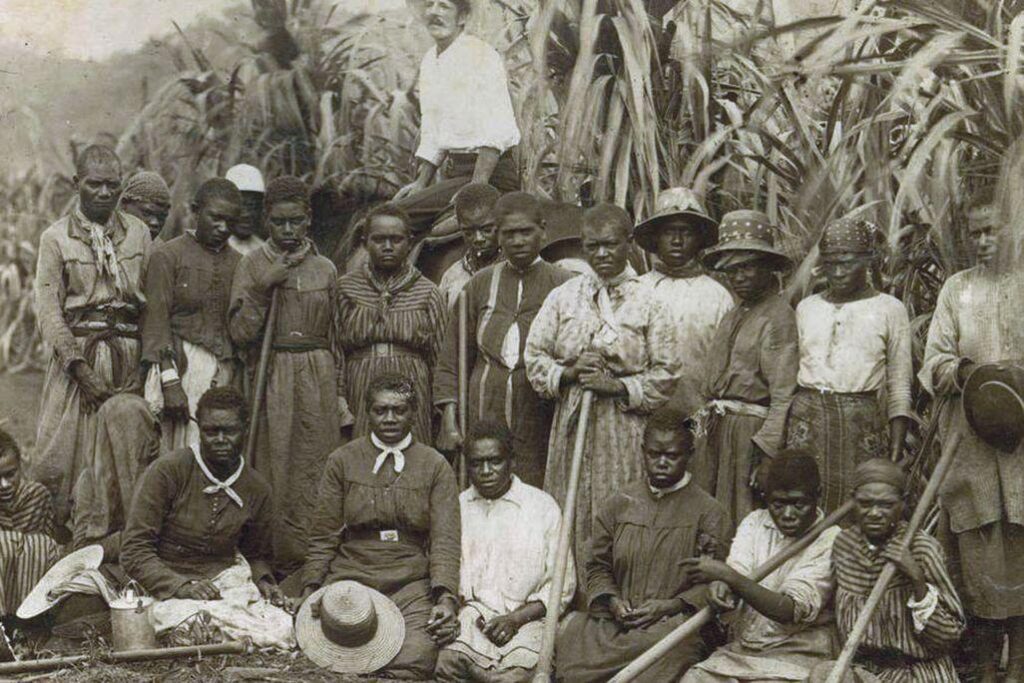
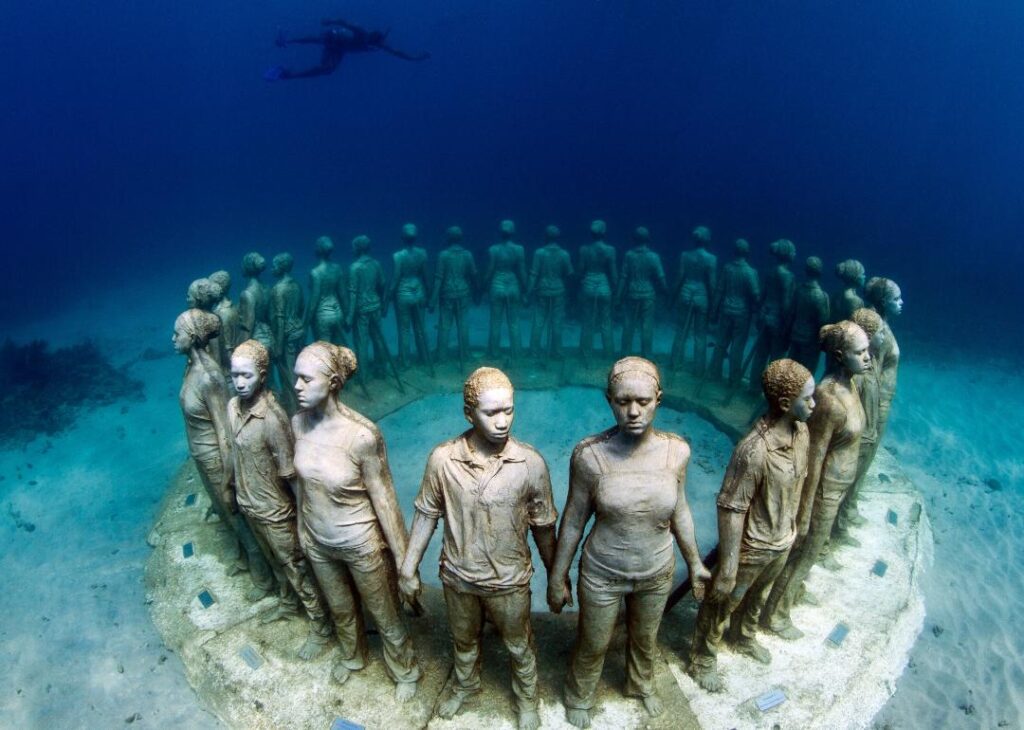
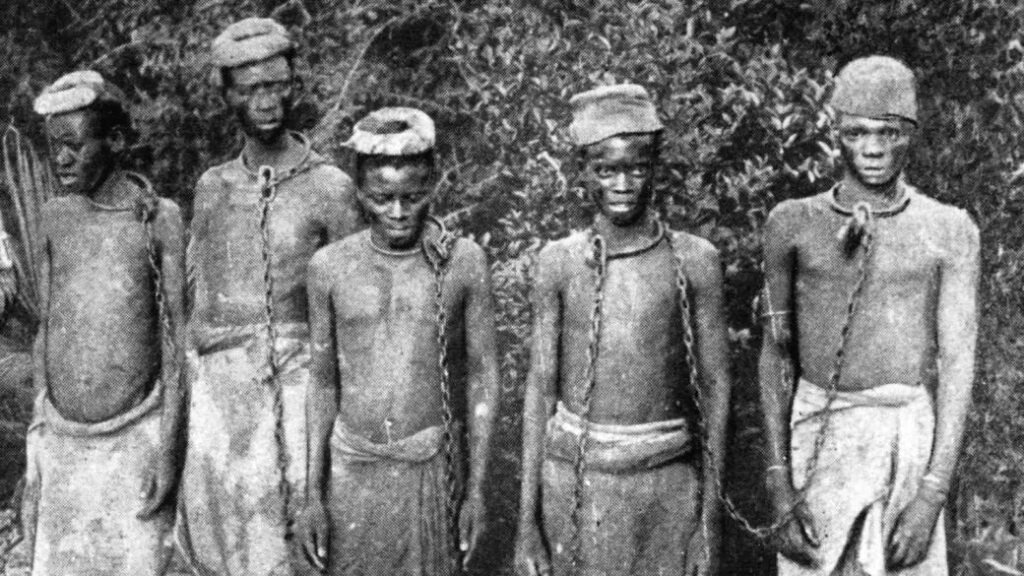
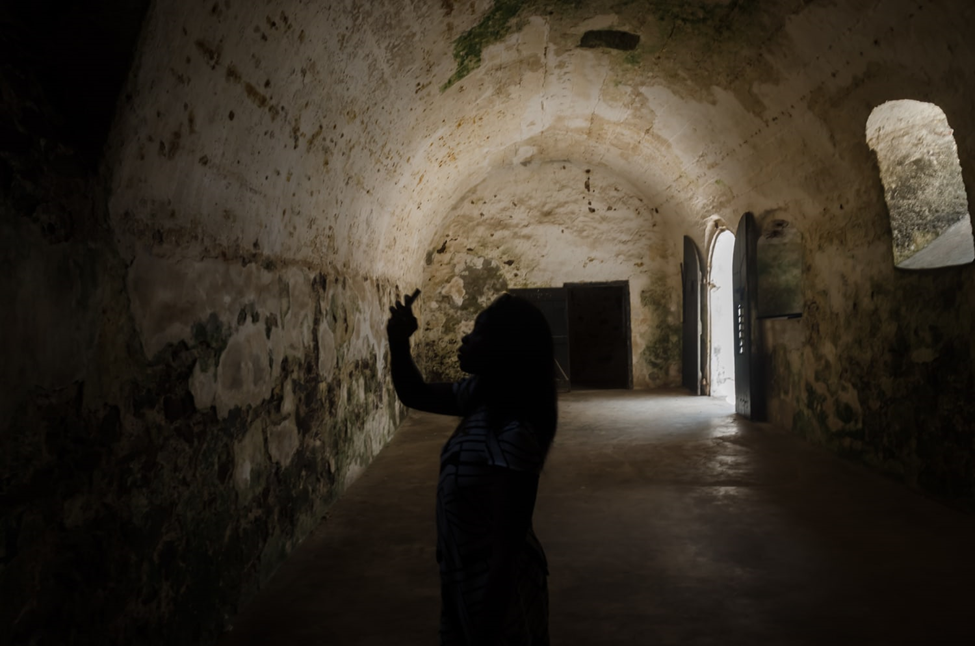
The lived experience of the enslaved defies easy narration. It began with capture; often through raids or conflicts exacerbated by the demand for human cargo. It continued through forced marches to the coast, where captives were confined in conditions designed to maximize control rather than preserve life. In the dungeons of coastal forts, disease and despair took their toll even before the journey began.
Women faced particular vulnerabilities, subjected to exploitation that compounded their suffering. Children, too, were drawn into the system, their futures predetermined by the circumstances of their birth. The brutality was not episodic; it was systemic, embedded in every stage of the process.
Abolition, when it came, did not resolve these injustices. While the transatlantic slave trade was formally ended in the nineteenth century, and slavery itself eventually abolished in various empires and nations, the transition was marked by profound inequities. In many cases, compensation was extended to slave owners for the loss of “property,” while the formerly enslaved received nothing; no restitution for generations of unpaid labour, no structural support to navigate a world that had been built on their subjugation.
This asymmetry lies at the heart of contemporary calls for reparations. The argument is not simply about financial compensation; it is about recognition, accountability, and the restructuring of relationships shaped by historical injustice. It is about acknowledging that the past is not inert; that its consequences continue to reverberate across time.
Mahama’s intervention at the United Nations represents a significant moment in this ongoing conversation. It signals a shift from fragmented advocacy to coordinated global engagement. It reframes reparations not as a marginal issue, but as a central question of international justice.
Yet the path forward remains uncertain. The divisions revealed in the General Assembly vote suggest that consensus will not come easily. The challenge lies in translating moral clarity into political action, in bridging the gap between acknowledgment and implementation.
What is clear, however, is that the conversation has entered a new phase. The question is no longer whether the legacy of slavery should be addressed, but how. How should responsibility be defined? How should reparations be structured? How can justice be pursued in a way that is both meaningful and transformative? From the shadowed dungeons of Elmina to the illuminated halls of the United Nations, the arc of this story is both long and unfinished. It is a journey from silence to speech, from denial to recognition. And as the world confronts this history with renewed urgency, one truth becomes increasingly difficult to ignore: justice, delayed though it may be, continues to demand its due.