

Generalised Anxiety Disorder is a persistent condition marked by excessive, uncontrollable worry that quietly shapes thought, mood, and physical well-being. Beyond ordinary concern, it creates a continuous state of inner tension, often without clear cause. Though deeply disruptive, it is not immutable. With informed, deliberate approaches, individuals can regain balance, restore clarity of mind, and gradually loosen anxiety’s grip on daily life and experience lasting emotional steadiness.
By Olabisi Bamgbose (MD)

Generalised Anxiety Disorder is not an occasional disturbance of the mind; it is a sustained condition in which worry becomes habitual, almost structural. It is the mind’s tendency to lean persistently toward apprehension; toward imagining outcomes that are uncertain, yet felt with unsettling immediacy. Unlike situational anxiety, which rises and falls with circumstance, this form endures, often without clear provocation, shaping perception, mood, and even the body’s rhythms.
Those who live with it frequently carry an invisible weight. Their days may be productive, their outward composure intact, yet internally there exists a constant negotiation with unease. Thoughts proliferate, often circling the same concerns, while the body remains subtly braced, as though anticipating a disruption that never fully arrives. Sleep becomes shallow, concentration fractured, and rest elusive.
Yet within this condition lies an important truth: the anxious mind is not fixed. It is responsive, capable of learning new patterns, of relinquishing old reflexes, and of gradually rediscovering equilibrium. What follows are seven carefully considered pathways; each grounded in contemporary understanding, each offering not a quick escape, but a sustained return to steadiness.
1. Recalibrating Thought: The Practice of Measured Reasoning
Anxiety often arises not from events themselves, but from the interpretations imposed upon them. The mind, seeking certainty, constructs narratives that tend toward the extreme; overestimating risk, underestimating resilience, and conflating possibility with inevitability. To address this is to engage in a disciplined reordering of thought.
One begins by noticing the patterns that recur. Certain fears return with remarkable consistency, often dressed in different circumstances but rooted in the same assumptions. By identifying these patterns, one creates the necessary distance to examine them. Are they proportionate? Are they supported by evidence? Or are they, in subtle ways, exaggerated projections?

This process is not adversarial. It does not demand that one suppress thought, but rather that one refine it. The anxious prediction, so compelling in the moment, can be gently tested against reality. More often than not, it reveals itself to be incomplete, shaped as much by habit as by fact.
Writing becomes a useful instrument in this regard. When thoughts are externalised, they lose some of their immediacy. They can be revisited, reconsidered, and, if necessary, revised. What seemed urgent in the mind often appears less definitive on the page.
Over time, this practice cultivates a quieter, more balanced internal dialogue. The mind begins to pause before concluding, to weigh before reacting. In that pause lies the beginning of freedom; not from thought, but from its unchecked momentum.
2. Cultivating Presence: The Discipline of Attention
Anxiety thrives in anticipation. It draws the mind forward into imagined futures, constructing scenarios that may never unfold. Presence, by contrast, returns attention to what is immediate and tangible, interrupting the cycle of projection.

To cultivate presence is to engage deliberately with the present moment; not as an abstraction, but as a lived experience. The breath, for instance, offers a constant point of return. Its rhythm, steady and unforced, anchors attention when the mind begins to drift.
At first, this practice may reveal just how restless the mind has become. Thoughts will intrude, attention will wander, and the impulse to abandon the exercise may arise. Yet this is not failure; it is the process itself. Each return to the present is a quiet act of training, strengthening the capacity for sustained awareness.
With time, this awareness begins to extend beyond formal practice. It enters daily life; into conversation, movement, even moments of stillness. The individual becomes less entangled in thought, more attuned to experience.
What emerges is not the absence of anxiety, but a different relationship to it. Thoughts lose some of their urgency; they are noticed rather than pursued. Sensations are felt without immediate interpretation. The mind, once driven by constant motion, begins to settle.
In this settling, there is clarity. And in clarity, a subtle but profound shift, the recognition that one need not follow every thought to its conclusion.
3. Restoring Neurobiological Balance: Supporting the System
While anxiety is experienced subjectively, it is deeply rooted in the body’s regulatory systems. The persistent activation of stress pathways alters not only mood, but perception, attention, and energy. In certain cases, addressing these underlying mechanisms becomes essential.
There are moments when the nervous system requires direct support: when its baseline has shifted to such an extent that effort alone cannot restore balance. Interventions that stabilize these systems can reduce the intensity of anxious states, creating space for other forms of adjustment.
This is not an abdication of personal agency, but an acknowledgment of complexity. The brain, like any organ, operates within biochemical parameters. When those parameters are disrupted, thoughtful intervention can assist in reestablishing equilibrium.
Equally important is the manner in which such support is approached. It requires attentiveness, ongoing evaluation, and a willingness to adjust. The aim is not indefinite reliance, but restoration, a return to a state in which the individual can engage more fully with other forms of care.
To regard this dimension with clarity rather than hesitation is to understand that well-being is multifaceted. It is not achieved through a single method, but through the integration of many, each addressing a different aspect of the human system.

4. Structuring Daily Life: The Subtle Power of Routine
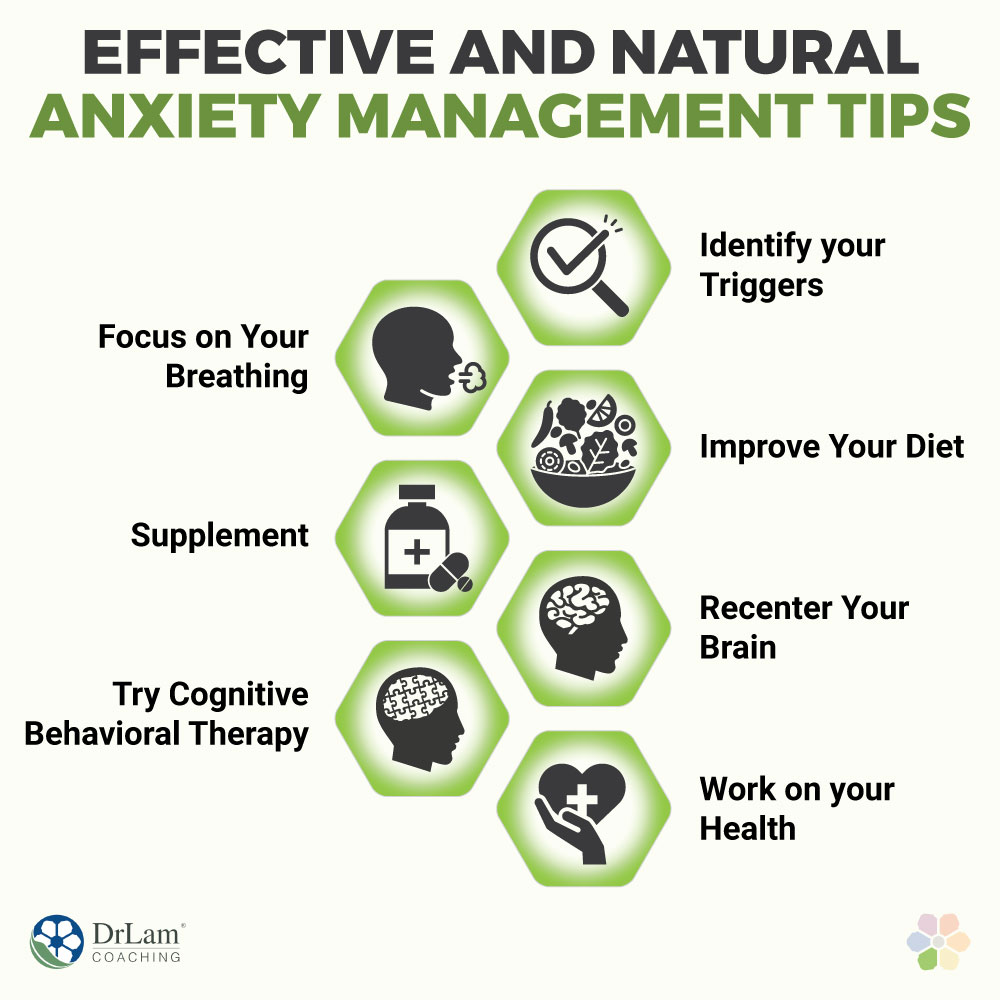
The rhythms of daily living exert a quiet but profound influence on mental stability. Irregularity, whether in sleep, activity, or nourishment, introduces a form of subtle chaos that the anxious mind readily amplifies.
To counter this is to design one’s days with intention. Sleep, in particular, demands consistency. When rest becomes predictable, the nervous system begins to recalibrate, reducing the baseline level of tension. Without this consistency, even minor stressors can feel disproportionate.
Movement contributes in equally important ways. The body, when engaged regularly, processes accumulated stress more effectively. Physical activity need not be strenuous; what matters is continuity. A daily walk, sustained over time, can yield significant shifts in mood and clarity.
Nutrition, often overlooked, supports these processes. Balanced intake stabilizes energy levels, while excessive stimulants, particularly caffeine, can exacerbate restlessness and disrupt sleep.
Taken together, these elements form a framework; a structure within which the mind operates. When the structure is stable, the mind has less need to compensate. It settles more readily, responds more proportionately, and recovers more quickly from disturbance.
Thus, well-being becomes less about dramatic intervention and more about quiet consistency, the accumulation of small, deliberate choices that reinforce stability.
5. Engaging Fear: The Gradual Expansion of Tolerance
Avoidance, though immediately comforting, reinforces anxiety over time. Each situation evaded confirms the mind’s belief that it is threatening, narrowing the individual’s world in subtle but significant ways.
To reverse this pattern requires a measured engagement with fear. Not abrupt confrontation, but gradual exposure; approaching what is feared in increments that are manageable, yet meaningful.
At the outset, discomfort is inevitable. The body responds as it has been conditioned to respond. Yet with repetition, a different pattern begins to emerge. The feared situation, once associated with overwhelming anxiety, becomes familiar. Familiarity, in turn, reduces intensity.
This process unfolds quietly. There are no dramatic moments of triumph, only steady progression. Each step, however small, expands the range of what feels possible. Situations once avoided become navigable; what was once daunting becomes routine.


There is a certain elegance in this method. It does not seek to eliminate fear entirely, but to recalibrate the response to it. The individual learns, through experience, that anxiety can be endured, that it rises and falls, and that it need not dictate action.
In this realisation lies a form of liberation, the reclaiming of spaces, experiences, and possibilities that anxiety had quietly constrained.
6. The Role of Connection: Shared Stability
Anxiety often isolates. It turns attention inward, amplifying internal dialogue while diminishing external engagement. Yet human beings are inherently relational; connection offers a form of regulation that cannot be replicated in isolation.
To speak openly with another, to articulate thoughts that have remained unexamined, is to bring them into a shared space where they can be understood differently. What feels overwhelming internally often becomes more proportionate when expressed.
This does not require extensive networks or constant interaction. A few relationships, grounded in trust and sincerity, are sufficient. Within such relationships, one finds not only support, but perspective, a reminder that one’s experiences, however intense, are not singular.
There is also a stabilizing effect in simply being with others. Conversation, shared activity, even quiet companionship can interrupt cycles of rumination, redirecting attention outward.
Professional relationships, too, hold value. A structured environment in which thoughts can be explored without judgment allows for a depth of reflection that is difficult to achieve alone.
In all its forms, connection serves as an anchor. It does not remove anxiety, but it provides a counterbalance, an external steadiness that complements internal effort.
7. Acceptance and Direction: Living With, Not Against, Uncertainty
The desire to eliminate anxiety entirely is understandable, yet it often becomes a source of further distress. The more one struggles against uncertainty, the more pronounced it appears. A different approach lies in acceptance, not as resignation, but as clarity.
To accept uncertainty is to recognize it as an inherent aspect of existence. Life, by its nature, resists complete control. When this is acknowledged, the compulsion to anticipate every outcome begins to soften.
From this point, attention can shift toward direction; toward the values that define a meaningful life. What matters becomes the guiding principle, rather than the fluctuating presence of anxiety.
Action, then, is no longer contingent on feeling entirely at ease. One moves forward despite discomfort, guided by purpose rather than avoidance. Anxiety may accompany this movement, but it no longer determines it.
Over time, this reorientation diminishes anxiety’s centrality. It becomes one element within a broader experience, rather than the defining feature.
This is not the eradication of anxiety, but its integration. And in that integration lies a quiet, enduring freedom, the ability to live fully, even in the presence of uncertainty.
The Gradual Return to Balance
Generalised Anxiety Disorder is a condition of persistence, but so too is recovery. Through deliberate thought, cultivated presence, structural stability, and meaningful engagement, the anxious mind can be gently guided toward equilibrium.
This is not a transformation that occurs all at once. It unfolds gradually, through repetition, reflection, and patience. Yet in that gradual unfolding lies something profound: not merely relief from anxiety, but the emergence of a more measured, resilient, and deeply grounded way of being.Olabisi Bamgbose, A Medical Doctor, Is Also An Occupational Therapist