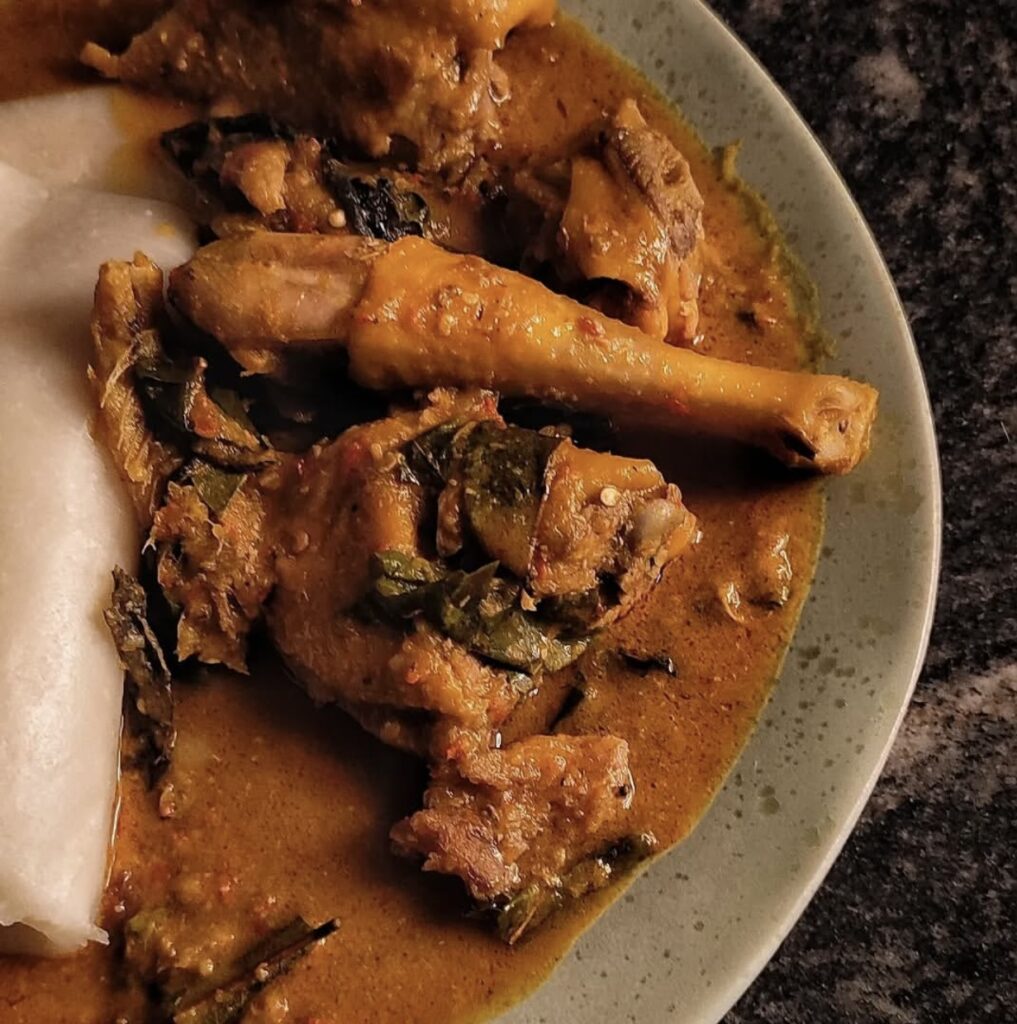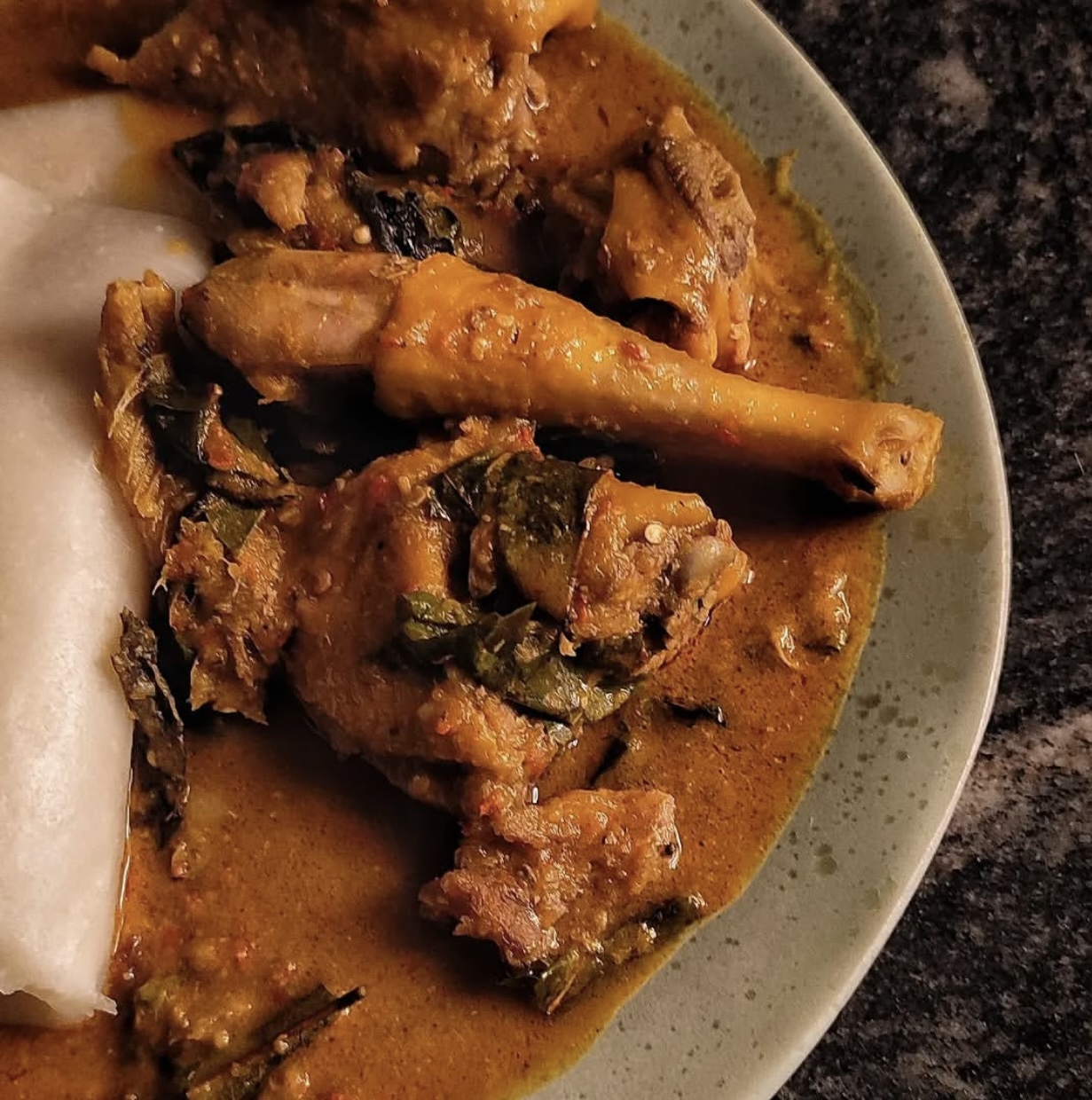

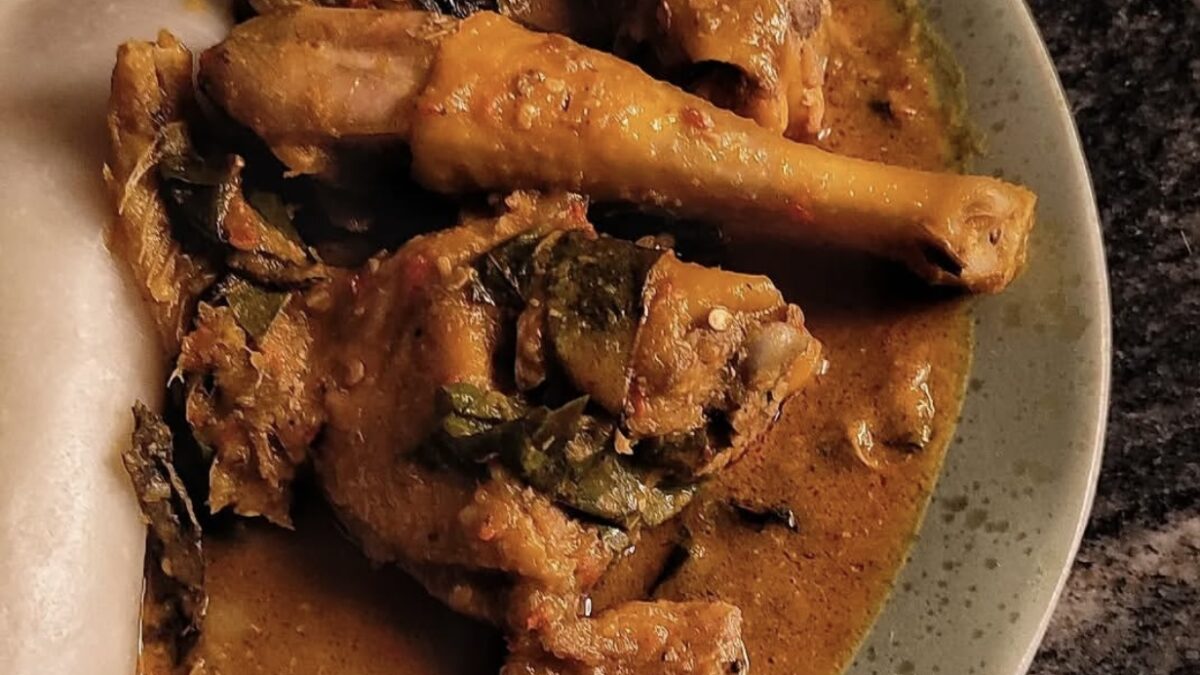
An aromatic Igbo masterpiece featuring slow-simmered native chicken, creamy palm nut extract, and the deep, umami soul of fermented Ogiri.
Yields: 6 Servings | Prep time: 45 mins | Cook time: 1 hr 15 mins
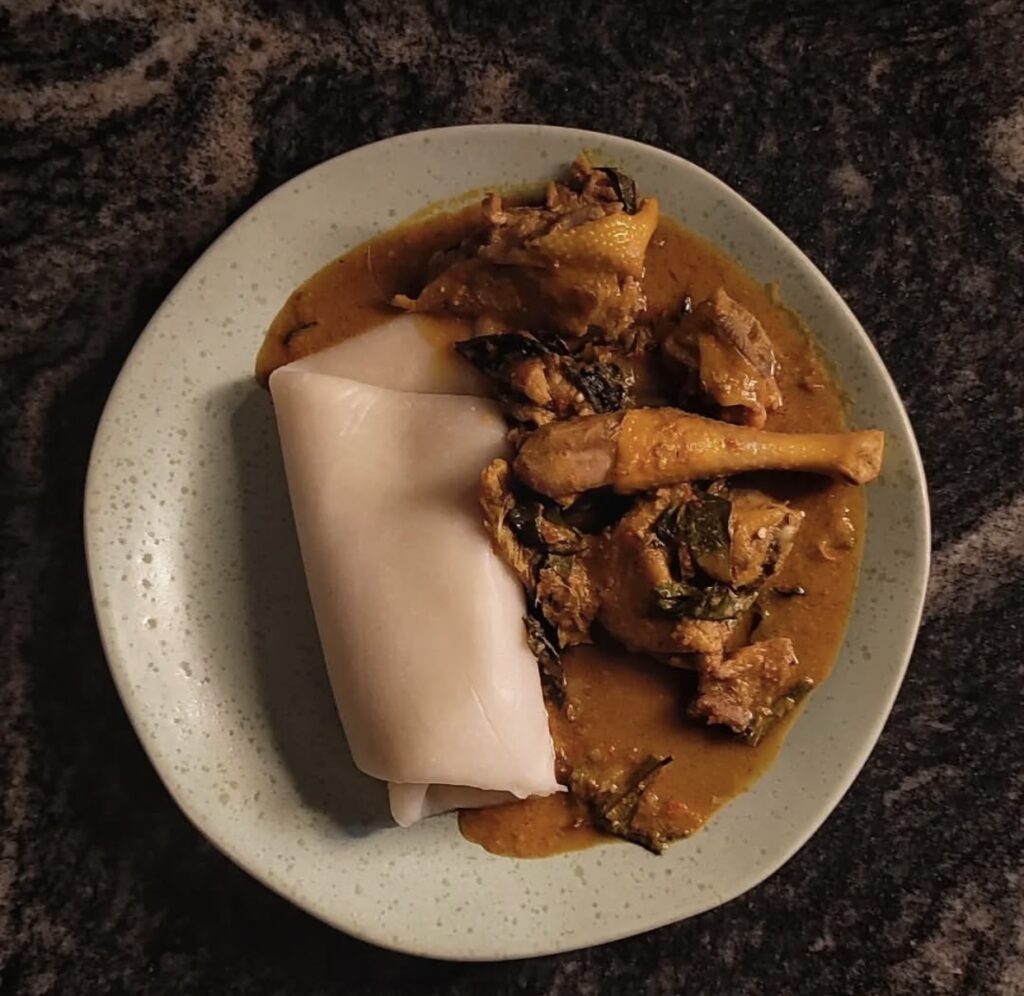
Ingredients
The Proteins
* 1 medium Native Chicken: Cleaned and cut into serving pieces.
* 2 Large Stockfish Disks: Pre-soaked until softened.
* 2 Dried Mangala Fish: Deboned and washed.
* 1 cup Ground Crayfish: For a rich, smoky base.
The Base & Thickener
* 2 kg Fresh Palm Nuts (Akwu): To extract the “liquid gold” base.
* 10 medium Cocoyams (Ede): The traditional thickening agent.
* 1 wrap Ogiri Igbo: Fermented oil bean seeds (essential for authentic flavor).
The Aromatics & Seasoning
* 4 Yellow Habanero Peppers (Atarodo):Pounded for heat and fragrance.
* 1 tsp Uziza Seeds: Ground (adds a peppery, earthy note).
* 2 Seasoning Cubes.
* Salt to taste.
The Greens
* 2 Bunches Fresh Oha Leaves: Plucked and hand-shredded.
* A few Uziza Leaves: Thinly sliced (optional, for extra spice).
The Side
* 1 kg Prepared Cassava Fufu (Akpu): Fermented and sieved.
Method
1. Prepare the Palm Nut Base
Boil the palm nuts and cocoyams together until both are tender. Remove the cocoyams, peel them while hot, and pound in a mortar until a smooth, stretchy paste forms. For the palm nuts, pound gently to strip the pulp, mix with warm water, and strain to extract the rich yellow “cream.” Pour this extract into your main cooking pot.
2. Develop the Stock
Season the native chicken and stockfish with salt and onions. Steam in their own juices for 10 minutes, then add enough water to cook until tender. Native chicken takes longer than regular poultry but yields a far superior broth.
3. Build the Flavor Profile
Bring the palm nut extract to a vigorous boil. Add the cooked chicken, stockfish, dry fish, crayfish, pounded peppers, and the Ogiri Igbo. The Ogiri is essential; its pungent, umami-rich aroma defines the “native” character of the dish.
4. Thicken the Soup
Drop small lumps of the pounded cocoyam into the boiling pot. Cover and allow to simmer on medium-high heat. As the cocoyam dissolves, the soup will transform into a thick, velvety consistency. If it becomes too dense, adjust with a splash of hot water.
5. The Final Flourish
Add the Uziza (seeds or leaves) and simmer for 2 minutes. Turn the heat to low and stir in the hand-shredded Oha leaves. Professional Tip: Turn off the heat after 60 seconds; the residual heat is enough to wilt the leaves while keeping them vibrant green and nutritionally intact.
Traditional Side: Hand-Stirred Cassava Fufu
To make the perfect fufu, sieve fermented cassava (akpu) to remove all fibers. Place the wet paste in a heavy-based pot over medium heat. Stir vigorously with a wooden spatula (mgbaji). As it thickens and turns from opaque white to a translucent cream, add a cup of hot water, cover, and steam for 5 minutes. Give it one final, energetic stir until it is perfectly smooth, glossy, and stretchy.
You can also serve with other preferred sides.
Chef’s Note
* The Golden Rule of Oha: Never use a knife to cut Oha leaves. The contact with metal causes the edges to oxidize and turn bitter. Always shred them with your fingers to preserve their sweetness and bright color.
* Native vs. Broiler: Native chicken is preferred because its bones are denser, providing a deeper, richer marrow flavor to the broth as it simmers.
* The Ogiri Factor: Don’t be intimidated by the pungent aroma of raw Ogiri. Once it hits the boiling palm oil, it transforms into a savory, nutty depth that cannot be replicated by bouillon cubes.
Chef D
Fine Dining Chef | Afro-Fusion Specialist
Instagram: @dan_ossy +234 8068281830