

After an eight-year silence, the Eyo Festival returned to Lagos in December; transforming the city into a luminous pageant of memory, identity, and living history
By David Edremoda
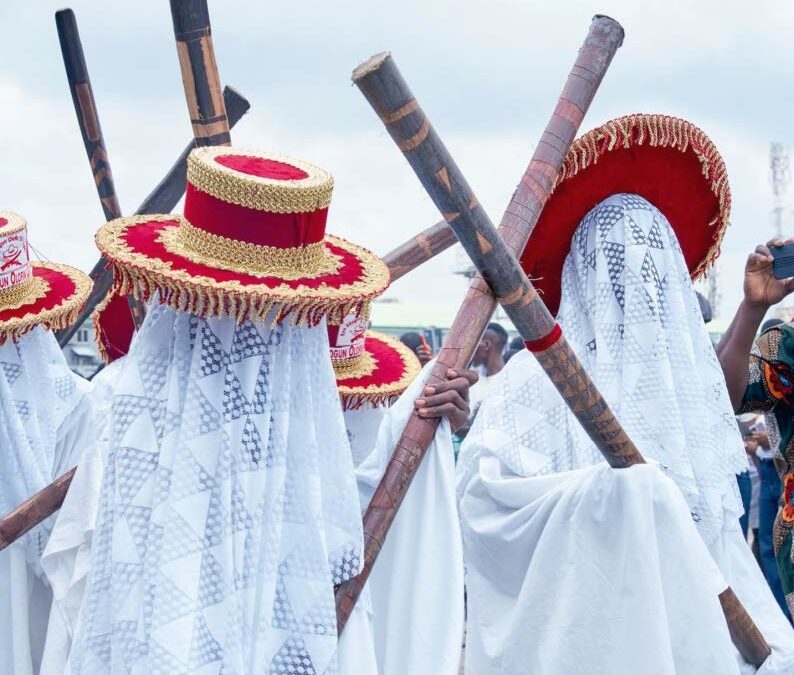
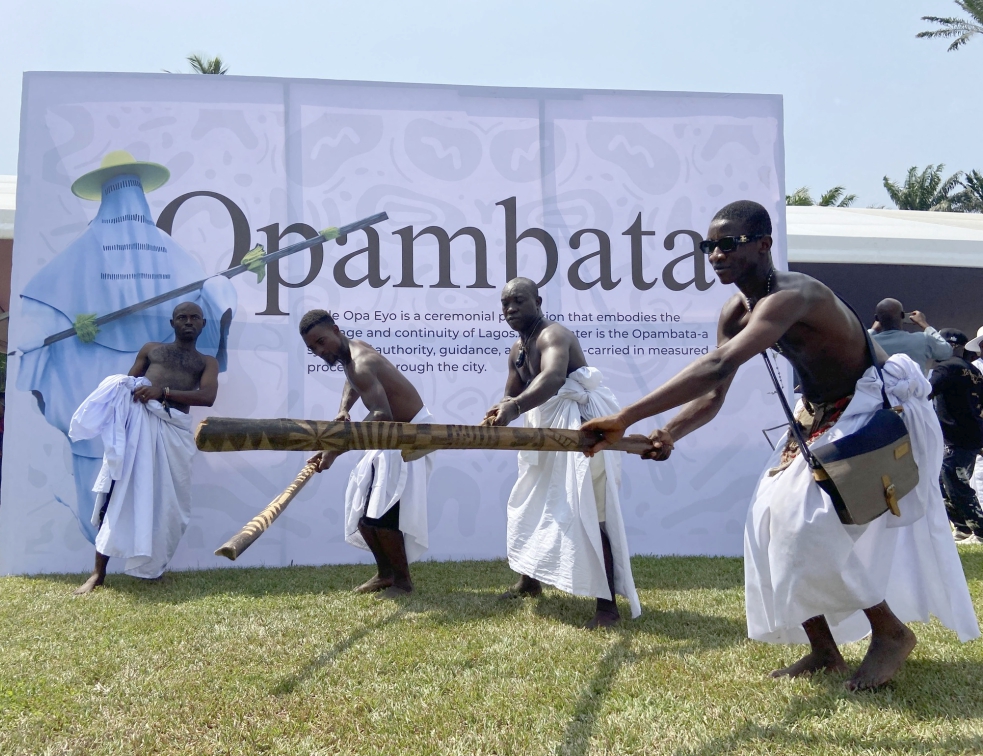
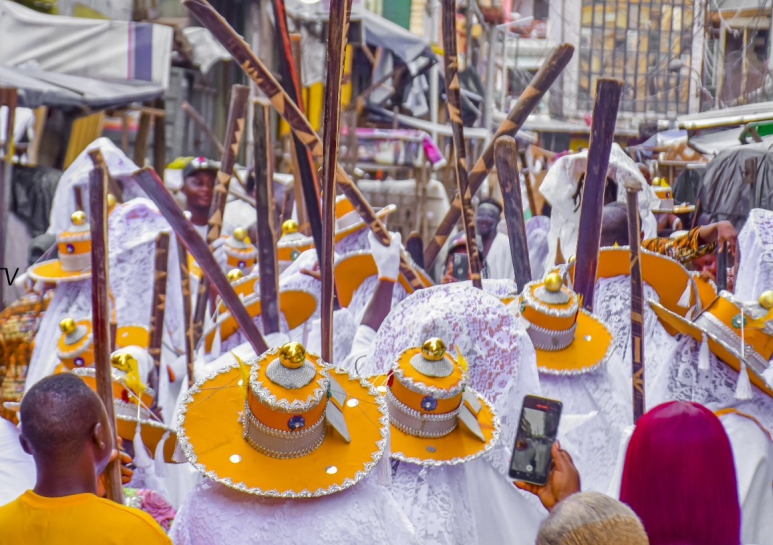
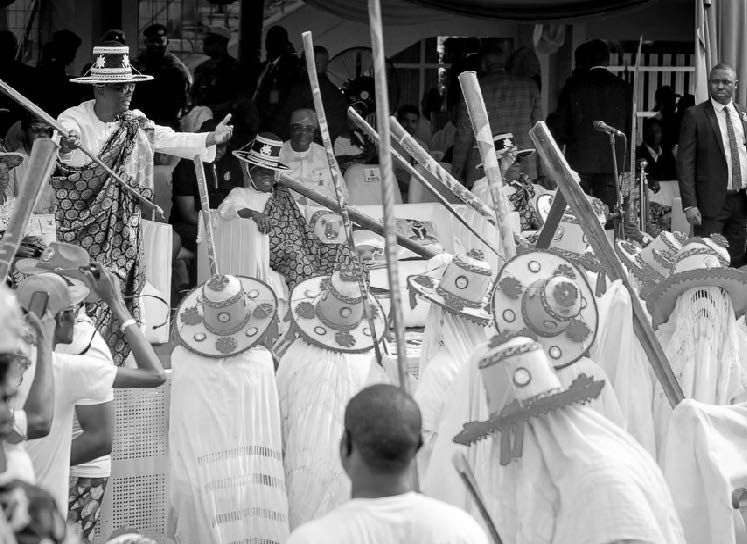
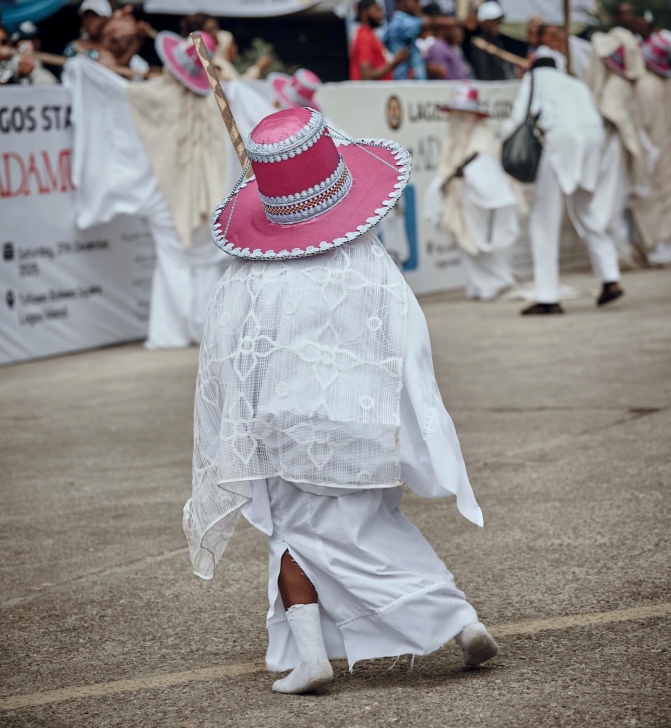
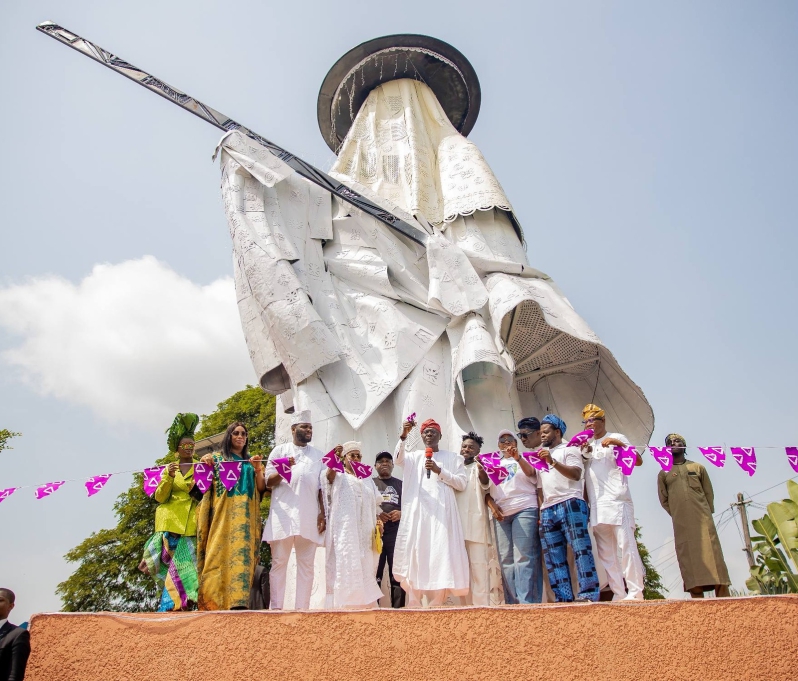
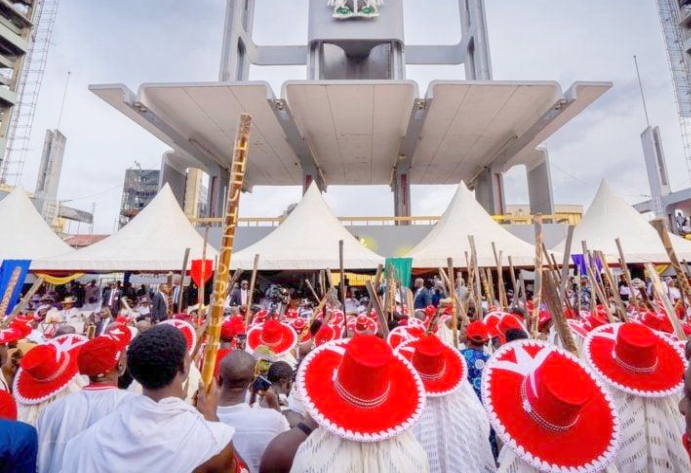
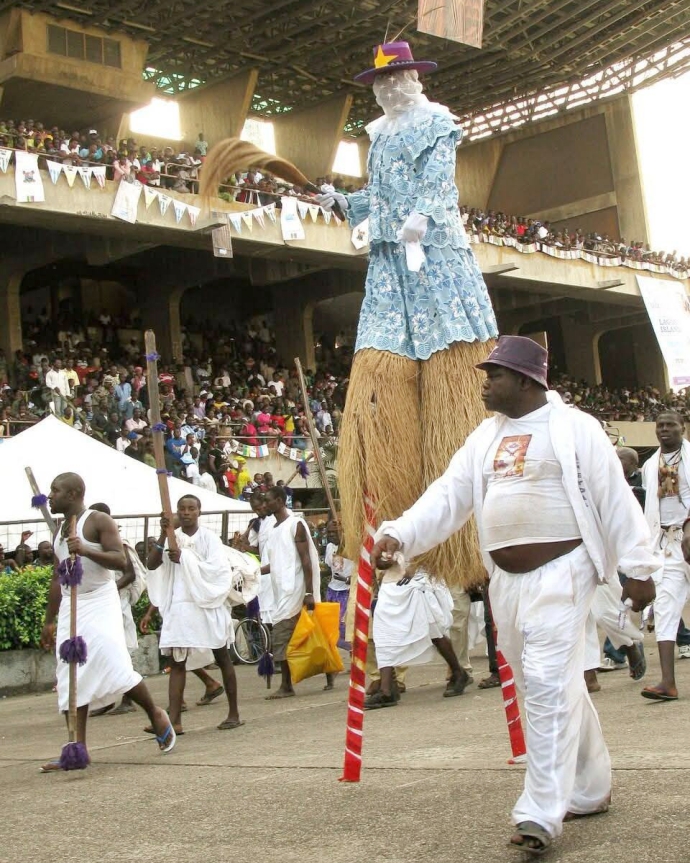
Under the smiting equatorial sun and sudden, teasing drizzles, an atmospheric signature of its closeness to lagoon and ocean, the city of Lagos awoke on 27 December 2025 to a vision both uncanny and familiar. Across Tafawa Balewa Square and along the historic arteries of Lagos Island, figures in flowing white moved in disciplined procession. Their faces were veiled, their heads crowned with bowler hats in varied hues, their hands gripping slender ceremonial staffs known as opambata.
For the uninitiated, the sight bordered on the surreal. One could easily mistake them for columns of penguins migrating across polar ice, the purpose of their gathering left tantalisingly unexplained. Yet this was no whimsical masquerade. It was the Eyo Festival; Lagos’s most revered cultural rite, returned after an eight-year hiatus, and reclaiming the city in an eruption of ancestral memory.
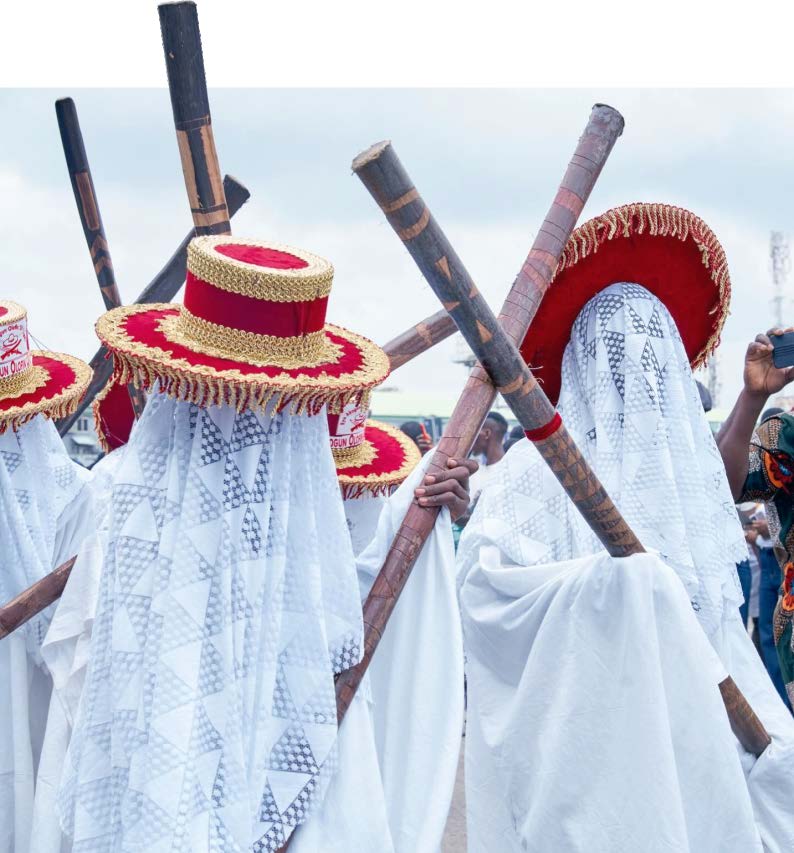
The Eyo Festival wears the face of Janus. One visage gazes firmly backward, into the spiritual and historical foundations of Lagos; the other looks squarely at the present, a megacity of neon lights, glass towers, and electric-blue commuter trains gliding across bridges suspended above water. On this December morning, past and present did not compete. They converged.
The Eyo Festival has long been etched into Lagos’s cultural imagination, immortalised not only through ritual but also through music. In 1974, the legendary juju maestro Ebenezer Obey released Eyo O, capturing the festival’s mystique in song:
Eyo o,
Eyo baba n’tawa
To nfi goolu nsere…
Sunny Ade later echoed the festival’s moral authority, singing of the Eyo as disciplinarian and moral guide; Adamu Orisa n’be l’Eko, a sacred presence in the city.
These songs are not nostalgic ornaments; they are oral archives. They remind Lagosians that the Eyo is not an entertainment imported for tourists but a living grammar of identity.
Tafawa Balewa Square as Sacred Ground
The venue itself carried heavy symbolism. Tafawa Balewa Square (TBS), site of Nigeria’s independence celebration on 1 October 1960, became a living canvas; a glacier of white moving rhythmically across history. Horse statues frozen in equestrian charge watched over the spectacle as thousands gathered in reverent celebration.
From there, the procession flowed through historic corridors of Lagos Island, transforming the festival into a pilgrimage. People marched, sang, and chanted, following the Eyo groups not merely as spectators but as participants in a collective act of remembrance. Joy intertwined with solemnity. Jubilation danced alongside restraint. Omoluabi, the Yoruba ethic of grounded moral character, was everywhere present.
Yet the grandeur of the main event was preceded by days of ritual preparation. The Ijade Opa Eyo procession had commenced earlier, involving homage visits by family representatives and traditional adherents to state and federal leaders. These visits, steeped in prayers, chants, and ceremonial offerings, marked the formal awakening of the Adamu Orisha tradition.
Honouring the Builders of Lagos
On 21 December 2025, festival organisers paid homage to President Bola Ahmed Tinubu at his Lagos residence, presenting the ceremonial staff and formally inaugurating the celebrations. In a notable departure from tradition, the 2025 edition honoured four distinguished Lagos figures rather than the customary one or three.

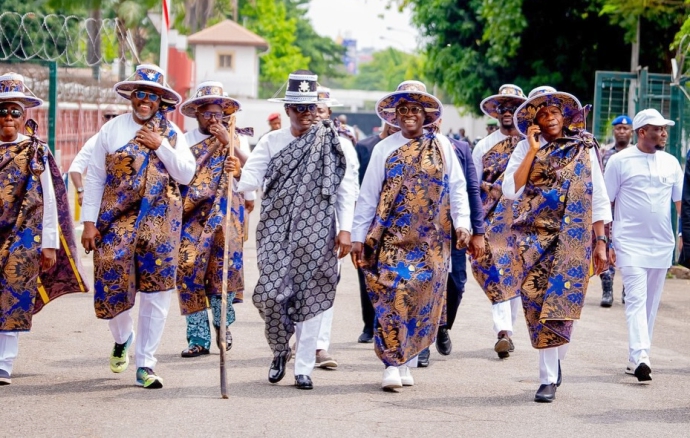
They were: Brigadier Mobolaji Johnson, Lagos State’s first military administrator; Alhaji Lateef Kayode Jakande, its first civilian governor; Sir Michael Otedola, a former civilian governor; and Alhaja Abibat Mogaji, former Iyaloja of Lagos and mother of the current President.
The symbolism was deliberate. Together, these figures represent governance, commerce, legacy, and continuity; pillars upon which modern Lagos stands.
In a message to the organisers, President Bola Ahmed Tinubu described the festival as “a great rekindling of our culture.” He called the Eyo Festival “a vibrant expression of the rich traditions of Lagos,” noting that it celebrates exemplary lives whose contributions helped shape the state’s national and international standing.
The President also drew attention to the festival’s timing during Detty December, Lagos’s peak season of return, revelry, and diaspora homecoming. “Our culture and traditions hold great tourism potential,” he observed. “The glamour of white-robed figures parading our streets sends a resounding message about our identity.”
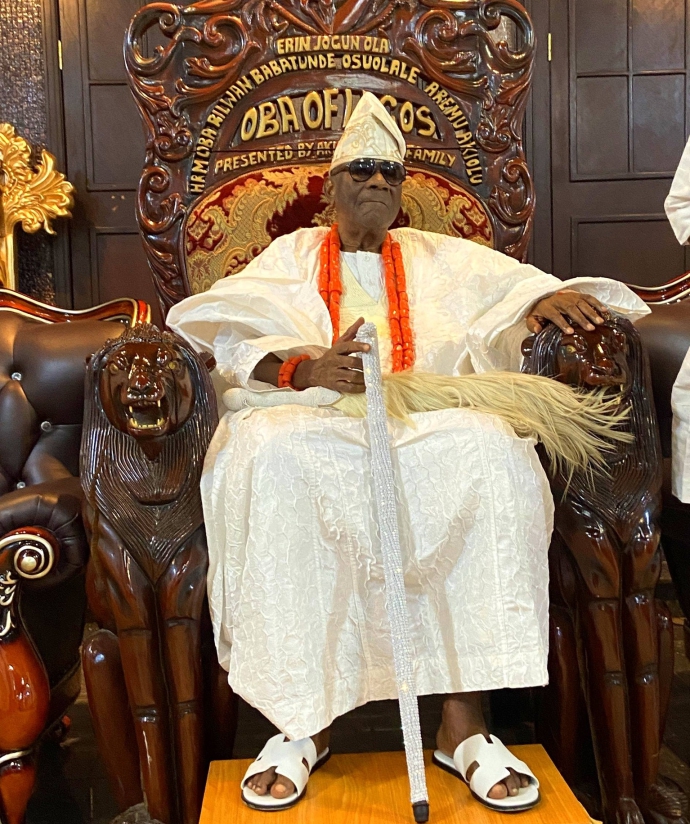
Governor Babajide Sanwo-Olu, welcoming dignitaries, described the event as both historic and intimate. “What we celebrate today is the first of its kind,” he said. “We are seated with our son, our father, the President, to witness the living heritage of Lagos.”
He praised the traditional institutions under the Oba of Lagos, Oba Rilwan Akiolu, for their leadership in reviving the festival. “After an eight-year interval,” he said, “this revered tradition returns in full splendour; an affirmation of our resilience and unbroken connection to history.”
The Sacred Origins of the Eyo
Beneath its pageantry, the Eyo Festival is a profoundly spiritual institution. Known formally as the Adamu Orisha Play, it predates colonial Nigeria and is rooted in Yoruba cosmology. Historically, it was performed to honour and escort the spirits of departed Obas, chiefs, and eminent elders into the ancestral realm. The masquerades, robed entirely in white, represent ancestral spirits, mediators between the visible world and the unseen. Emerging traditionally from the Iga (palace) of a ruling family, they move toward the Agodo (shrine), believed to cleanse the city, restore balance, and reaffirm communal bonds.
The first recorded Eyo procession on Lagos Island occurred in 1854, organised in honour of Oba Akitoye. Since then, the festival has marked coronations, memorials, and pivotal civic moments, evolving while retaining its sacred core.
One of the festival’s most striking features is its structured system of family lineages, each represented by distinct Eyo groups. These are not decorative choices but encoded hierarchies of meaning.
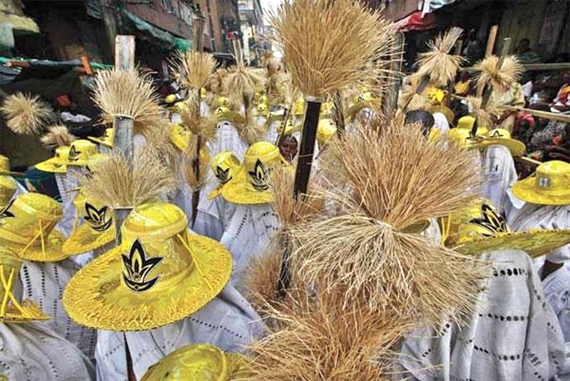
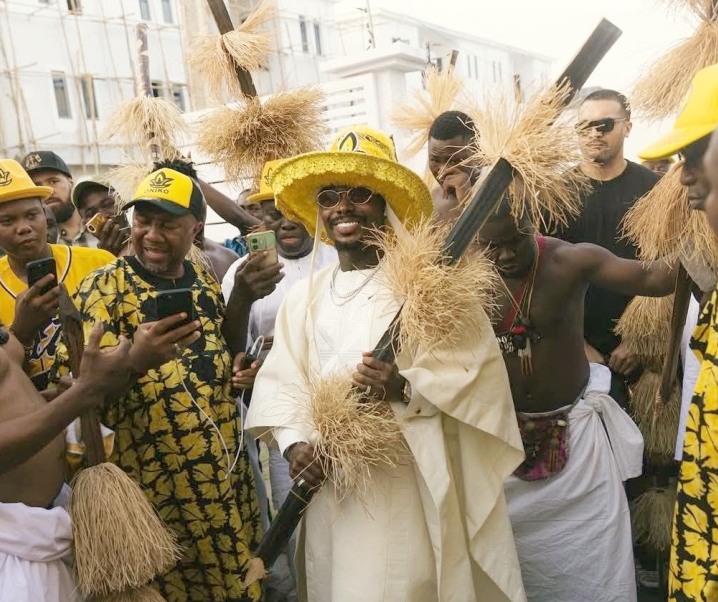
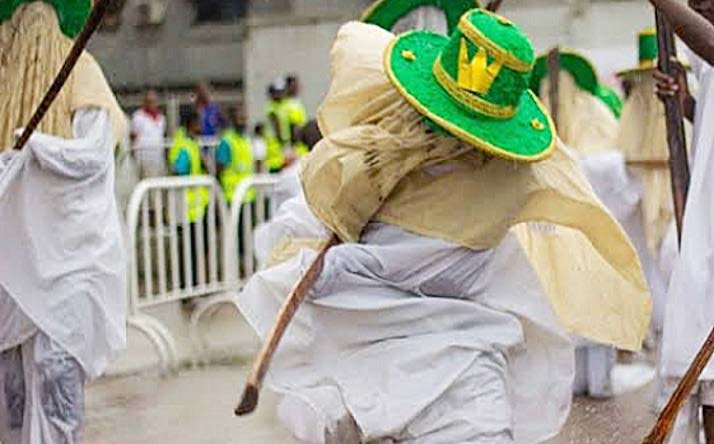
The Adimu, identified by broad black hats, are the most senior and sacred, closely associated with royal authority. Laba, with red caps, signify power and enforcement. Oniko wear yellow-tinged hats linked to prosperity. Ologede, in green, evoke growth and vitality, while Agere, adorned in purple, represent youth and potential.
Together, these groups form a moving cosmology; a choreography that maps spiritual authority, lineage, and balance.
Custodians and Modern Stewards
The revival of the Eyo Festival after eight years was no small undertaking. At its centre stands the Oba of Lagos, Oba Rilwan Babatunde Akiolu I, custodian of the ancestral rites. His support proved pivotal in navigating the security and logistical challenges that had stalled previous editions.
The Lagos State Government, through the Ministry of Tourism, Arts, and Culture, provided coordination and infrastructure, while the Nigeria Tourism Development Authority (NTDA) helped position the festival as a global cultural attraction. Corporate sponsors and private partners supported logistics, safety, and promotion, ensuring the festival’s success without diluting its sanctity.
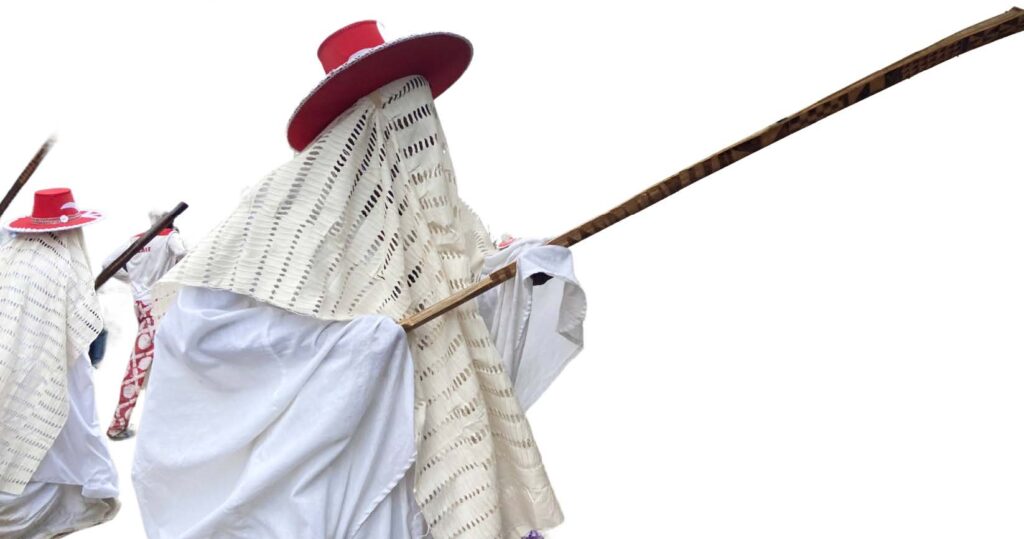
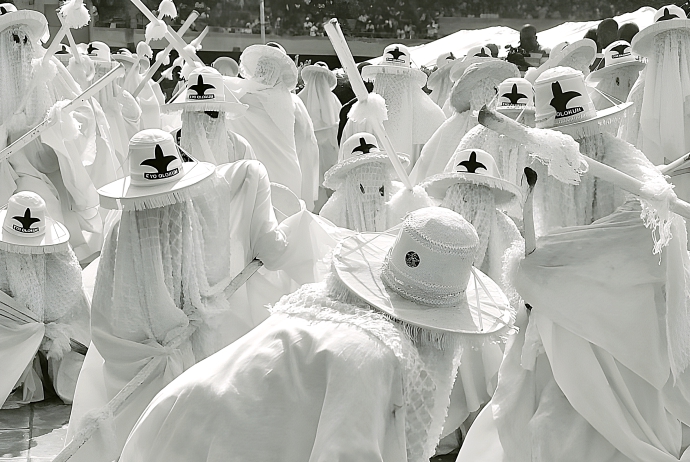
Spiritually, the Eyo Festival affirms beliefs that transcend spectacle. White robes symbolise purity, peace, and reverence, marking a liminal moment when the sacred brushes against the everyday.
Socially, the festival dissolves boundaries. Christians, Muslims, secular observers, and traditionalists stand shoulder to shoulder, united by shared heritage. In a city as plural and restless as Lagos, this moment of collective grounding is invaluable.
Economically, the Eyo Festival has become a cornerstone of Lagos’s December tourism economy. Held during Detty December, it amplifies activity across hospitality, transport, retail, and the creative industries.
Hotels reported near-capacity bookings weeks in advance. Restaurants, tour operators, artisans, and cultural vendors benefitted from increased patronage. Curated heritage tours and digital content extended the festival’s reach beyond physical attendance.
Tourism analysts note that cultural festivals like Eyo play an outsized role in shaping Lagos’s global image; projecting a city that does not discard tradition in its rush toward modernity but wears it proudly. When the last chants faded and the white-robed figures dispersed, Lagos did not return unchanged. For one luminous day, the city remembered itself; not as chaos or caricature, but as a civilisation with depth, rhythm, and soul.The Eyo Festival’s return was not merely a revival. It was a reminder: that beneath Lagos’s relentless motion lies a still centre, clothed in white, walking patiently through history.