
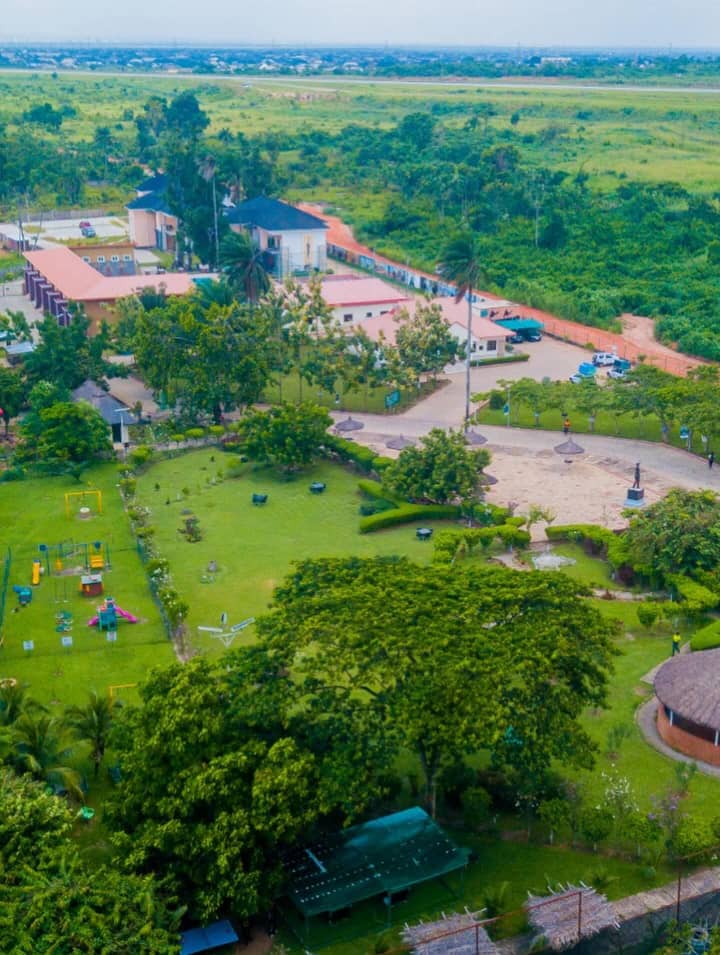
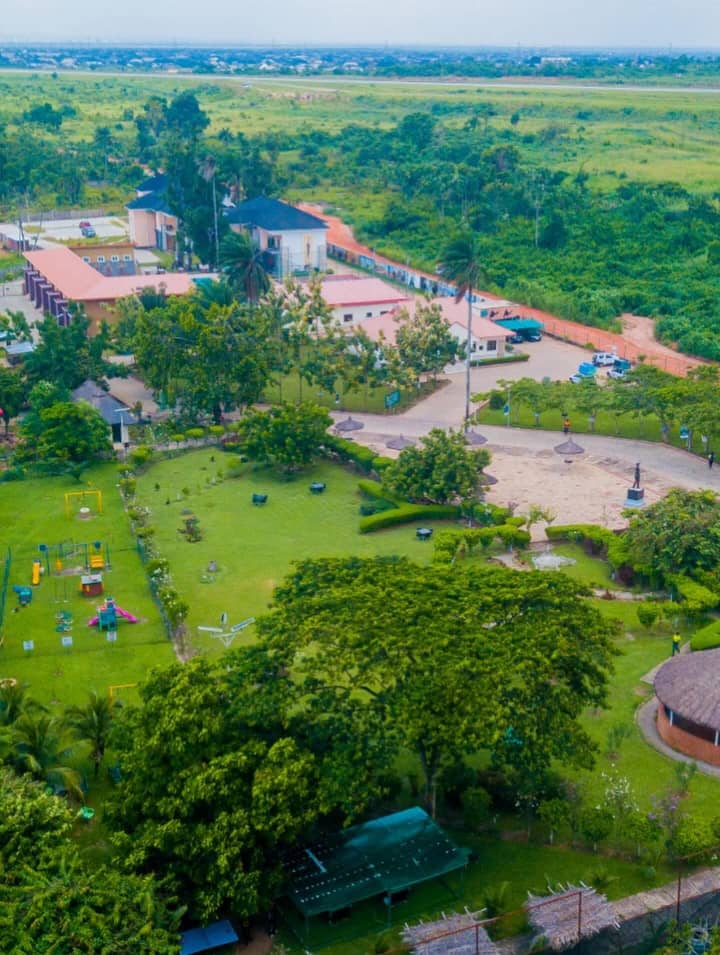
The Mandela Garden, a breath-taking resort nestled in what was once a marshy part of the Asaba International Airport, is not only eco-friendly; it is also a place surrounded by nature’s untouched beauty.
By Sylvester Asoya
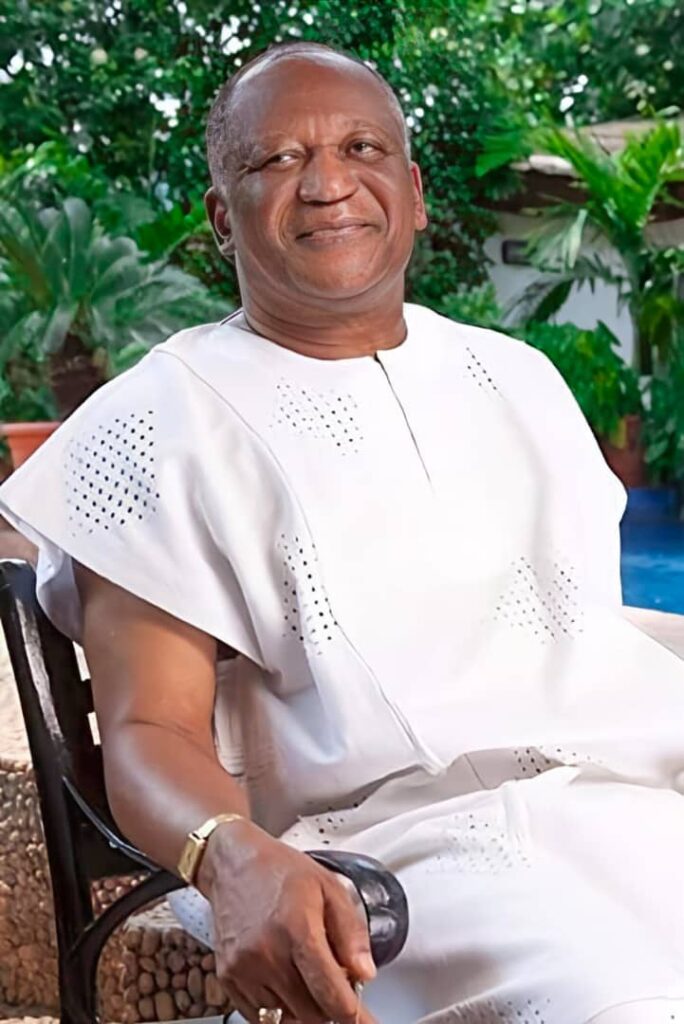
At this eco-lodge, an experience of timeless beauty, warm hospitality, and rich cultural heritage awaits every visitor. But this remarkable resort is more than just a haven of nature, leisure, art, history and conservation. Indeed, the garden is a living celebration of culture and the legacy of Nelson Mandela, a pan-African icon who transformed Africa’s political and social landscape with his love of country, deep sacrifice and unfaltering altruism. Beyond being a living tribute to history and the enduring spirit of Nelson Mandela, the resort, according to Dr. Newton Jibunoh, the founder, was established on the ideals of hope, courage, dignity, faith and immortalisation.
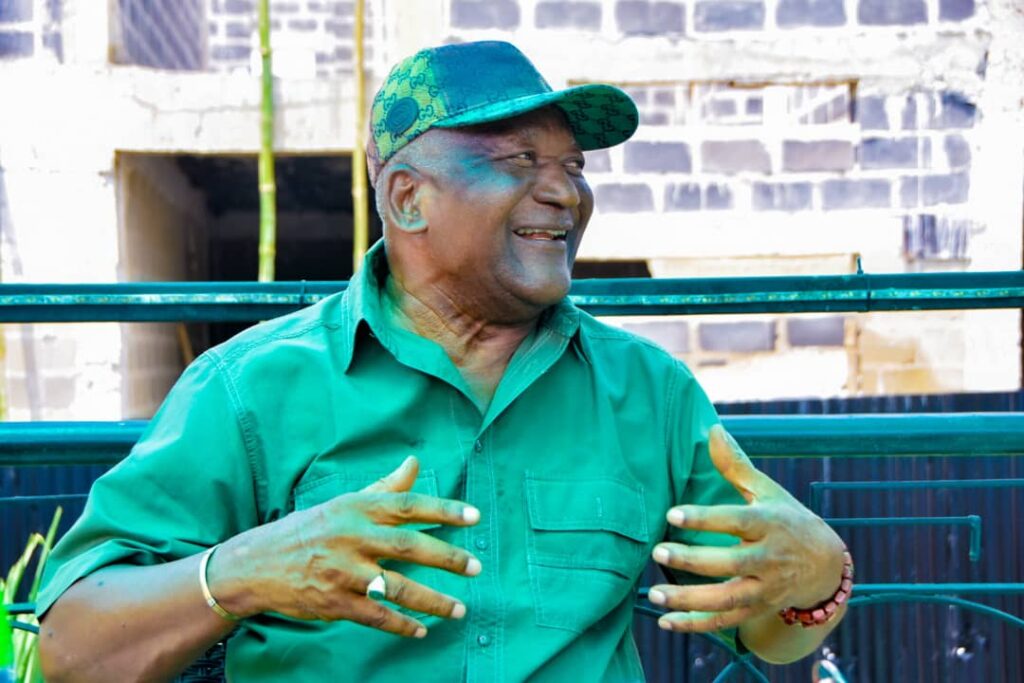
Jibunoh, an engineer by training, is a globally acclaimed environmentalist and passionate lover of nature who has dedicated his life to preserving the planet’s fragile ecosystem. And he is harnessing the full potential of Fight Against Desert Encroachment, FADE, his nonprofit organization, to lead the charge against environmental degradation in Africa and even beyond.
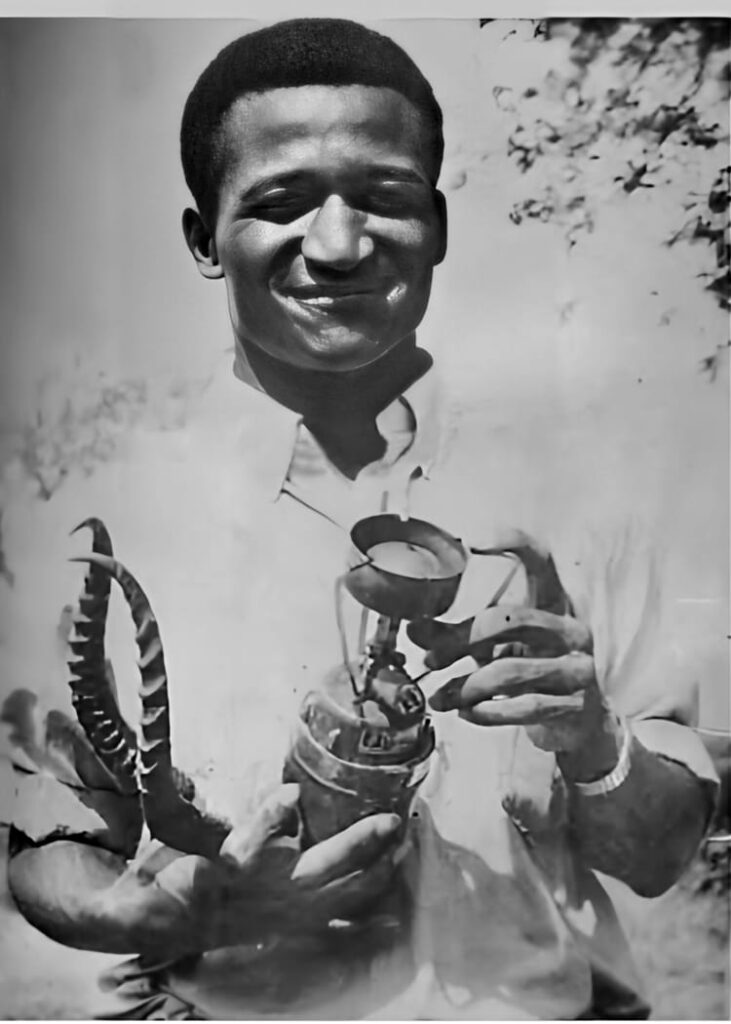
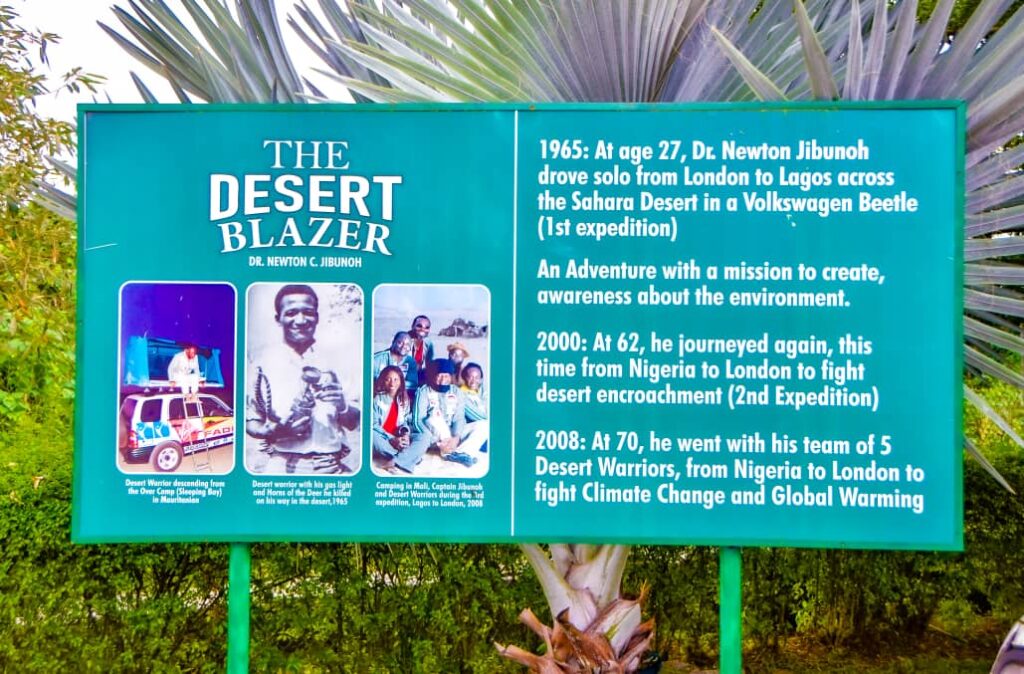
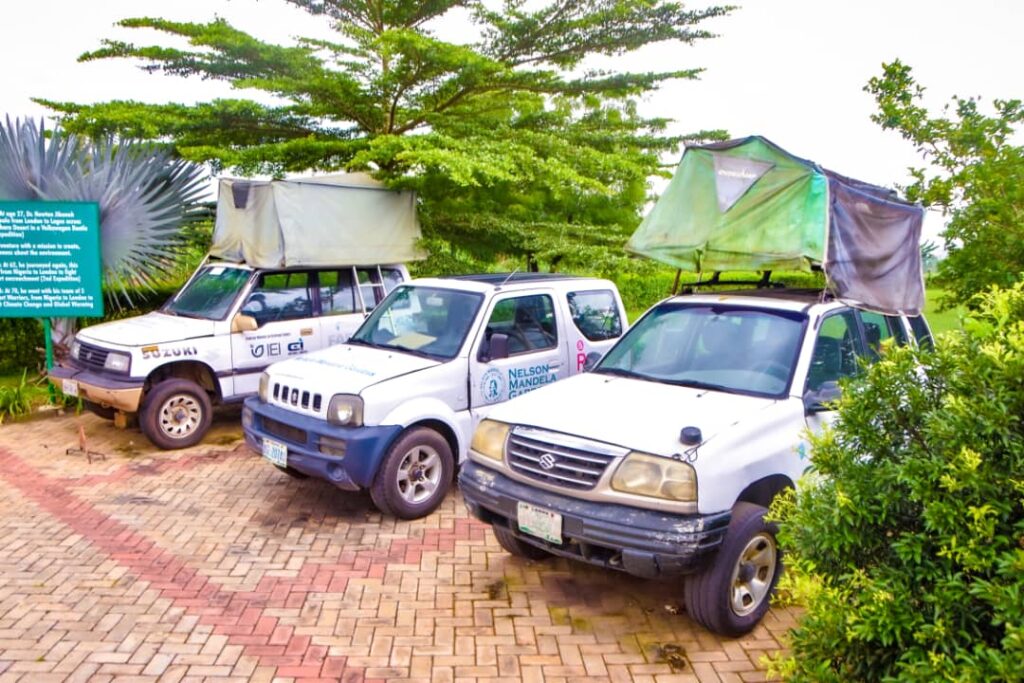
But outside the typical offerings expected in a resort, the Mandela Garden provides visitors, the opportunity of learning about Jibunoh’s three historic expeditions across the Sahara and the Mediterranean. This single facility also houses artworks that celebrate heritage and creativity. This is in addition to Dr. Newton Jibunoh’s iconic Desert Warrior Vehicles, the emblematic desert tents and the different books written on the three extraordinary expeditions across the Sahara. From his travel records and adventures, one can trace a consistent interest in the environment, particularly in the area of conservation.
At the age of 27, Jibunoh drove solo, all the way from London to Lagos, across the Sahara, in a Volkswagen Beetle car. According to him, it was an adventure to create awareness about the environment. In 2000, at 62, he also embarked on another journey from Nigeria to London. This time, his mission was a fight against desert encroachment. Then, in 2008, at 70, Jibunoh returned to London by road, with his team of five, to fight climate change and global warming.
What, then, motivated this engineer, culture aficionado and environmentalist to undertake these dangerous journeys across the Sahara and the Mediterranean, not once, but three times?
In truth, boy Newton, the restless lad from Akwukwu-Igbo, headquarters of Oshimili North Local Government Area in Delta State, conquered fear at a relatively young age through the daring adventures he embarked on in his childhood. “I must confess, from childhood through adulthood, my life has been a continuous adventure. By the age of 8, I was already fishing at night with professional fishermen on the River Niger. But you can only understand me if you know what fishing at night means. I also had an uncle who was a hunter, and I would go hunting with him in the dead of night. In fact, I was eager to see how the impossible could be made possible. That was how I conquered fear. And that was also how a life of dangerous adventures began for me.”
But Jibunoh’s time as a student at Cranfield Institute in the United Kingdom, was also a major source of motivation for his many risky expeditions. According to him, he was already fascinated by exploration to space, shortly before completing his studies at Cranfield. At the time, the United States and the Soviet Union, were locked in a fierce competition in space exploration. Jibunoh, was further emboldened to pursue his dream of becoming an astronaut because Cranfield Institute of Technology, his alma mater, used to be an aeronautic school, with a big airstrip where astronauts trained. But his aspirations were halted because his science subjects did not measure up to becoming a space explorer. “So, when I graduated, I was eager to return to Nigeria because a job was already waiting for me at the Ministry of Works, having been interviewed in London. It was at that moment that the thought of doing the impossible came to my mind. Since I could not go to space, I wanted to do something bizarre. Therefore, driving from London across 15 countries, the Sahara and the Mediterranean, became not only an ambition, but inevitable. So, when I succeeded, I was satisfied with myself. Eventually when I met some astronauts many years after my hazardous travels, they told me that what I did was even greater than going to the moon.”
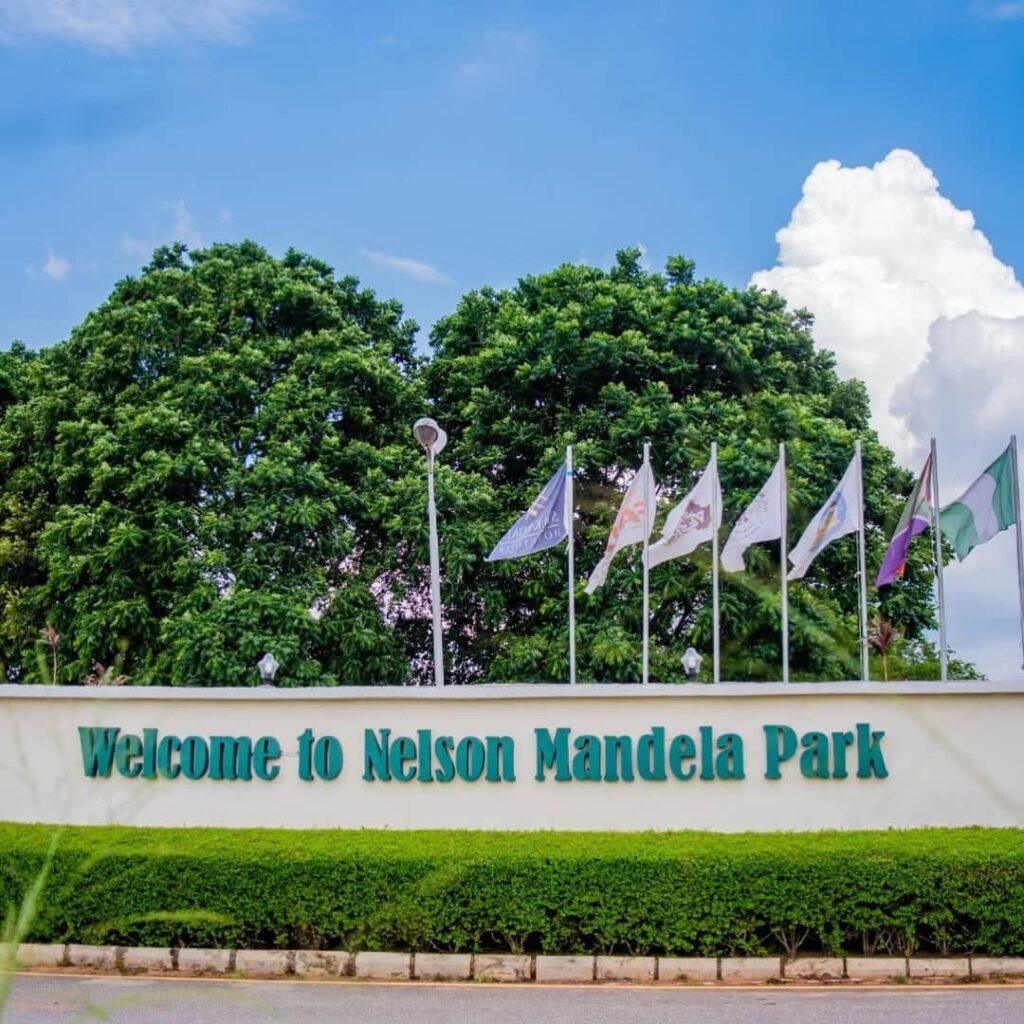
The inspiration and creation of the Mandela Garden began in the mid-1960s during the Civil Rights Movement. From Jibunoh’s account, the resort was driven by the vision to immortalize one of Africa’s greatest statesmen, and also provide an inclusive and welcoming space for relaxation, recreation, vacation and learning. According to him, he was profoundly influenced by the speeches of Kwame Nkrumah and Nelson Mandela, two iconic figures in the history of Africa, celebrated for their roles in the continent’s fight for freedom and justice. It was their speeches that reshaped Jibunoh’s thinking and redirected his path as a young man committed to Africa’s freedom and liberation.
In no time, the Free Mandela Movement began in London, and Jibunoh was elected the Vice President based on his passion and committed involvement in the struggle for the liberation of his continent. At the time, Jibunoh, who was about 27 years, was saddled with the duty of spying and identifying countries that secretly supported Apartheid, despite the global outrage against South Africa’s racist government. In the process, he found himself working with Zizi Mandela, Mandela’s daughter and Winnie Mandela, the wife of the renowned freedom fighter. When Mandela was eventually freed, the United Nations honoured his legacy by immortalizing his good example with the rare privilege of declaring July 18th as Nelson Mandela International Day.
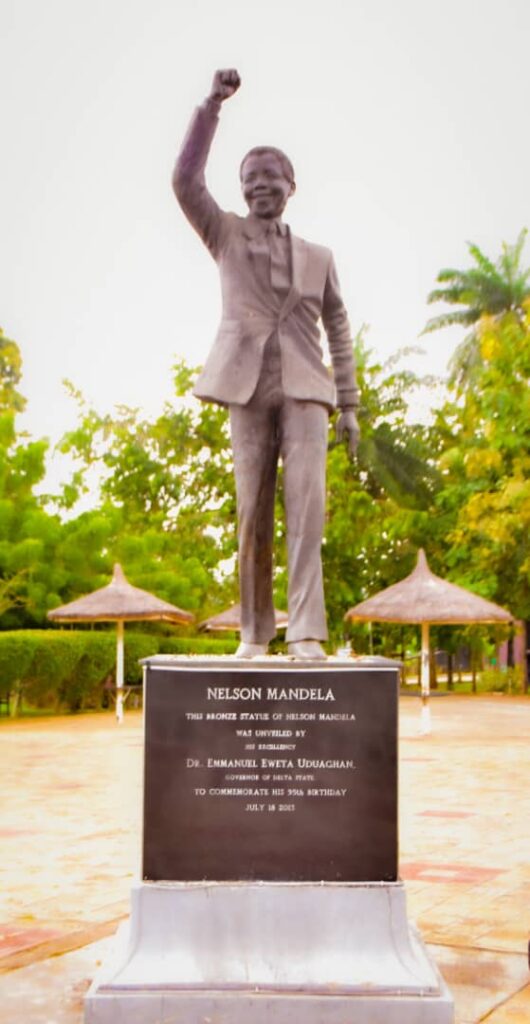
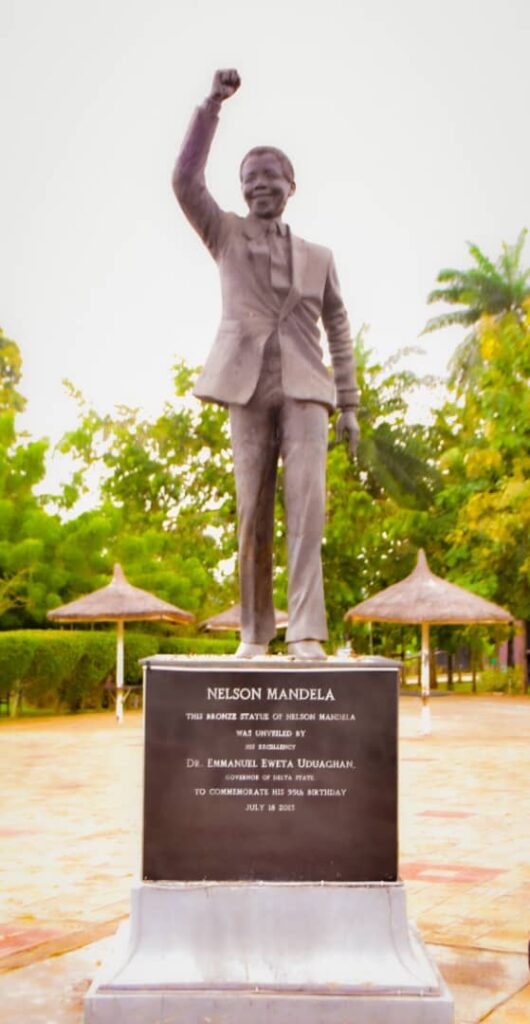
The events that followed were largely frenetic and unexpected, leaving everyone caught off guard. “As if in a hurry to outdo each other, the British and the Americans quickly erected two statues of Mandela in their respective countries following the declaration of July 18 as Mandela Day.
It was at this point that Jibunoh resolved to replicate the Mandela statue in Nigeria, as a fitting tribute to the ideals Mandela stood for. Quickly, he called on his architect to design a befitting statue of Mandela, one that would be completely different from the British and American versions. Before he knew it, the UN endorsed his idea of establishing a Nelson Mandela Foundation, and asked him to discuss details of the foundation with the South African Ambassador to Nigeria at the time, Ambassador Mogwatti. “The ambassador was excited. He told me his door was open, and that I should come anytime I wanted. The next stage was where, and how to build.”
But an opportunity to choose a location for the resort came during his 75th birthday celebration. “So, on my birthday, I told members of my family that I wanted to plant 75 trees. But where? As an Environmental Ambassador in Lagos State, I was asked by the then governor of the state to bring my friends along to the tree-planting event. I then invited my friends: retired army officers, environmentalists, corporate bodies, politicians, public interest groups and other categories of people.”
Unknown to Jibunoh, the former governor of Delta State, his home state, Dr. Emmanuel Uduaghan, was invited by Babatunde Fashola, the then governor of Lagos State, who came to the event with members of his cabinet. To Jibunoh’s surprise, Uduaghan delivered a moving speech that received widespread acclaim on that special day. The former governor of Delta State told the audience that he had been closely following the activities of the environmentalist in Lagos, Kano and Abuja. But he was yet to do something for Delta, his home state in the field of environmental sustainability.
So, when Jibunoh got the much-anticipated endorsement from the UN to build the Mandela Garden, he went to Uduaghan and reminded him of his famous speech during his birthday in Lagos. “Is this for real?”, the excited former governor asked. And the environmentalist responded in the affirmative, and told the governor that he wanted a piece of land between 8 and 10 hectares. This was to enable him build a befitting monument for a world icon like Mandela. Without hesitation, the governor grabbed his phone and placed a call to his Commissioner for Lands, and ordered him to come to his office immediately. On arrival, the commissioner informed the governor that there were available empty spaces for development at Anwai, a suburb of the capital city, and inside the Asaba International Airport. “The following day, the commissioner brought me to the airport, a rain forest belt. I must confess, it was love at first sight. I refused to inspect the hectares at Anwai because I already loved what I saw at the airport. And the journey of The Mandela Garden began.”
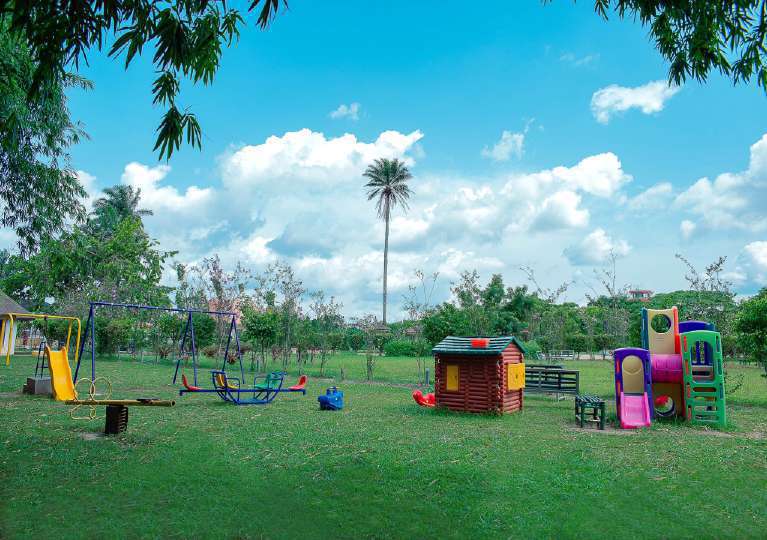
After all the preliminary works were concluded on the soon-to-become Mandela Garden in Asaba, Nigeria, Jibunoh returned to South Africa to brief the anti-apartheid fighter on the developments. But before he left South Africa, Mandela pleaded: “Please whatever you do at the Mandela Garden in Nigeria, take children into consideration because for 27 years, I did not see children.”
So, work began, first with the Children Playground. By the time Jibunoh concluded work at the recreational facility for children, Mandela was already unwell. But his family members, Governor Emmanuel Uduaghan and the same South African ambassador who was consulted at the beginning of the project were all present at the official opening of the Mandela Garden. The founder also had in attendance on that official opening in Asaba, his friends like E.K. Clarke, J.P. Clarke, General T. Y. Danjuma and nearly everyone that assisted him in planting the 75 trees in Lagos during his birthday. Since it was officially commissioned, the Mandela Garden has opened its doors to people from far and near, welcoming guests from all walks of life. A black American mayor who visited and planted a tree, was also one of such visitors.
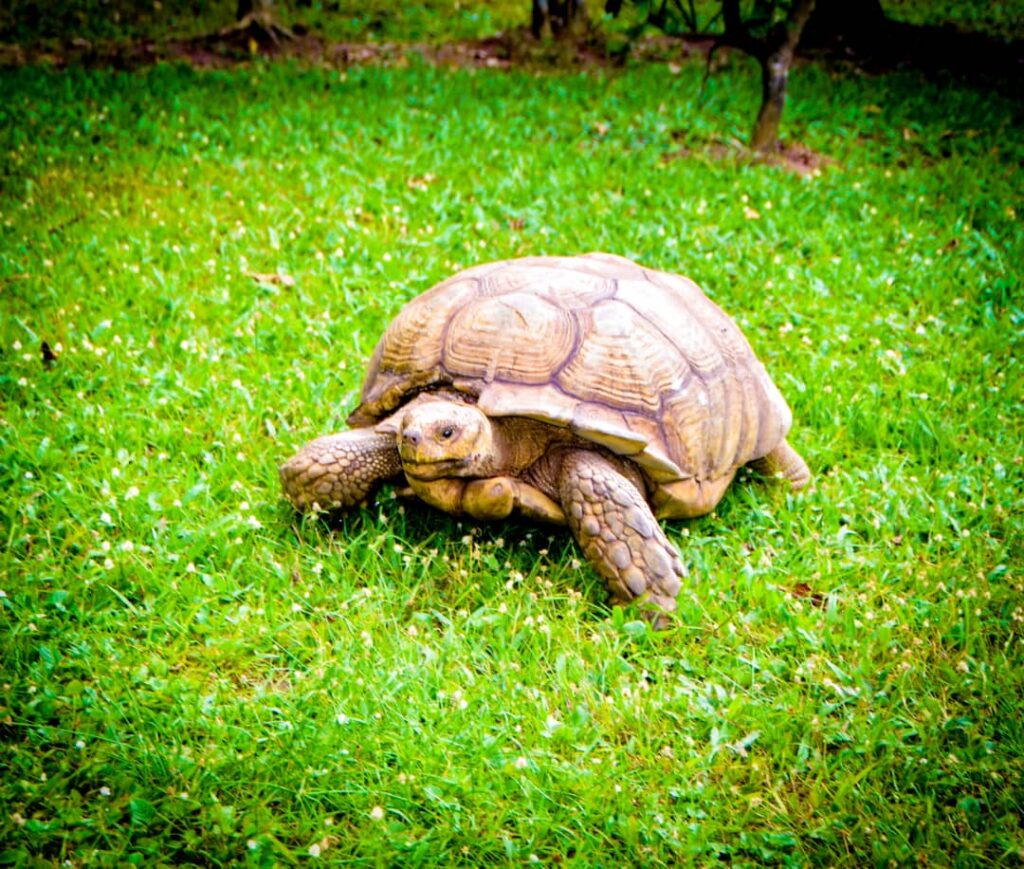
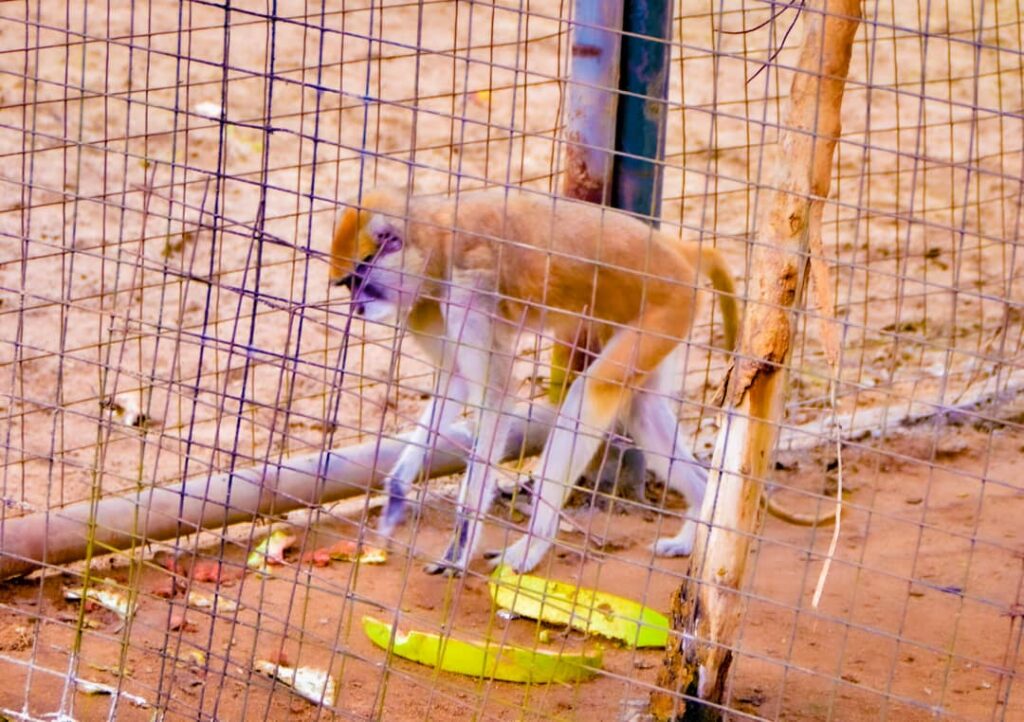
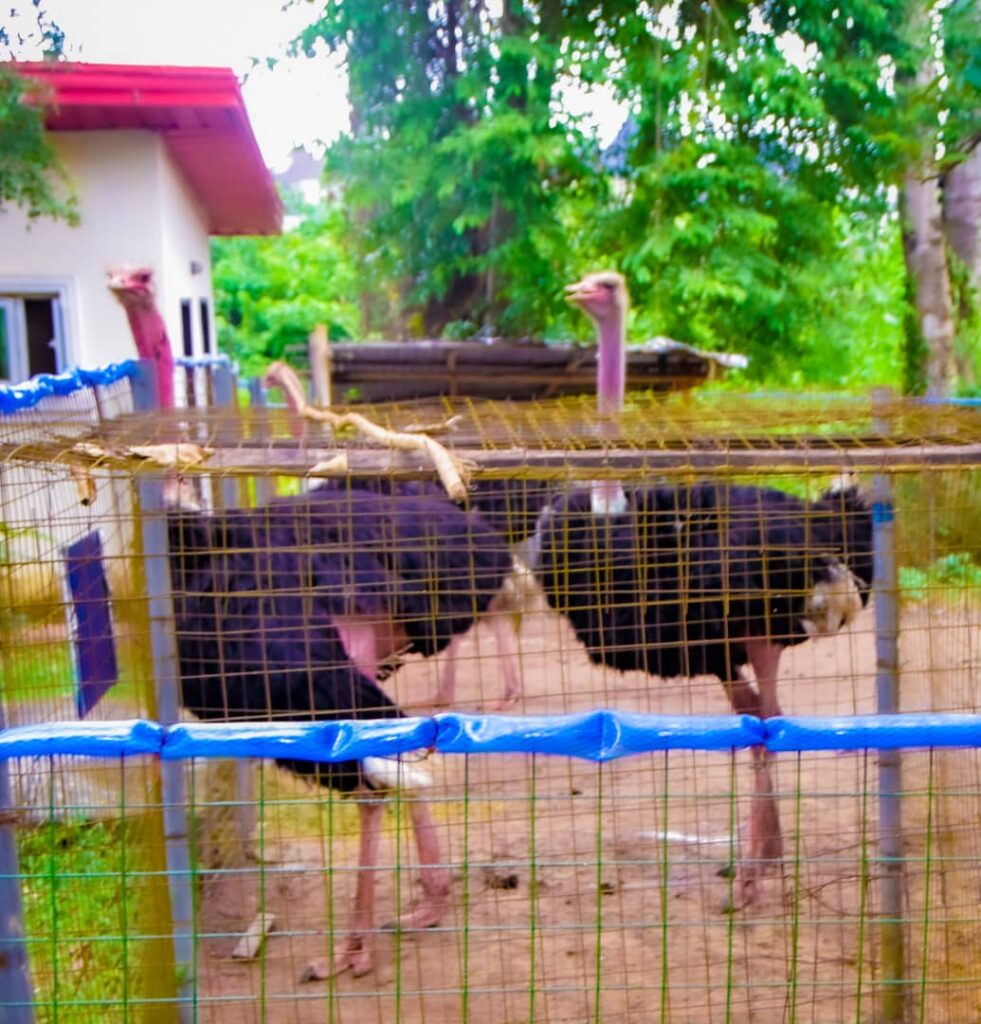
The resort which stands as a testament to thoughtful planning and execution, has now fully taken shape, with all its key features completed and already welcoming visitors. The Mandela Garden, Asaba, boasts amenities such as Olympic-sized swimming pool, art gallery, museum, tennis courts, well-equipped game room with billiards table, mini golf course, boutique and gift shop, bars, a restaurant, a mini zoo, lodges and breathtaking scenery, offering panoramic views of many places around the airport