

Remembering The Late German, Ulli Bieier’s Contributions in Promoting Performing Arts, Literature and Cultural Reawakening of Modern Nigeria
By David Edremoda
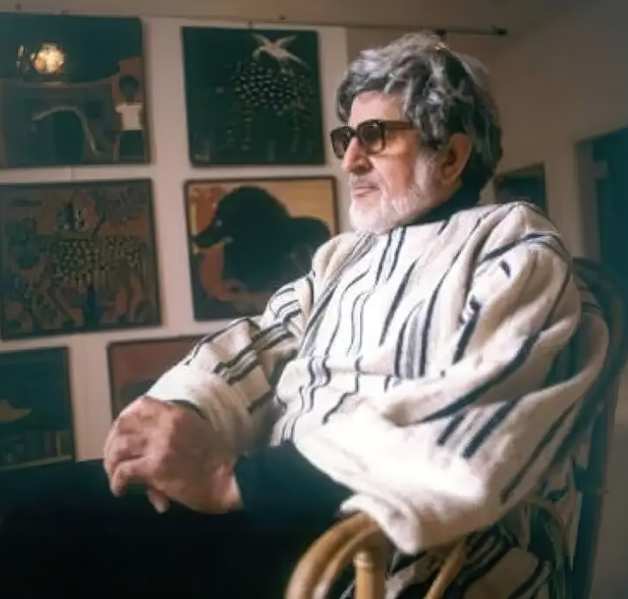
In the annals of Nigeria’s artistic and literary awakening, few names resonate with the lasting reverence afforded to Ulli Beier. A German-born polymath — editor, writer, scholar, and indefatigable cultural activist. Beier’s legacy in Nigeria is not merely that of an expatriate academic, but of a devoted catalyst who helped unveil, preserve, and invigorate the indigenous creative spirit of a nation on the cusp of modernity. Where others of his background often approached Africa through the patronising gaze of colonial anthropology — insisting, with insidious arrogance, that Africans were without history or civilisation — Beier stood as a remarkable exception. He arrived not as a conqueror of narratives, but as a listener, a learner, and ultimately, a midwife to the cultural renaissance that would shape Nigeria’s postcolonial identity.
The Unlikely Envoy: From Glowitz to Ibadan
Born Horst Ulrich Beier in July 1922 to a Jewish family in Glowitz, then part of Weimar Germany, Beier’s early life was shaped by the dislocations of exile. Fleeing Nazi persecution, his family resettled in Palestine, a journey that no doubt sensitised the young Beier to the complexities of cultural identity, marginalisation, and resistance. He earned a degree in phonetics from the University of London and, in 1950, journeyed with his first wife, the Austrian artist Susanne Wenger, to Nigeria. It was a move that would irrevocably alter the trajectory of both his life and Nigerian cultural history.
Beier initially took up a post in the Department of Phonetics at the University of Ibadan. Yet the rigid formalism of academic linguistics soon gave way to a broader passion: the rhythms, rituals, and aesthetics of Yoruba culture. Transferring to the Department of Extra-Mural Studies, he ventured far beyond the academic cloister, immersing himself in the cultural life of towns like Ede, Ilobu, and Osogbo. It was in these spaces, vibrant with traditional performance, visual symbolism, and spiritual cosmology, that Beier encountered the enduring soul of Nigeria — and committed himself to amplifying it.
A pivotal moment in Beier’s intellectual journey occurred in 1956 when he attended the First Congress of Black Writers and Artists at the Sorbonne in Paris. Organised by Présence Africaine, this landmark gathering of diasporic thinkers, including Léopold Senghor, Aimé Césaire, and Frantz Fanon, sparked in Beier what might be described as an epiphany. He returned to Nigeria invigorated by the urgency of decolonising African expression and began laying the groundwork for what would become his most enduring literary legacy.
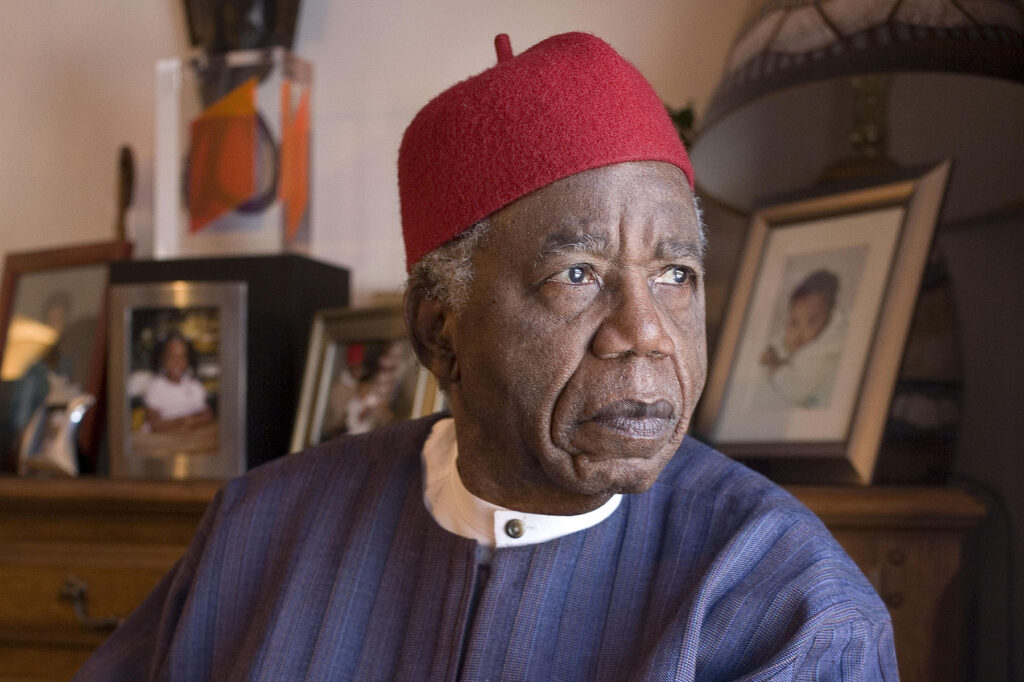
In 1957, Beier founded Black Orpheus, a literary journal that would serve as a crucible for new African voices. The first of its kind in Anglophone Africa, the journal published poetry, fiction, and criticism from emerging Nigerian authors and translated seminal works from Francophone and African American writers. Through its pages, a generation of now-canonical writers: Wole Soyinka, Chinua Achebe, Gabriel Okara, John Pepper Clark, Cyprian Ekwensi, first reached an international audience. The literary scholar Professor Abiola Irele, himself a later editor of the journal, wrote of its influence: “Black Orpheus succeeded in breaking the vicious circle that seemed to inhibit the development of a proper reading public… It became one of the most important formative influences in modern African literature.” More than a publication, it was a platform of resistance, an intellectual vanguard asserting that African voices not only mattered but could command the highest standards of global literary discourse.
Mbari: A Meeting Ground for the Imagination
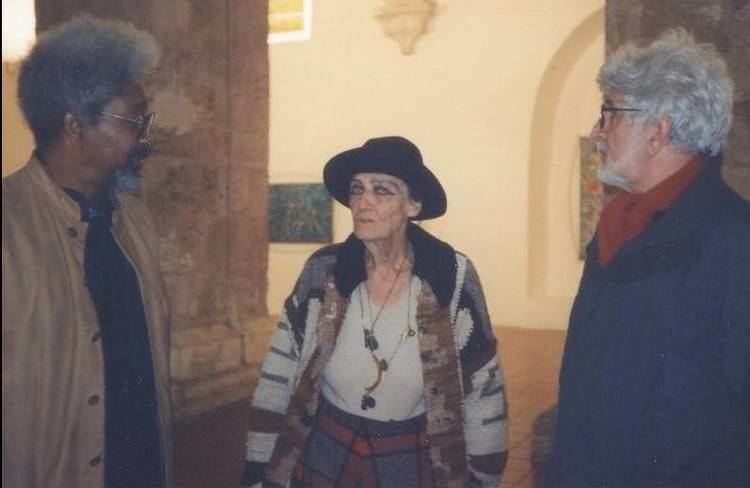
In tandem with Black Orpheus, Beier co-founded the Mbari Artists and Writers Club in 1961, in the heart of Ibadan. Inspired by the Igbo concept of “Mbari”— a sacred art form that merges sculpture, architecture, and ritual — this cultural salon became a gathering space for some of the continent’s most dynamic creative figures.
At Mbari, playwrights and poets mingled with painters and musicians. Wole Soyinka, Chinua Achebe, Christopher Okigbo, Amos Tutuola, Mabel Segun, and Bruce Onobrakpeya were among its regulars. So too were Uche Okeke and Demas Nwoko, whose experiments in visual form bridged traditional aesthetics with contemporary expression. South African writer Ezekiel Mphahlele also found intellectual kinship there. The Daily Telegraph once wrote of Mbari: “It became synonymous with the optimism and creative exuberance of Africa’s post-independence era.” And rightly so — for within its walls, a vision of African modernity was being rehearsed in real time, unshackled from colonial constraints yet rooted in cultural authenticity.
Osogbo and the Birth of a Cultural Movement
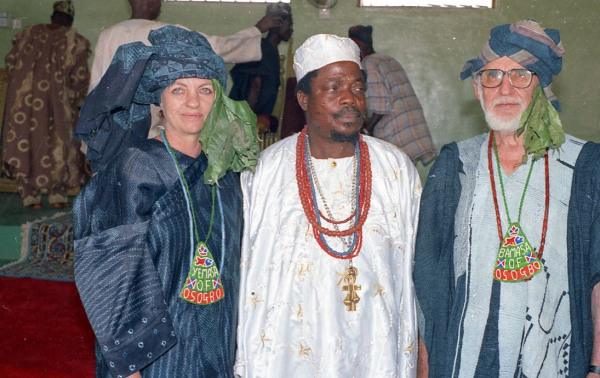
Perhaps no other chapter of Beier’s Nigerian sojourn was as fruitful, or as symbolic, as his work in Osogbo. In 1962, alongside Yoruba dramatist Duro Ladipo, Beier co-founded the Mbari Mbayo Club in the town, transforming Ladipo’s ancestral home into a vibrant performance space and art gallery.
Osogbo quickly emerged as the epicentre of an indigenous modernist movement. It was here that artists such as Twins Seven Seven, Jimoh Buraimoh, and Muraina Oyelami developed their unique visual languages: bold, experimental, yet unmistakably Yoruba. Beier, in concert with his then wife Susanne Wenger, not only documented their evolution but actively nurtured their practice.
His collaboration with Ladipo yielded not only theatrical productions but important translations and publications. Under the pseudonym “Obotunde Ijimere,” Beier published adaptations of Yoruba plays, helping to introduce the profundity of indigenous dramaturgy to broader audiences. He also compiled anthologies such as Modern Poetry from Africa (1963), further establishing Nigeria as a literary powerhouse. The influence of Beier and the Mbari Mbayo group was not confined to elite circles. As Ifa priest and oral poet Chief Ifayemi Elebuibon later recalled, Beier’s fascination with traditional Yoruba performance was deeply immersive. “He used to attend all traditional festivals,” Elebuibon recounted, “asking questions, taking photographs, and documenting chants.” It was this commitment to the lived experience of culture, not just its academic abstraction, that set Beier apart.
A Legacy Etched in Earth and Ink
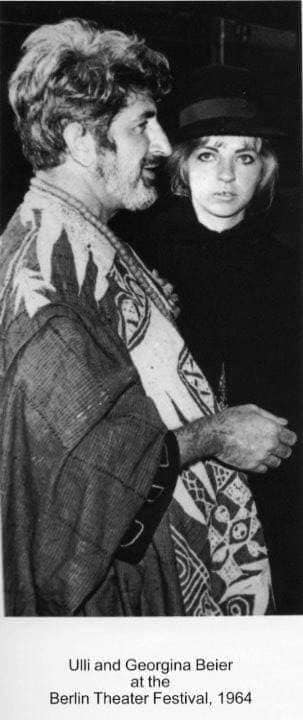
Following the outbreak of the Nigerian Civil War in 1966, Beier and his second wife, Georgina Betts, relocated to Papua New Guinea, where he continued his work in cultural preservation. In later years, they settled in Australia, where Beier died peacefully in 2011 at the age of 88.
Yet his spiritual home remained Osogbo, Ibadan, and the Nigerian cultural landscape he helped to shape. His legacy endures not merely in the institutions he founded or the artists he mentored, but in the sensibility he championed: one that viewed African art not as a curiosity of the past, but as a living, evolving force.
In the wake of his passing, tributes poured in from across Nigeria’s cultural and intellectual spectrum. Alhaji Abubakar Sadiq Mohammed, then Minister of Culture and National Orientation, described Beier’s impact as “phenomenal and enduring,” noting that his influence resonated “not only among Nigeria’s literary icons but also among artisans in Ilobu, Ife, Osogbo, Ede, and beyond.”
Professor Tunde Babawale, former Director-General of the Centre for Black and African Arts and Civilization, hailed Beier as “a unique personality who made indelible contributions to the development and popularisation of Yoruba arts and culture.” He noted that Beier’s efforts laid the groundwork for spaces such as the Iwalewa House at the University of Bayreuth in Germany, which continues to host African studies scholars today.
Dr. Bruce Onobrakpeya, the renowned printmaker and Mbari alumnus, perhaps captured the sentiment best: “He is one of those who shaped the history of art in Nigeria. But on the other hand, Ulli has left a legacy of not only being an artist but an art institution.”
For Nike Okundaye of the Nike Art Foundation, Beier was a bridge between generations. “His contributions to the arts were enormous,” she said. “He loved tradition and was one of the pillars of contemporary art in Nigeria.”
Ulli Beier’s enduring relevance lies not only in what he gave, but in how he gave it. He approached Nigerian culture not as an outsider imposing structure or judgment, but as a respectful witness — amplifying, encouraging, translating, and archiving, always with a sense of reverence. In a century that often sought to erase African cultural identities under the cloak of modernisation, Beier helped Nigeria rediscover and reassert its artistic voice. Through literature, visual arts, drama, and performance, he wove his name into the tapestry of Nigerian heritage, not as a foreign thread, but as part of the loom itself.