

Nigeria’s Nollywood Star, Dele Odule, Opens His Ibudo Asa Film Village in Ijebu Igbo, Ogun State
By David Edremoda
There are journeys that transport us not merely across geography but deep into the sediment of time itself. They carry us from the neon-lit turbulence of the 21st century; its skyscrapers, honking megacities, shimmering billboards, high-speed rails and aircraft that pierce the upper air, into worlds where the pace of life slows to the shuffle of bare feet on red earth, where the first sound at dawn is the crow of a cock, and where the fastest means of travel is a donkey or a canoe rowing against the gentle persistence of a village stream. It is this portal, this deliberate rift in time, that veteran Nollywood actor Dele Odule has crafted in Ijebu Igbo, Ogun State, through his newly unveiled Ibudo Asa Film Village, a project that seeks not just to entertain audiences or facilitate filmmaking but to resurrect, with reverence and creative precision, the essence of Yoruba civilisation before modernity blurred its outlines.
What Odule has built is not simply a cluster of thatched sets ideal for period film shoots; it is a tribute to cultural memory, a living museum of textures, spaces, and rituals that might otherwise vanish in the tidal wave of urban development. His vision mirrors those previously seen in the projects of Kunle Afolayan and Ibrahim Chatta; film villages that have become sanctuaries for Nigeria’s historical imagination and indispensable tools for storytellers seeking authenticity. The practical reason is clear: without such spaces, Nollywood’s attempts to depict the eras of Lisabi, Aare Latoosa, or various Alaafins risk being compromised by unintentional intrusions of the present; errant mobile phones, satellite dishes peeking into the sky, plastic chairs tucked in the wrong corners, actors slipping away to charge their smartphones, or the ubiquitous noise of contemporary life breaking the spell. Viewers, even the most forgiving, can instantly detect such fractures in cinematic illusion. What Odule has done is remove the friction between story and setting, allowing the past to unfurl undisturbed.

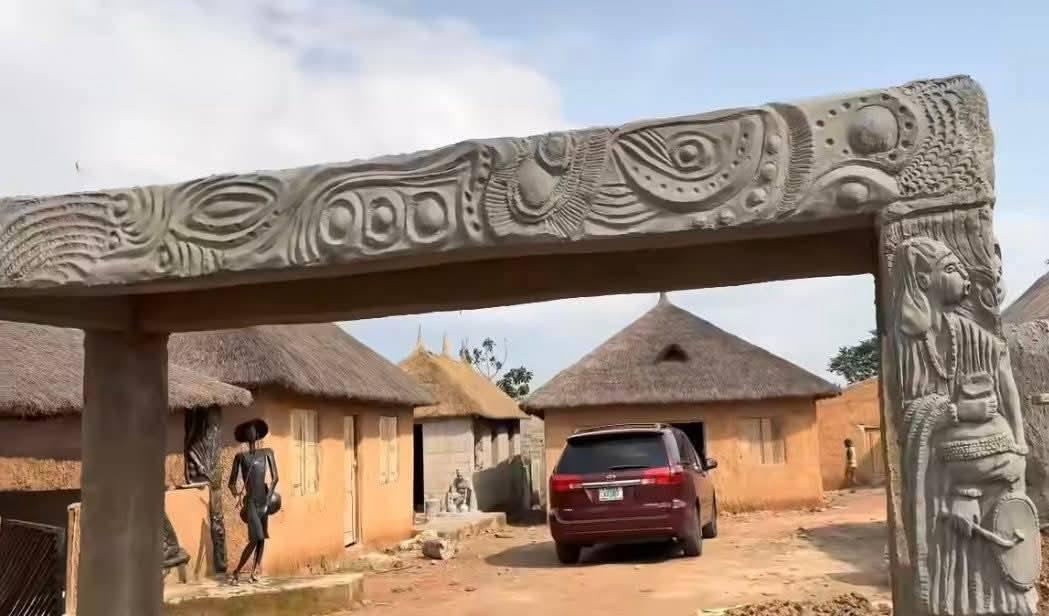
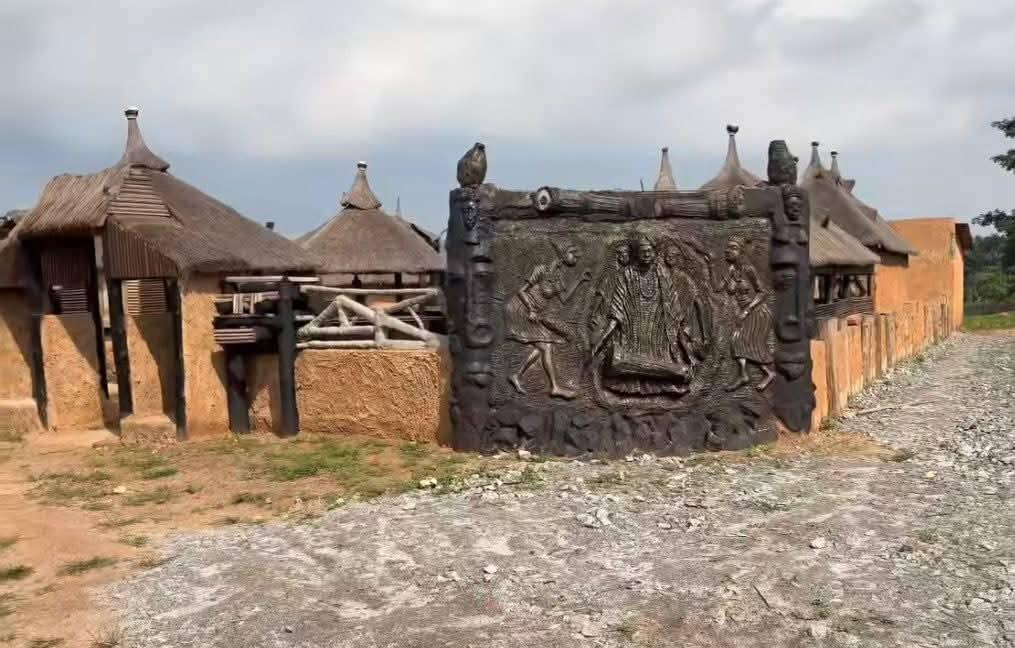
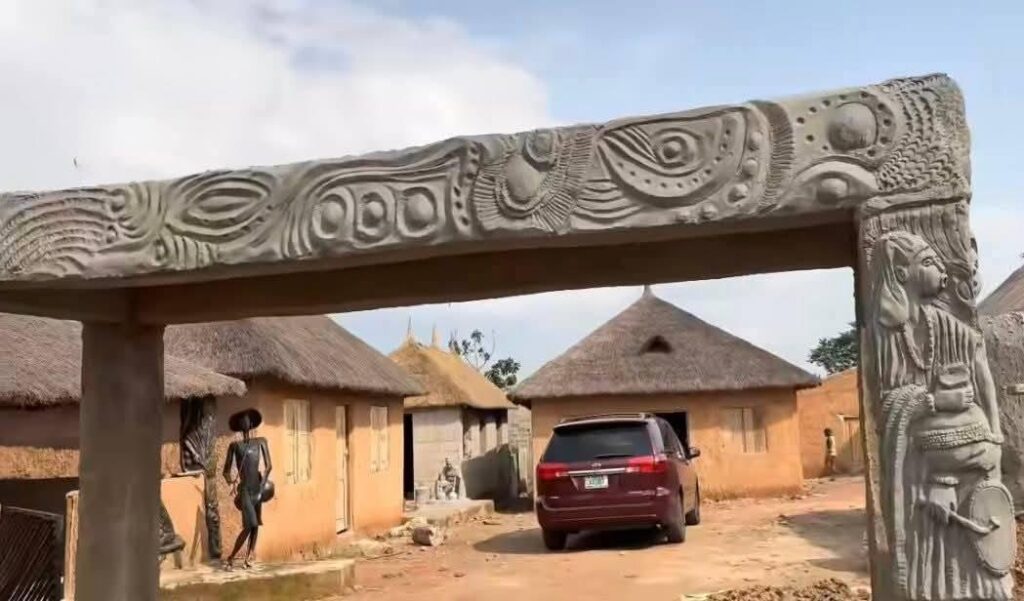
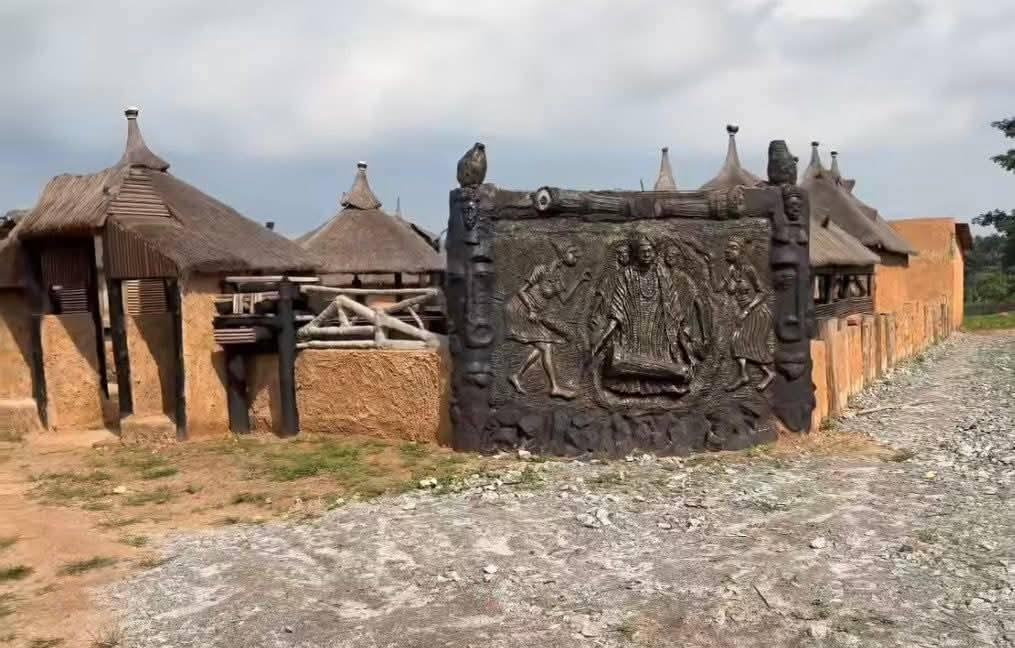
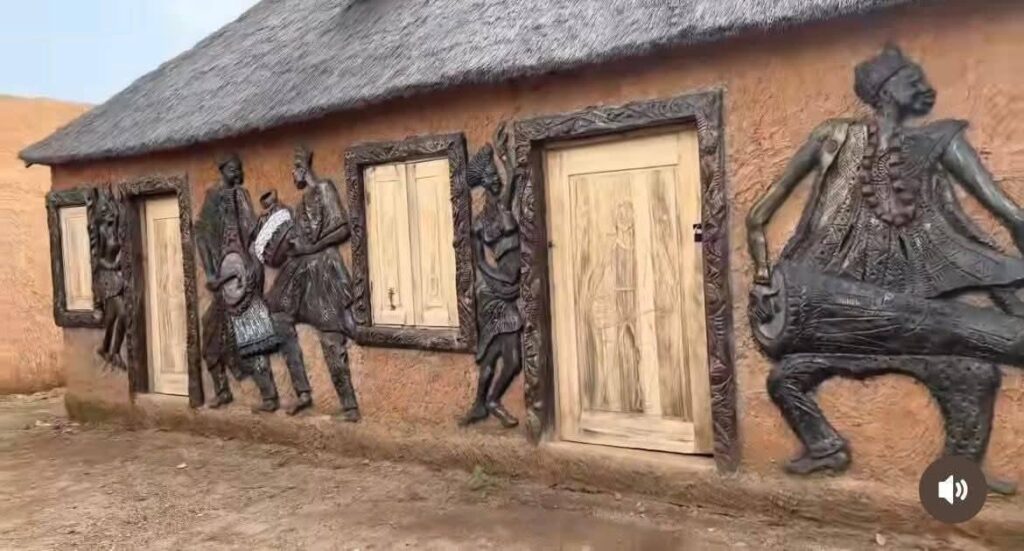
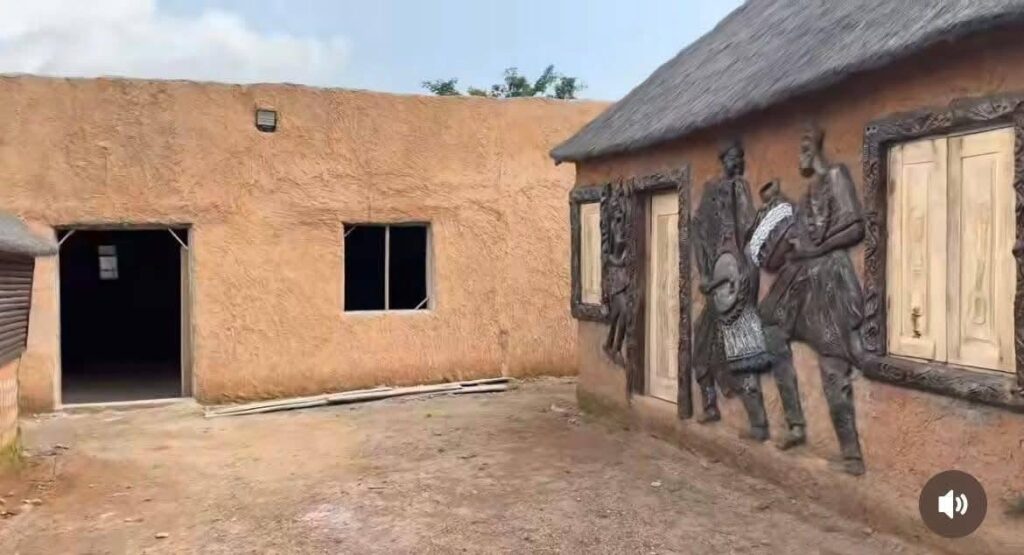
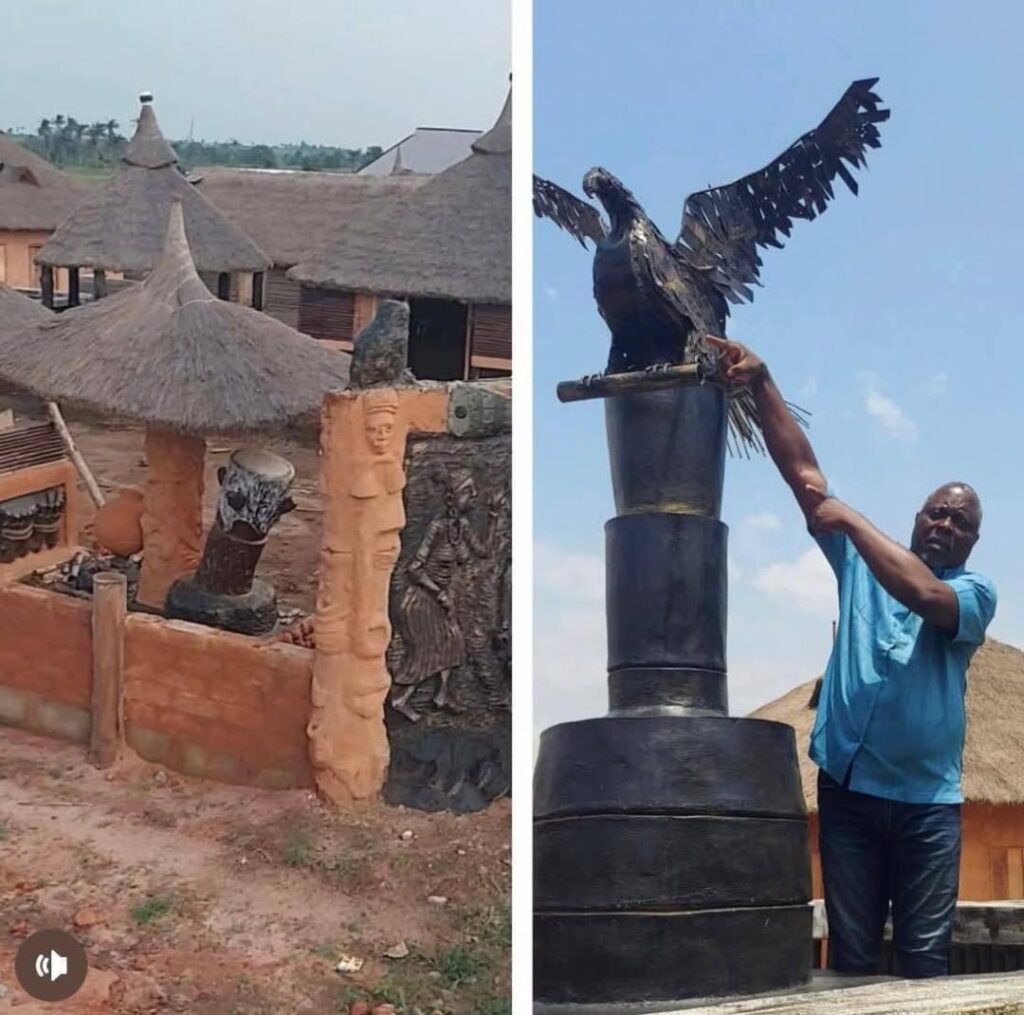
Approaching Ibudo Asa, one is greeted by a grey entrance gate adorned with sculptural reliefs, abstract shapes melding into figurative etchings reminiscent of palace walls or ancestral groves. A man carved in a heavy cap that folds against his ear stands like a guardian of forgotten centuries. Beyond the gate lies a street that seems to exhale history. Mud houses line the path, their thatched roofs slanted modestly, as if humbled by the weight of stories they contain. On one wall, the silhouette of a palm-wine tapper clings to a stylised tree; on another, a painted bàtá drummer seems frozen mid-performance, drumsticks lifted as if about to summon the gods.
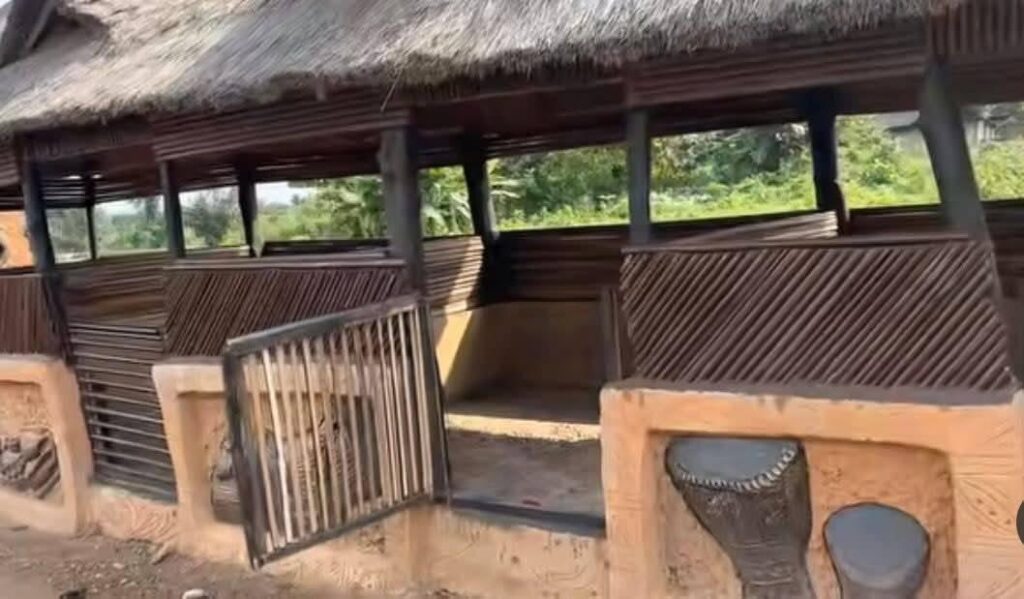
A narrow pedestrian gate opens into a second enclave, where the clay walls deepen in colour and the pathways narrow, guiding visitors past buildings whose architectural patterns invoke Ijebu Igbo, Ode Oyo, Ibadan, or Ile-Ife in the pre-colonial era. One structure, low-walled and airy with deliberate gaps beneath its roof, announces itself as a meeting hall or a place where the Oba convenes with his chiefs, the sort of civic chamber in which disputes are settled, festivals planned, and communal memory cultivated. Everything here: the texture of mud, the slant of roofs, the deliberate positioning of courtyards, is built not for spectacle but for accuracy. It is an archive made visible.
Yet Ibudo Asa is more than an elaborate set. It is a multipurpose artistic ecosystem containing production grounds, hospitality spaces for actors and filmmakers, rehearsal theatres, workshop rooms, mini-exhibition spaces, and open-air courtyards that can host screenings or cultural performances. It doubles as both a filmmaking facility and a tourism destination, a place that welcomes directors scouting for locations, students learning about Yoruba cultural history, and visitors curious about the mechanics of filmmaking. Odule’s vision, according to reports, has been nurtured for years; a dream long carried in his artistic consciousness until its unveiling in August 2025 made it publicly real. His intention, a report noted, was to “give back to society and create an enabling environment where upcoming and established actors can tell African stories in their authentic forms.”
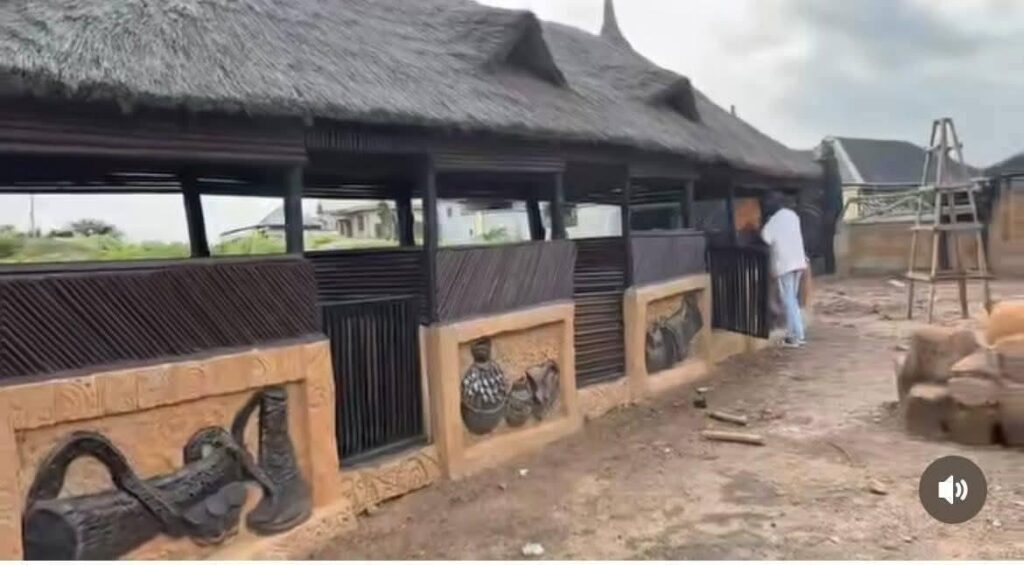
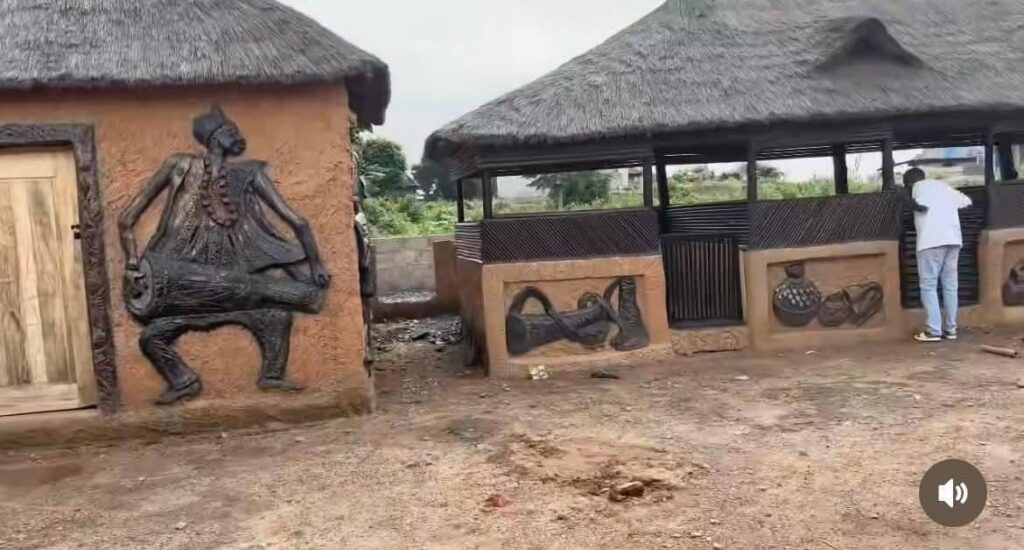
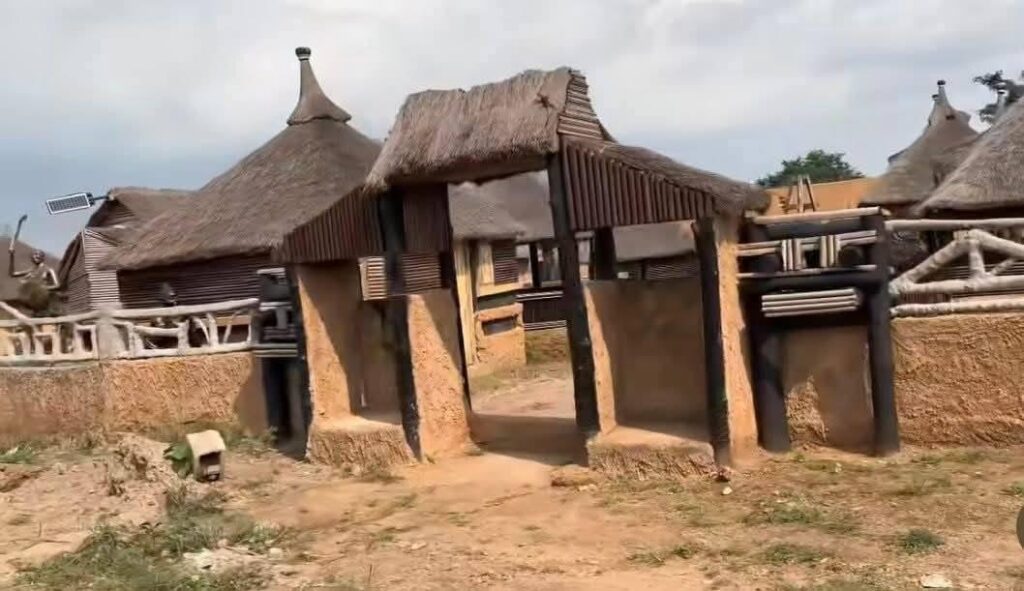
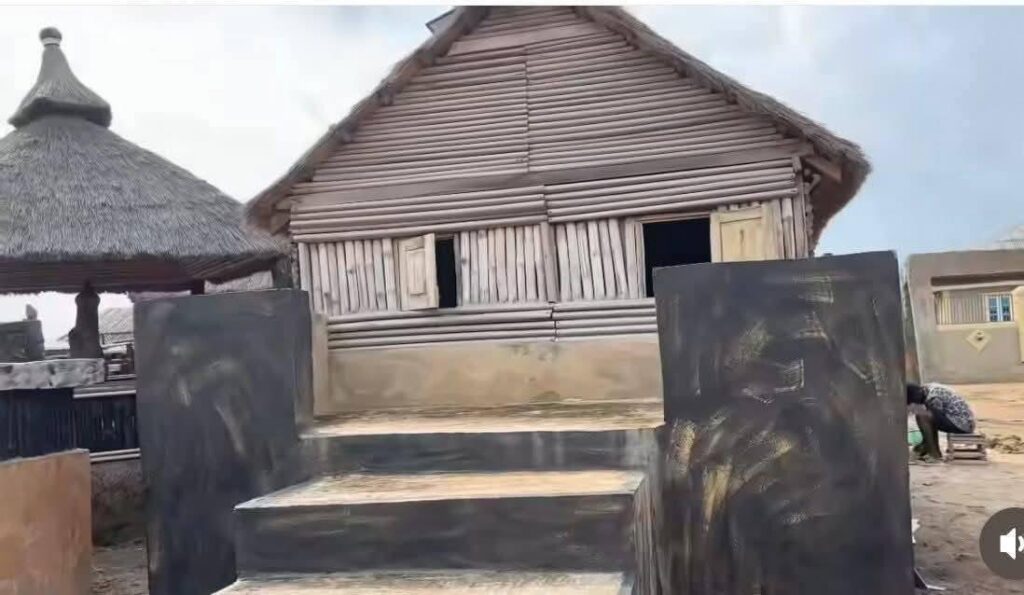
This sentiment was echoed by The Nollywood Times, which described the film village not merely as a set but a cultural infrastructure; a space for training, cultural transmission, and creative incubation. During the unveiling, Odule delivered a quiet but compelling charge to Nollywood: that as the industry continues its impressive global ascent, it must not lose the cultural roots that anchor its storytelling. Ibudo Asa, he explained, was conceived as a space where African identity is not merely acknowledged but foregrounded, where filmmakers can access both material and symbolic resources needed for productions of enduring quality. “We must build institutions that can stand the test of time and remind us of who we are while telling our stories,” he said. It was not a plea but a reminder that no industry can survive without cultural architecture.
Ibudo Asa has already captured public imagination. After its opening, Olumide Olanike of Fact Frontier visited the site and noted that the village possesses an extraordinary capacity to serve as a bridge between culture and cinema. She observed that Nigerian filmmakers often struggle to reconcile authenticity with modern production demands, and that Ibudo Asa offers a space where younger talents can root their work firmly in Yoruba heritage while still producing films with wide appeal. Social media amplified this sentiment, with fans and colleagues alike flooding Odule’s Instagram page to congratulate him. The photos and videos he posted; mud houses glowing under sunlight, courtyards bustling with visitors, spread across timelines like postcards from a forgotten century.
The admiration extended to industry legends. In January 2025, Prince Jide Kosoko toured the village ahead of shooting Esugbayi Eleko – The Movie. The 70-year-old icon left deeply impressed, praising Odule’s creative eye and artistic training. He marveled at the costumes, the architecture, and the handmade artefacts that Odule personally designed. He described Ibudo Asa as “a beautifully and proudly African cultural complex that is set to redefine the arts and culture sub-sector,” adding with infectious excitement, “I can’t wait to see this complex fully operational.” His praise was both an endorsement and an acknowledgment of the sheer labour behind such a project.
The potential for tourism is immense. Nestled in the tropical rainforest belt of Western Nigeria, Ibudo Asa offers more than film production. Visitors can tour costume archives, observe behind-the-scenes production, or enjoy local dishes in a café serving yam, egusi, afang, and natural palm wine. There are craft shops selling Yoruba art, textiles, and film merchandise, and visitors might even stumble upon a live film shoot, complete with lighting rigs, costumed actors, and bustling crew members. As dusk settles, tourists can sit beneath the open sky for an evening of Yoruba drumming, storytelling by seasoned theatre practitioners, or a rooftop screening of a Yoruba classic. It transforms filmmaking into a cultural pilgrimage.
Perhaps the most far-reaching impact of Ibudo Asa lies in its educational promise. The Yoruba film tradition was built through apprenticeship; from the Alarinjo troupes to the theatre movements of Hubert Ogunde, Kola Ogunmola, and Duro Ladipo. Odule’s village revives this lineage. Here, veterans such as Jide Kosoko, Adebayo Salami (Oga Bello), and others can mentor emerging actors, teaching them timing, stage discipline, dialect coaching, gestural technique, and the intangible wisdom of stagecraft that cannot be learned in formal classrooms. This form of on-site pedagogy is invaluable because it lowers barriers for rural youth, preserves endangered oral traditions, and fosters intergenerational transmission that professionalises Nollywood from its grassroots.
Behind this project stands a man shaped by culture and adversity. Born on 23 November 1961 in Ile-Ife but raised in Oru, Ijebu North, Odule’s early life was marked by the loss of his mother and the grounding influence of village life. He attended St. Mark Anglican Primary School and Itamerin Secondary Modern School before enrolling at the Muslim Teachers Training College. Later, he studied Mass Communication at Olabisi Onabanjo University and took Theatre Arts courses at the University of Ibadan. His artistic journey began in 1977 under the mentorship of Mukaila Adebisi of the Oloko Theatre Group. He later trained with the Tubosun Odunsi Drama Group, performing poetry on weekends to fund his education. His breakthrough came with the iconic Ti Oluwa Ni Ile, though he had appeared earlier in Agbebo Adiye, Aribi Sebi, and Ayanmo. Since then, he has featured in over a thousand films, proving himself a consummate practitioner who sings, drums, dances, and acts with equal fluency. He served as President of TAMPAN and remains a cultural ambassador for Airtel Nigeria.
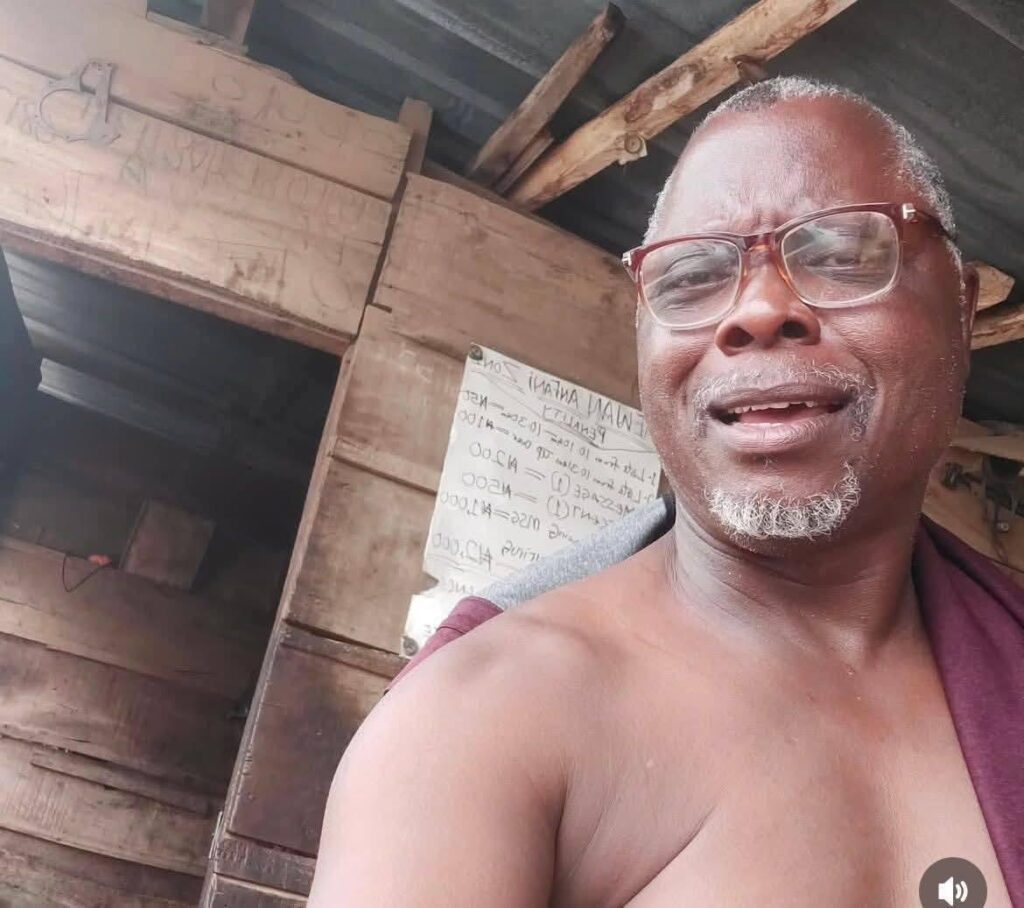
In interviews, Odule has often traced his artistic roots to the cultural vibrancy of his childhood. “Traditional activities taught me I could sing, drum and dance,” he recalled. “When I later saw that actors were paid for doing what came naturally, I knew I had found my calling.” It is this deep link between personal history and artistic purpose that animates Ibudo Asa. It is not a vanity project but a gift of memory; an attempt to rebuild the worlds that shaped him. Ibudo Asa stands today as an architectural poem carved in clay and timber, a declaration that cultural preservation is not passive nostalgia but an active, necessary contribution to the evolution of Nigerian cinema. In building this village, Dele Odule has created a sanctuary for the past, a workshop for the present, and a seedbed for the future. His film village is a reminder that cinema is not only about images projected on screens; it is also about the places where stories are born, rehearsed, lived, and transmitted. It is a tribute to the soil that nourished him, and a gift to a film industry that continues to rediscover its voice. In an age where modernity threatens to flatten memory, Ibudo Asa stands gently, insistently, as a place where memory takes root again; where history is not forgotten but inhabited.