
Time Magazine’s implied prediction in 1958 that Nigerian leaders would, after independence, tear the country apart falls flat as the nation waxes stronger despite challenges
By David Edremoda
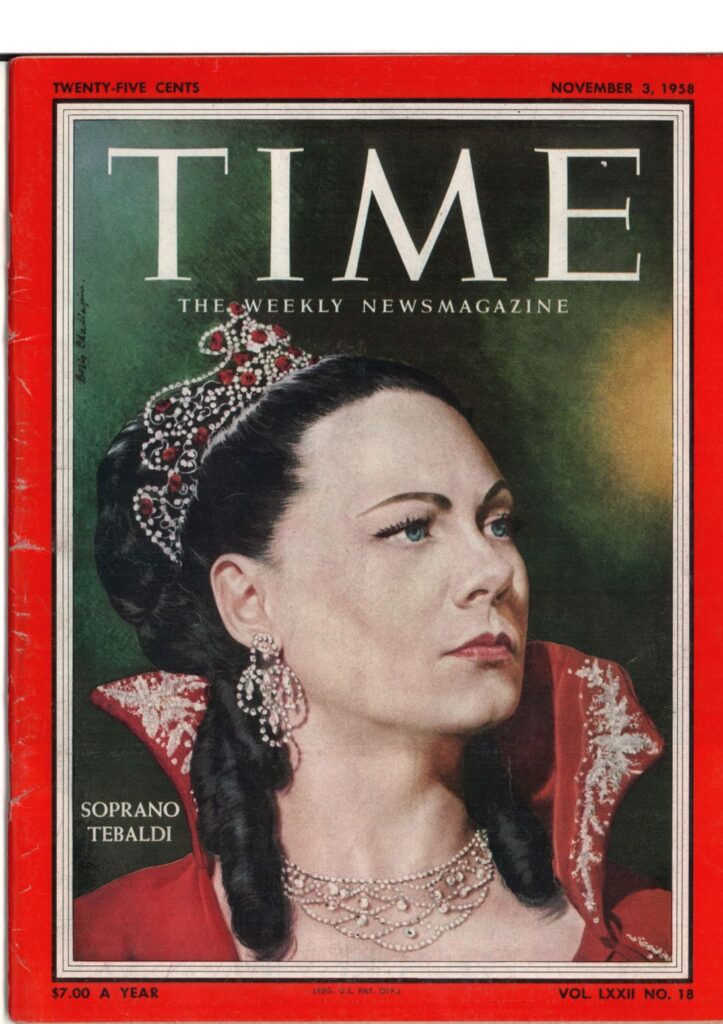
On October 1, 2025, Nigeria marked sixty-five years of independence, a milestone weighted with meaning, not merely for its passage through time, but for its defiant continuity as a single nation against all odds. In the years leading up to independence, few observers, particularly those beyond its shores, believed Nigeria could long withstand the internal frictions etched into its colonial inheritance.
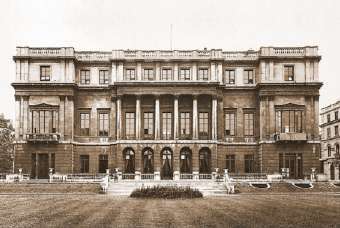
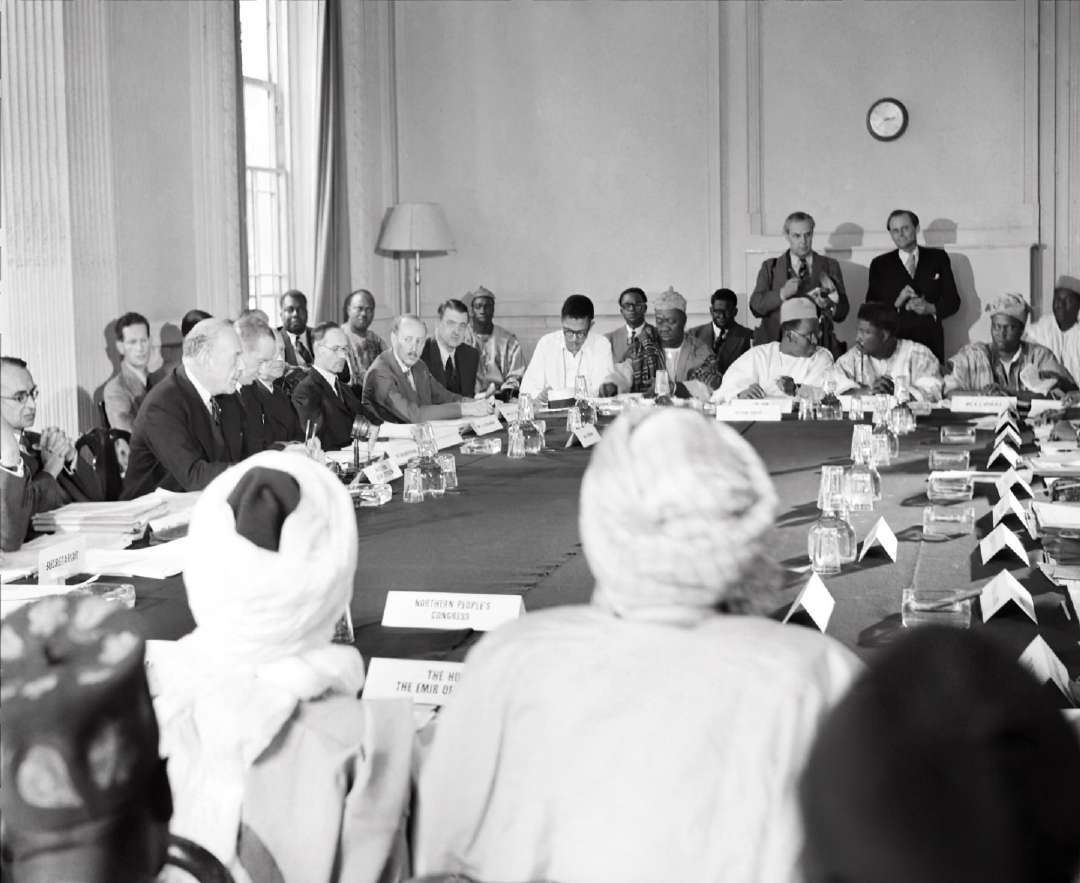
Foremost among the skeptics was Time Magazine, whose 1958 coverage of the constitutional negotiations at Lancaster House painted a portrait of a nation-in-waiting already at war with itself. There, under the stately chandeliers of the Music Room, where once Chopin played for Queen Victoria, the regional leaders, representing Nigeria’s major blocs, clashed with venomous intensity. Time likened their disputes to the deadly standoff between mongoose and cobra.
“In the end,” the magazine wrote in its November 3, 1958 edition, “the Nigerians got what they had come for… But behind the scenes, the conference revealed ominous signs of trouble to come.” And trouble did come: tribalism, mutual suspicion, civil strife, economic instability, and insecurity. Yet the nation did not collapse. Nigeria has bled, faltered, risen, and redefined itself through history’s crucible. At 65, it remains unbroken — not by denial of its divisions, but by its stubborn refusal to surrender to them. Below is the Time Magazine article that was first published in November 3, 1958:
Independence without difficulties is a dream of Utopia.
“For one month delighted Londoners watched the 80 ceremonially dressed Nigerians – some with necklaces of animal teeth, others with feathered straw hats, at least one with a jeweled crown – parade into Lancaster House for their historic conference.
Everything possible had been done to make them feel at home.
For the Colonial Office’s big reception at the Tate Gallery, all nude statues were carefully screened so as not to offend Moslems. The Lord Mayor served up a banquet of stewed peanuts, and one paramount Chief – His Highness James Okosi II of the Onitsha – fulfilled a lifelong ambition: to ride the escalator at the Charing Cross underground station.
In the end, the Nigerians got what they had come for: on Oct. 1, 1960, the largest (373,250 sq. mi.) of Britain’s remaining colonial territories would get its independence. But behind the scenes the conference had revealed ominous signs of trouble to come.
From the start there was a clash between the personalities of the Premiers of the three regions — each obviously more important than the scholarly Federal Prime Minister, Alhaji Abubakar Tafawa Balewa.
In Western eyes, Obafemi Awolowo of the Western Region seemed the most statesmanlike: as the conference began, the London Times carried a full-page ad proclaiming his declaration for freedom under the title “This I Believe,” prepared with the help of an American public relations man.
In contrast, U.S.- educated Premier Nnamdi (“Zik”) Azikiwe of the Eastern Region seemed to have learned more in the U.S. about Tammany tactics than Thomas Jefferson, and was somewhat under a cloud as a result of a British tribunal’s 1956 investigation into corruption in his administration.
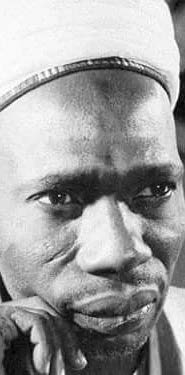
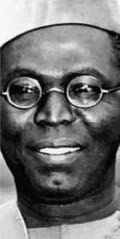
The North’s Premier, the Sardauna of Sokoto, a haughty Moslem of noble birth, could barely conceal his contempt for his less aristocratic colleagues.
Insults and Accusations. Under the great chandeliers of the Lancaster House music room, where Chopin once played for Queen Victoria, the Premiers bickered, shot insults back and forth like poisoned darts.
When the conference took up the ticklish problem of how to protect the rights of minorities among Nigeria’s 250 tribes, Awolowo suggested creating three new states.
The North’s Sardauna, not wishing to relinquish any of his own territory, vetoed the idea. Nor did he like the plan for a centralized police force under the federal government: he much preferred to use his own force, which, answerable only to him, can pop a man in jail with no questions asked.
At one point, the Sardauna accused Awolowo of sending his supporters to Israel to be trained as saboteurs in the North, a charge fabricated out of the fact that Western Nigeria has imported agricultural experts from Israel to advise its farmers.
Awolowo countercharged that the Sardauna flogs his prisoners.
At receptions the delegates sipped their orange juice, icily aloof from one another. In elevators conversation would suddenly stop if a delegate from another region got on.
But as the weeks passed, the Sardauna grudgingly consented to let the constitution carry a bill of rights, though he was so thoroughly opposed to giving the vote to women that the conference decided that this was, after all, not necessarily a “fundamental” right.
The delegates then agreed on a centralized police force, but one that would be administered by a council of representatives from each region.
Finally, with their own independence from Britain assured (as well as that of the adjacent British Cameroons, should they choose to become a part of Nigeria), the delegates started for home.
Until Nigeria’s federal election takes place next year, the three Premiers will continue jockeying for power, and the fate of Nigeria could well hinge on who comes out on top.
Last week, even as the National Planning Committee of Independence opened its contest for the design of a national flag (first prize: $300), many Nigerians had grave reservations about what lay ahead.For all its jubilation, Nigeria’s West African Pilot felt obliged to warn: “Independence without difficulties is a dream of Utopia.” – Time Magazine, November 3, 1958.
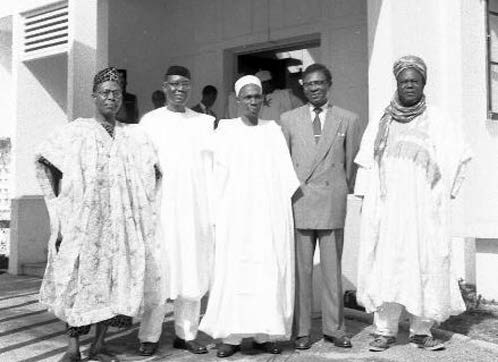
Nigeria at 65: A Testament to Resilience and Unity
Predictions, no matter how ominous, do not seal a nation’s fate. Rather, it is the will of a people, their choices, sacrifices, and enduring spirit, that carves their path through history. As Nigeria marks 65 years of independence, it stands not only as a sovereign entity but as a powerful rebuke to those early forecasts of inevitable disintegration.
In 1960, many Western observers doubted the viability of Nigeria as a united nation. With its vast ethnic diversity, over 250 ethnic groups, its colonial borders seemed more a recipe for fracture than cohesion. And yet, like the proverbial man once told by a seer he would remain poor, Nigeria refused to submit to destiny. Instead, it forged ahead, often through turbulence, to define its future on its own terms.
Nigeria’s regional diversity has proven to be a strength rather than a weakness. The northern region, rich in grains, and the south, bountiful in roots, tubers, and oil wealth, have developed an economic interdependence that binds them. The healthy rivalry between the pre-independence regions, driven by visionary leaders like Obafemi Awolowo, Nnamdi Azikiwe, and Ahmadu Bello, laid a foundation of progress that still echoes today.
The nation’s human capital is formidable: brilliant minds, trailblazers in science, business, arts, and technology – both at home and across the diaspora – continue to raise Nigeria’s profile on the global stage.
Crucially, Nigeria’s unity has also been preserved by institutions such as the Armed Forces, which have intervened at critical junctures to stabilize the republic. Yet it is the Nigerian people, in their ordinary yet heroic capacity for endurance, who are the true custodians of this unity. In times of economic hardship, political unrest, and social upheaval, Nigerians have stood firm: resilient, adaptive, hopeful. At 65, Nigeria is not just a nation that has survived, it is a nation still becoming, still striving, and still believing.