

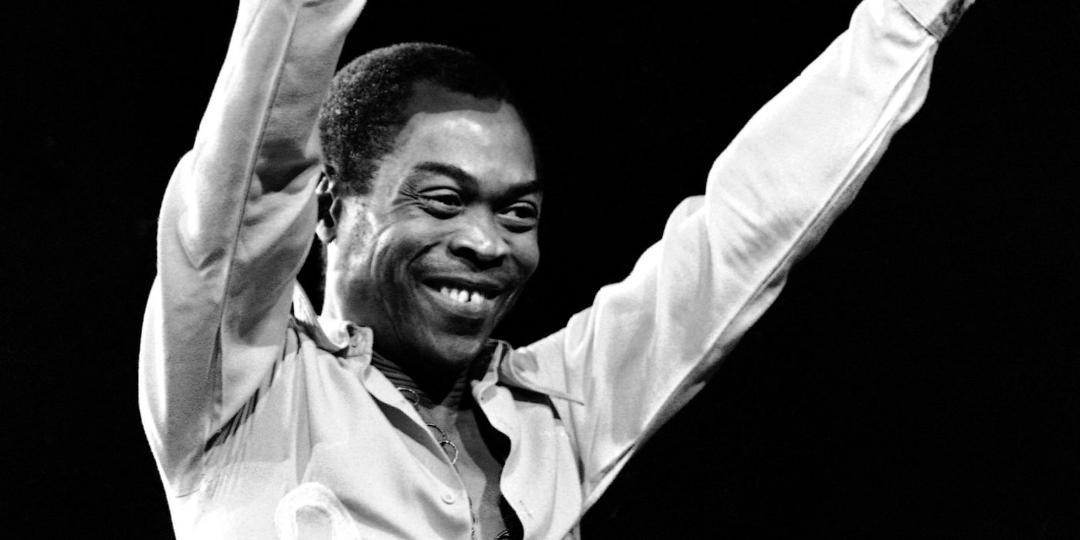
Twenty-eight years after his death, the iconic pioneer of the Afrobeat music genre, Fela Anikulapo Kuti, is posthumously inducted into the 2025 Grammy Hall of Fame, courtesy of his 1976 classic, Zombie
Soldiers all over the world march in lockstep. Their legs move in millipede’s legs unison as they obey the commands of their drill sergeant. As he shouts orders on top of his voice, his neck veins stretched to their elastic limits like guitar strings, the subalterns under him obey implicitly. They stand ramrod straight. As they salute, their hands would go through the air in a whistling slash. Tension among them can only dissolve into camaraderie as the Sergeant Major asks them to stand at ease. That is the positive side. Discipline and oneness in the Armed Forces.
There is, however, a flipside to this command and obey structure: loss of individuality and personal objective reasoning. It was this negative part that Fela explored in his song, Zombie. In popular culture, a zombie is typically depicted as a reanimated corpse, often portrayed as mindless. It is a popular myth among Haitians who perform voodoo, through which it is believed they can command reanimated corpses to perform different tasks.
Anyone who listens to the late Fela Aikulapo-Kuti’s Zombie, which made it possible for the musician to be posthumously inducted into the 2025 Grammy Hall of Fame, will appreciate the depth of the man’s mastery of history, psychology, socio-linguistics and trope. In the song, he portrays soldiers as not having a mind of their own and can be asked to perform any act, however suicidal, by their superiors.
An artiste may die, but his music lives forever. That holds for Afrobeat pioneer Fela Anikulapo-Kuti, who, 28 years after his death, has been posthumously inducted into the 2025 Grammy Hall of Fame. The reason is that his 1976 classic, Zombie, made it possible. The announcement was made by the organisers of the Grammy Awards, the Recording Academy, as part of this year’s Hall of Fame inductees. The award differs from regular Grammy categories by honouring recordings that are at least 25 years old and have “lasting qualitative or historical significance.”
The theme of Zombie is very strong. In a statement announcing the 2025 selections, the Academy said Zombie was selected “for its fearless critique of oppression, cultural impact, and enduring relevance to political resistance and African musical heritage.”
Zombie, till today, remains a classic because of its originality. It was not a remix of any earlier song.
Fela’s use of metaphor (comparing soldiers to Zombies) is compelling. The comparison makes the song unforgettable. Moreover, Fela’s use of onomatopoeia, the formation of a word from a sound associated with what is named, created humour which drove home the message. That’s the “joro jara joro” sound, which resonates with how soldiers march.
His persecution after the release of the song (destruction of Kalakuta Republic) went down in history as one of the worst human rights abuses in Nigeria.
Reacting to the news, Fela’s eldest son and singer, Femi Kuti, recently shared the family’s excitement on X (formerly Twitter), writing: “Our father’s legacy lives on. We are honoured to accept this Grammy Hall of Fame award on behalf of Fela Anikulapo-Kuti. His music continues to inspire & unite people across the world #Grammy.”
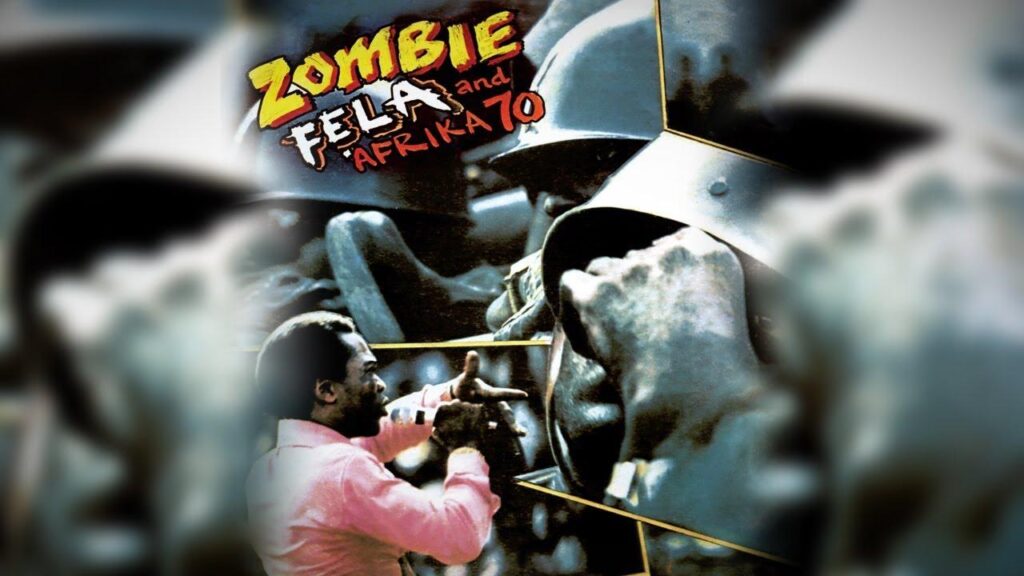
Originally released in Nigeria in 1976 under Coconut Records and later in the UK by Creole Records in 1977, Zombie is widely regarded as one of Fela’s most incendiary and impactful albums. Featuring tracks like Zombie, Mister Follow Follow, Observation Is No Crime, and Mistake (recorded live at the Berlin Jazz Festival in 1978), the album was a satire of the Nigerian military, likening soldiers to mindless “zombies” who blindly follow orders without question. Its massive commercial success ignited outrage within the ruling military regime, eventually provoking a violent state-backed assault on Fela’s Lagos commune, Kalakuta Republic.
During the brutal 1977 raid, Fela was severely beaten, his studio and master tapes were destroyed, and his mother, Chief Funmilayo Ransome-Kuti, a revered activist, was thrown from a window and later died from her injuries.
That attack, which was widely condemned by human rights groups, deepened Fela’s reputation as a fearless musical dissenter and became a historic moment in Nigerian sociopolitical consciousness.
Fela’s induction places Zombie alongside other legendary works previously admitted into the Hall of Fame, including albums from Michael Jackson, Jay-Z, Cat Stevens, and Santana. Music scholars and fans alike have described the Grammy recognition as a long-overdue global acknowledgement of Fela’s influence on world music and political thought. Fela, who died in 1997, is widely credited with creating Afrobeat, a genre that fused jazz, highlife, and traditional African rhythms with searing political commentary.
His music inspired generations of activists and artistes, from Seun Kuti and Burna Boy to global figures like Questlove and Beyoncé. The Grammy Hall of Fame nod adds to a growing list of posthumous accolades for the late icon, who has already been the subject of multiple documentaries, biographies, and the Broadway musical Fela!

Fela The Musical Gadfly
Fela Anikulapo Kuti, Nigerian musician, composer, and political activist, was born on October 15, 1938, in Abeokuta, Nigeria. He was the pioneer of Afrobeat, a music genre that combines traditional African rhythms with jazz, funk, and highlife. Fela’s parents were both activists, with his mother, Funmilayo Ransome-Kuti, being a renowned feminist and anti-colonialist, and his father, Israel Oludotun Ransome-Kuti, an Anglican minister and the first president of the Nigeria Union of Teachers.
Fela began learning piano at age eight, encouraged by his father. He attended Abeokuta Grammar School, and later he was to study medicine in London in 1958, but switched to music at Trinity College of Music. In London, Fela formed his first band, Koola Lobitos, which played a fusion of jazz and highlife.
Fela returned to Nigeria in 1963 and re-formed Koola Lobitos, beginning his career as a radio producer and musician. He developed the Afrobeat genre, which became a powerful tool for social commentary and activism. His music became radicalised when he had a 10-month tour of the US in 1969. It was there he met Black Panther and civil rights activist Sandra Smith, now Sandra Izsadore, who later became his girlfriend. She introduced Fela to the writings of black activists like Malcolm X, Angela Davis, Jesse Jackson, H. Rap Brown, Stokely Carmichael, Huey Newton, Frantz Fanon and other revolutionary thinkers and “educating him on social and political issues.”
Thereafter, Fela’s music addressed issues like corruption, human rights abuses, and colonialism, making him a target for government repression. He was known for his outspoken views and criticism of Nigerian governments, which led to numerous arrests and harassment.