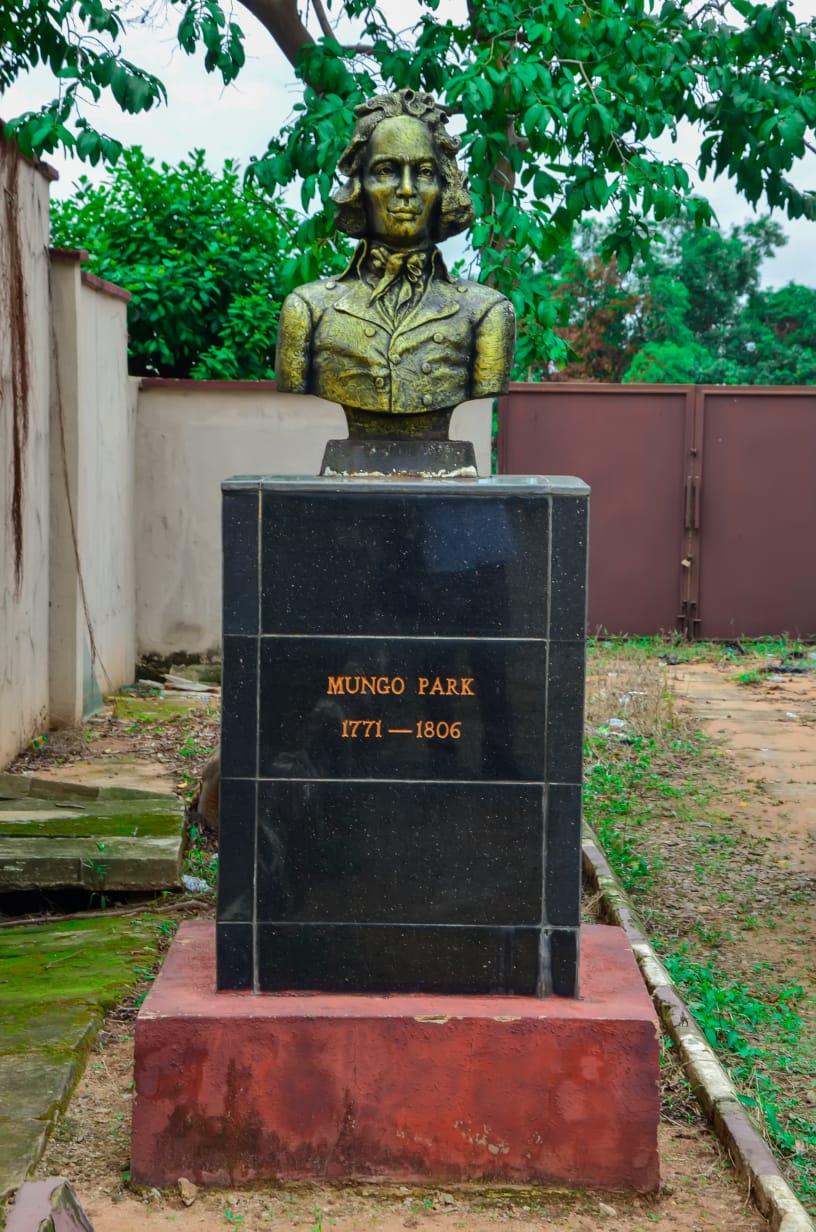

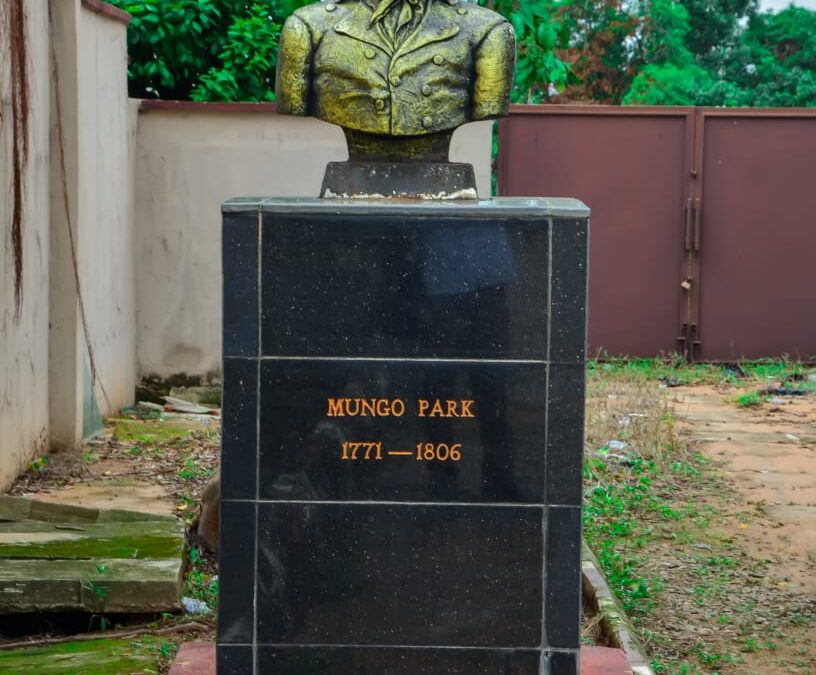
At Asaba, Sylvester Asoya encounters Mungo Park, Lander Brothers, George Tubman Goldie, Ralph Moore, Major Festing and relics of the famous Ekumeku liberation War of 1883.
Without history, there will definitely be no memory. Therefore, history is undoubtedly an important subject. Apart from helping in understanding the present, it also helps in learning from the past and providing understanding into the future. As a living subject, history can help remarkably in gaining valuable insights about eras, cultures and how societies and governments evolved. Asaba, to put it mildly, is a storehouse of history and knowledge. For instance, the history of colonial Nigeria will be incomplete without the exhilarating exploration story of Mungo Park (1771-1806). Mungo Park, an adventurer and the first European explorer, believed to have traced the Niger River from the highlands of Equatorial Guinea to Bussa in Niger State, Nigeria, where his boat capsized, remains a great historical figure. Although this great Scottish explorer did not set foot in Asaba, a gigantic ancient building erected in his memory, stands tall at the centre of Asaba today.
So, how did the idea for Mongo Park’s House, a great monument, replete with history and thrilling adventure, and now 139 years old, come about in Asaba?
The Mungo Park House was built by George Tubman Goldie in 1886, for purely economic purpose. Goldie, an agent of all British Commercial firms, is easily remembered for uniting every British interest in both the Oil River and Niger Delta Provinces to form the United African Company. But he did not do it alone. He did it with the support of other British merchants who were also on ground at Asaba. However, he later changed the trading firm to Royal Niger Company with headquarters at Asaba. An additional information by the National Museum inside Mugo Park’s House in Asaba, speaks eloquently about Asaba’s attractiveness as a town under the Royal Niger Company. This was at a period when the country was divided into protectorates: the Northern and Southern Protectorates. “In the past, the River Niger held a certain lure for both distant and indigenous adventurers who strived to settle around and along its banks.” From available written and oral records, trade, transport, agriculture (fisheries, aquaculture and livestock) and sheer adventure, drove many people to the Niger.
At Asaba, two other notable imperialists are still alive and kicking. They are Sir Ralph Moore and Major Festing. Moore was the Consular-General of the Southern Protectorate after the merger of Niger Delta and Oil River Provinces with headquarters, first at Asaba, and later Calabar. Festing, on the other hand, was the cruel Commanding Officer of the Royal Niger Company’s Constabulary based at Asaba. He was actually the one who led military forces against the warriors of Ekumeku guerrilla warfare, a resistance movement in 1883. Ekumeku War is also known as Anioma-British war which was fought between 1883 and 1914.
Outside war, conquest, centrality, trade, economic exploitation and imperialism, Asaba is also very significant because it houses a sea of endless primary sources that include personal documents, illuminating local records, artifacts and collections that can be invaluable for research and writing on Nigeria and her colonial experiences. For example, at the city’s National Museum, the “sophisticated” weapons of Festing’s ruthless British infantrymen during the Ekumeku uprisings, are on display. The gallery also offers easy to find answers on how Ekumeku warriors, bound by secret oath, effective local leadership, traditional institutions, guerrilla tactics, discipline, courage and patriotism, held the invading British forces for nearly two decades.
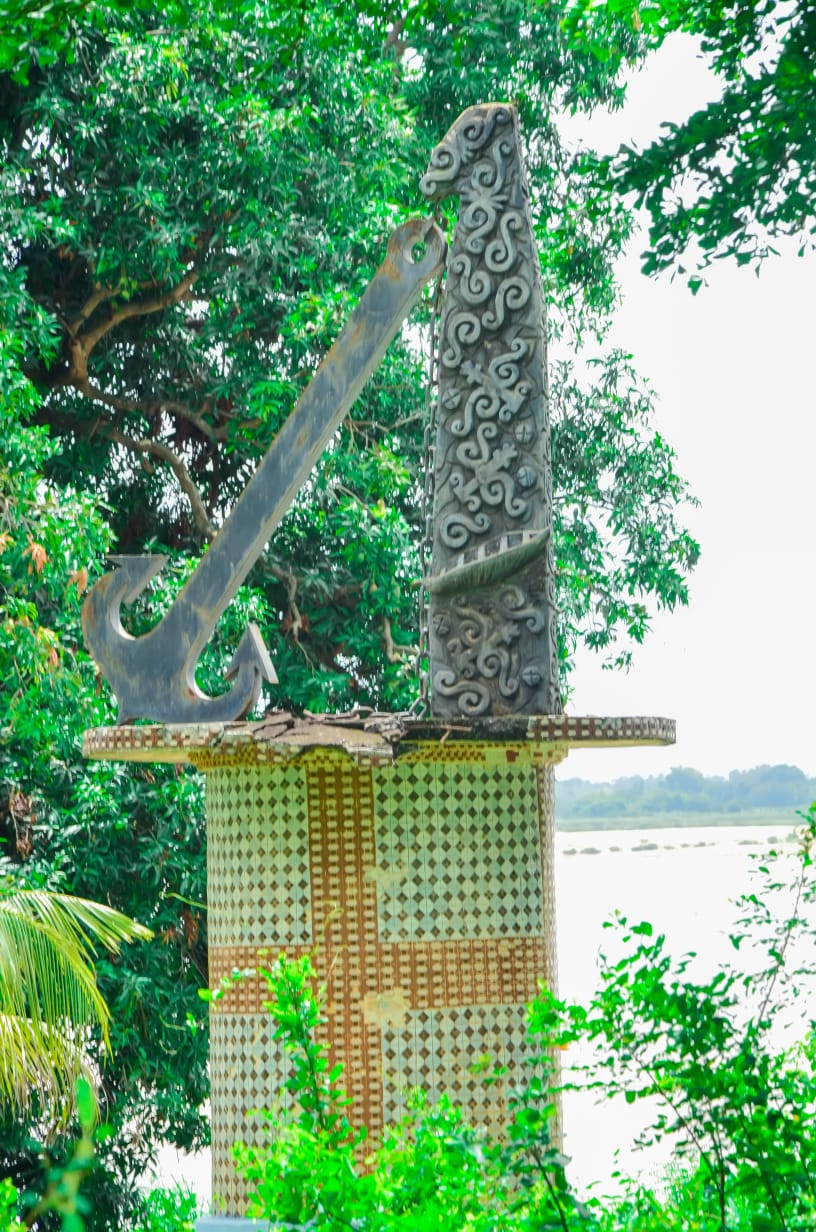
Other historical sites at Asaba include notable landmarks like the Anchorage. The anchorage was built by the Delta State government at the supposed landing spot of Richard and John Lander (the Lander Brothers). Believed to have anchored at Asaba in 1833 before their onward journey to the mouth of the River Niger, Lander Brothers began their exploration of the Niger from Clapperton. But Lander Brothers did not just complete the mission of explorers before them like Mungo Park and others, they also solved the riddle that once surrounded River Niger which had puzzled geographers, scientists and natives for many centuries. In addition to their discoveries were the groundwork for British colonial interests. However, the fallout from Lander Brothers and adventures included: economic expansion, cross-cultural understanding, access to the interior of West Africa and the fact that imperialism significantly impacted education and social well-being in many parts of West Africa, including Asaba.
In total, the anchorage marked the first established European documentation of the mouth of the River Nger.
Asaba, a beautiful city on the western bank of the Niger, also hosts the first Southern Protectorate Court of Justice presided over by Sir James Marshal. This masterpiece, which is now High Court No.4, Asaba, is located in front of Mungo Park’s House. But that is not all. Another surviving relic of colonial administration at Asaba, is the European Cemetery, situated by the bank of River Niger. There is even a folkloric story of how relatives of one of the colonialists who was buried at the European Cemetery, came all the way from Europe to chain the grave of the deceased who was in the habit of disturbing the neighbourhood.
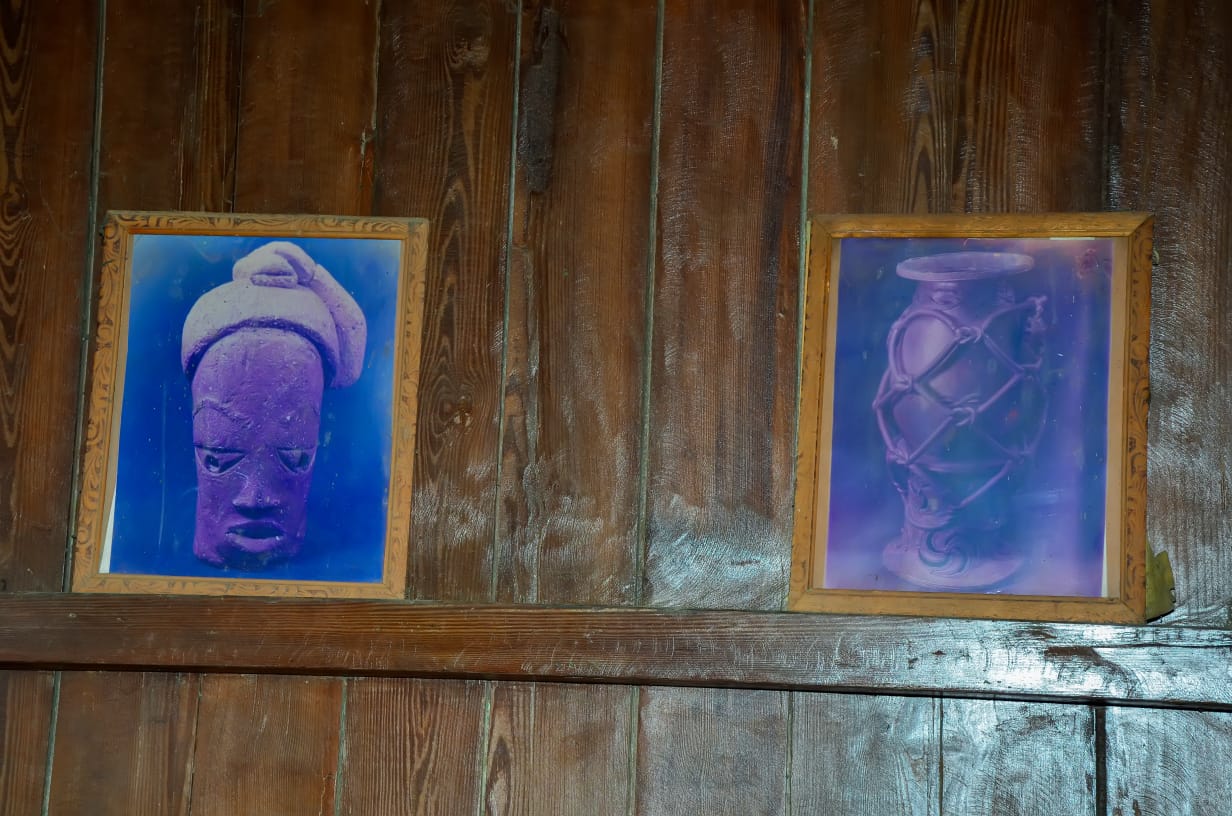
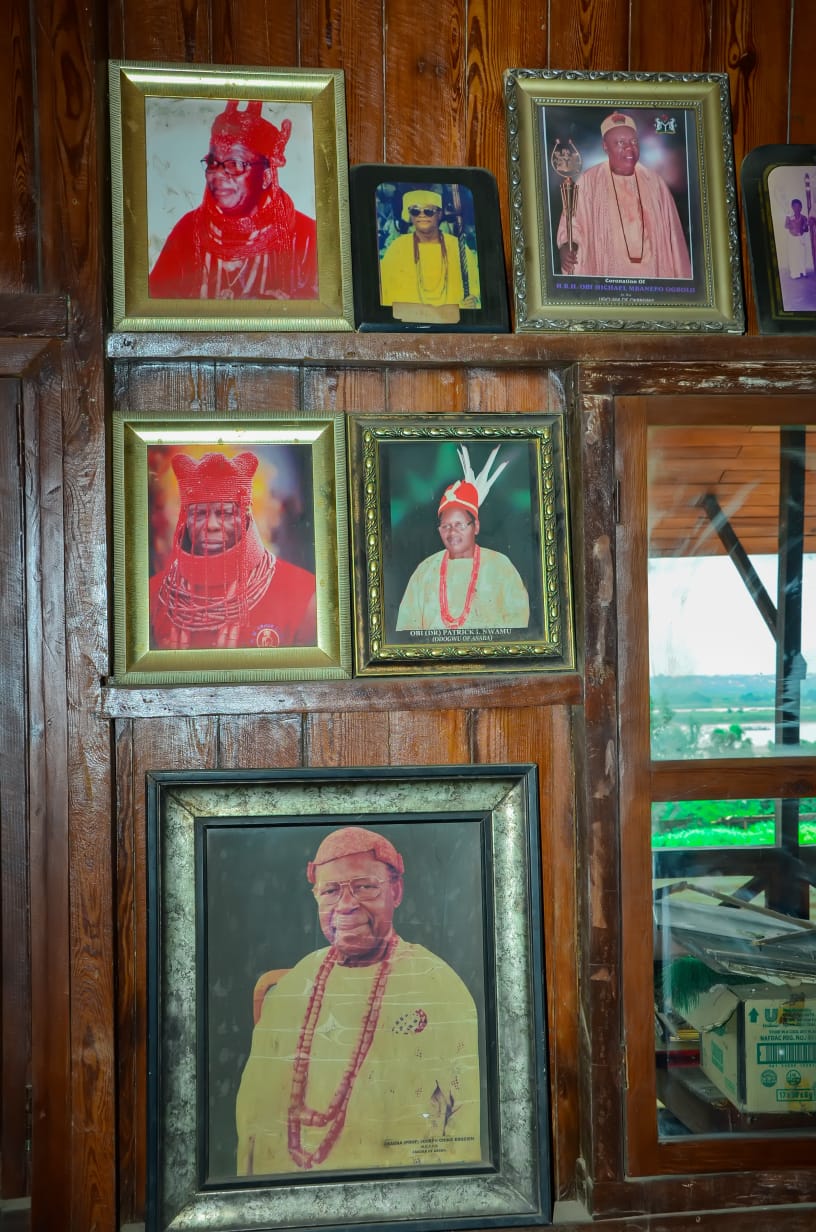
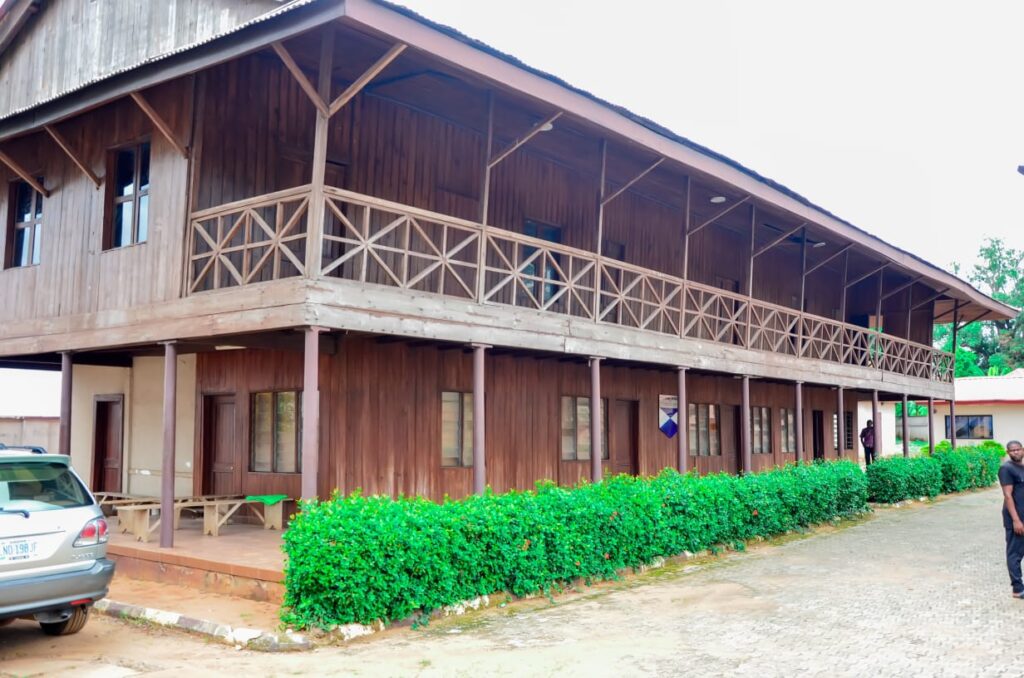
Inside the Mungo Park House, there are still more discoveries. Here, terracotta photographs and other art works depicting human figures, created by the Nok Civilization and believed to have flourished between 900BCE to 200CE, are preserved. There are also physical artifacts of Ekumeku uprisings at Mungo Park House; this is aside the interesting historical accounts and lessons in resilience.
While at Asaba, it was easy to discover the roles of geography and culture in the Lower Niger Region. Although geography and culture were not intricately linked as one would have expected in colonial years, they were nevertheless, ever present in the physical environment, languages, religion, traditions and cultural practices. To understand the ethnic nationalities of the Lower Niger Region is to go back in history to colonial era. Today, these people include Edo Region, Igbo Region, Western Delta Region, Urhobo Region, Central Delta Region, Ijaw Region, Ibibio Region and South East Region. And they were easily distinguishable by their unique cultures, traditions and modes of dressing.
Another remarkable experience in this journey of discovery is that the trip to Asaba significantly addressed distortions of historical facts. As is well-known, the deliberate misrepresentation or falsification of historical figures, events or evidence, could seriously endanger and undermine facts and realities. In this instance, Chidi Uchenwa, Chief Education Officer, National Museum, Asaba, provides clarification and answers. According to him, “this house was built and named after Mungo Park. Mungo Park did not build the house. And Mungo Park did not even set his foot here in Asaba. Historical accounts offer insights into how he took his adventure from Equatorial Guinea where the Niger took its course, with the aim of discovering the beginning and the end of River Niger. Unfortunately, he could not get here (Asaba), he died in Bussa, which is in present Niger State. Therefore, this house was built by the Royal Niger Company in 1886.”
Uchenwa continues: “The Mungo Park House, I must say, was purposely built for economic purpose. It was a warehouse where palm oil and agricultural products from the hinterlands were stored. Remember that before now, there was no entity called Nigeria. What we had, were protectorates. It was Southern Protectorate with its headquarters here in Asaba and Northern Protectorate with control center at Zungeru, in today’s Niger State. And Lagos at that time, was a colony.”
This unusual Chief Education Officer at National Museum, Asaba, also took his visitor on a historical journey through the colonial period and back. “Asaba, as the administrative headquarters, had the flag of the Royal Niger Company raised here at Asaba because the Royal Niger Company was in control of trade. However, when the British discovered that trade was flourishing, they took over all the businesses and lowered the flag of Royal Niger Company, raised the Union Jack and took over everything. As you can see, Mungo Park House is a storey building made up of strong wood and iron. And it could be said that this house at Asaba was the first Government House in Nigeria. From Asaba, the administrative headquarters of Southern Nigeria moved to Calabar. Eventually, Nigeria was born in 1914.”
However, it is important to add that historical updates and regular documentation are vital for tracking changes, ensuring accuracy and maintaining clear records of historical facts, figures and events. Despite the lack of all these and more, including absence of investment in research and publication, Uchenwa still manages to recall the names of colonialists, the major events of many eras, the principal actors, the different treaties and details of everything in-between, with an elephantine memory.
One may ask: is Delta State effectively leveraging its many tourism sites and possibilities? The answer may not be emphatic yes, for obvious reasons. However, tourism potentials, when fully harnessed, can provide livelihoods, create thousands of jobs and wealth, engender hope, drive economic growth, stimulate cultural exchange and also lead to improved infrastructure. Ejiro Nkem Nwaomu, an official of Delta State Tourism Board, who spoke on behalf of the General Manager, insists that the state is ready to significantly boost its tourism sector by exploiting its historical and cultural sites. “Our job is to market and promote tourism, and we are doing exactly that at the moment. We are marketing Delta State as the preferred tourism destination in Africa. We all know that tourism has a multiplier effect on the economy; that is why we are not leaving any stone unturned. Therefore, we are doing everything possible to attract visitors, not only to Asaba, but everywhere in Delta State that holds tourism attraction.”
Outside the sites at Asaba, Delta State, with strategic development and promotion, offers a variety of popular attractions that can significantly enhance its presence on the world tourism map.